Dinner · Part 3 of 3: Tips & recipe card
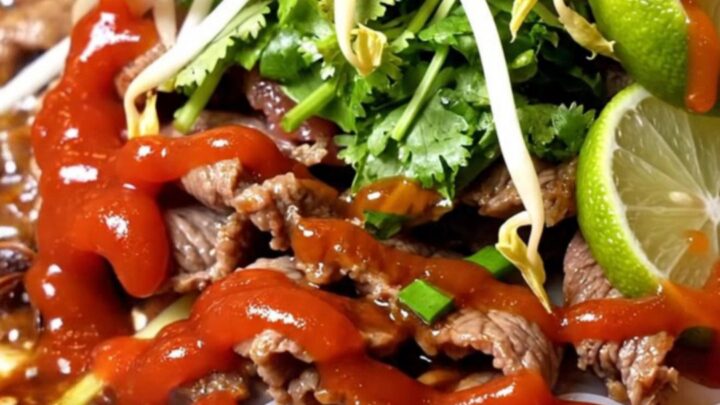
15-Minute Sizzling Pho Skillet Noodles with Lemongrass Beef Tips, FAQ & printable recipe
- Prep
- Cook
- Total
- Serves
- 4
Tips for success
Slice the beef cold and confident. Fifteen minutes in the freezer changes everything: the meat firms up, the knife glides, and the slices come out even enough to sear at the same rate.
Cut across the grain so the brisket stays tender after its quick sear. Pat the slices dry before they meet the pan — surface moisture is the enemy of browning, and a dry slice builds the crust that flavors the whole glaze.
Treat the skillet as the flavor engine. Resist scraping the browned lemongrass and beef residue out between stages; the broth phase exists to dissolve it into the sauce.
Keep the heat high for the noodle toss and keep the noodles moving with tongs, lifting from the bottom so nothing sticks. Taste the glaze right before the noodles go in — fish sauce varies by brand, and a half teaspoon more at that moment is easier than fixing a finished bowl.
Variations
- Extra-Charred Edges: Let the noodles sit undisturbed for 30 seconds at the end of the toss before stirring, building a light crust on the bottom layer. Repeat once, then finish as directed for deeper caramelization.
- Spicy Lemongrass Version: Mince one Thai chili with the garlic and ginger, and stir a teaspoon of chili-garlic paste into the glaze with the hoisin. Keep the sriracha at the table for those who want more heat still.
- Extra-Herb Bowl: Add a handful of mint alongside the Thai basil and cilantro, and serve with additional lime. The mint brightens the anise-heavy glaze and makes the finished bowls taste closer to a fresh pho table.
- Richer Glaze: Whisk half a tablespoon of butter into the glaze right before the noodles go in. It rounds the star anise and gives the finished strands a silkier, more clinging coat without changing the flavor profile.
Storage and make-ahead
- Fridge
- Refrigerate leftovers in an airtight container for up to 3 days; keep herbs and sprouts separate and add them fresh when serving.
- Freezer
- Freezing is not recommended — rice noodles turn mealy and the glaze breaks. Refrigerate only, and plan to finish the dish within 3 days.
- Reheat
- Reheat in a skillet over medium heat with 2 to 3 tablespoons of water, tossing until glossy and steaming, about 4 minutes.
Cool any leftovers no longer than 2 hours at room temperature, then transfer them to an airtight container and refrigerate. Keep the fresh garnishes separate if possible, since herbs and sprouts lose their snap inside a sealed warm container. The noodles drink up sauce overnight, so plan to loosen the dish with a splash of water or broth the next day rather than expecting the same glossy texture.
The prep phase splits cleanly from the cooking, which makes this an easy dish to stage. Slice the beef up to a day ahead and keep it covered in the refrigerator; mince the lemongrass, garlic and ginger the morning of, or the night before, and store them together in a small container.
The glaze itself is best built fresh, since it depends on the browned bits in the pan, but the broth and hoisin can be measured and combined in advance. Soak the noodles just before cooking — soaked noodles held for hours turn gummy.
Serving ideas
Serve this straight from the skillet at the table, the way it is meant to land: steaming, glossy and still faintly crackling. Set out small bowls of sriracha, extra lime wedges and a pile of clean bean sprouts so each person can build their own bowl the way a pho table works. Wide, shallow pasta bowls or deep soup bowls both suit the dish — the noodles should be visible, not buried.
Round out the meal simply. A quick cucumber salad with rice vinegar and a pinch of sugar cuts through the richness of the glaze, and it can be made while the beef rests.
Plain iced tea or a light lager suits the anise-and-char flavors better than anything sweet. Chopsticks and a wide spoon make the meal feel like the street-stall dish it imitates, and a second skillet is worth warming if the table is larger than four.
Frequently asked questions
Can the beef be sliced ahead of time?
Why do the noodles get soaked instead of boiled?
What if concentrated pho broth is hard to find?
Can this be made in a stainless-steel pan?
How is the beef checked for doneness?
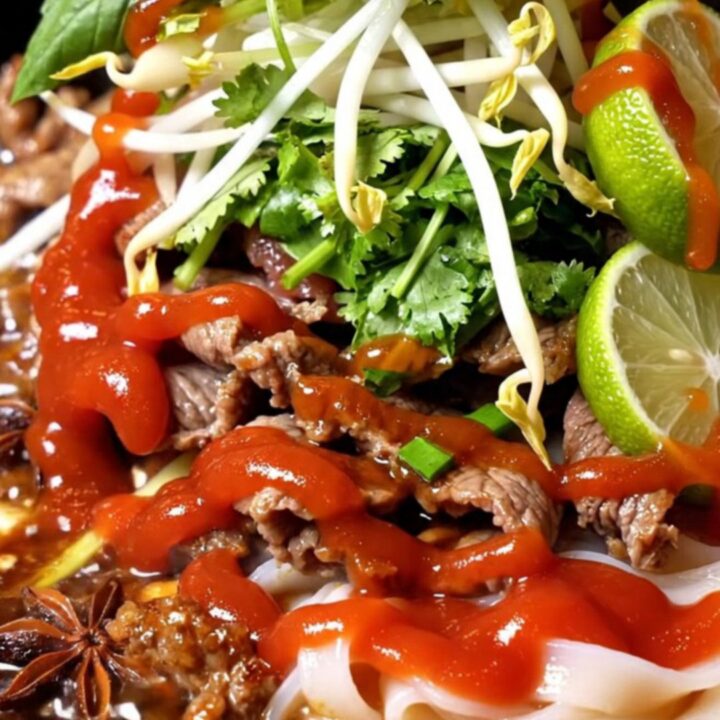
15-Minute Sizzling Pho Skillet Noodles with Lemongrass Beef
Ingredients
- 14 oz flat rice noodles, pho-style
- 12 oz beef brisket, thinly sliced against the grain
- 2 tbsp fish sauce
- 2 stalks lemongrass, tender inner parts minced
- 4 cloves garlic, minced
- 1 tbsp fresh ginger, minced
- 2 whole star anise
- 1 small cinnamon stick
- 2 tbsp neutral oil
- 1 cup concentrated beef pho broth
- 1 tbsp hoisin sauce
- Thai basil leaves, for serving
- Fresh cilantro, for serving
- Bean sprouts, for serving
- Lime wedges, for serving
- Sriracha, for serving
Instructions
- Place the flat rice noodles in a large bowl and cover them with very hot tap water. Let them soak for 8 to 10 minutes, stirring once so they do not stick together, until pliable but still firm with a chalk-white core. Drain them in a colander and rinse briefly with warm water.
- Slice the brisket as thinly as possible across the grain, aiming for slices about 1/8 inch thick. A slightly firm, half-frozen piece of meat is far easier to cut cleanly. Keep the slices in a single layer on a plate so they sear evenly rather than steaming in a pile.
- Trim the lemongrass stalks to the tender inner core and mince them finely, then mince the garlic and ginger. Keep the star anise and cinnamon stick whole so they perfume the oil without scattering woody bits through the dish. Have everything within reach of the stove.
- Heat the oil in a large cast-iron skillet over medium-high heat until it shimmers. Add the lemongrass, garlic, ginger, star anise and cinnamon stick and sizzle them for about 1 minute, stirring constantly. The pan should smell intensely citrusy and warm, with no browning past golden.
- Push the aromatics to the edges, add the beef in one layer and drizzle the fish sauce over it. Sear undisturbed for about 1 minute, then toss for 1 to 2 minutes more until the slices are browned and cooked through to 145°F (63°C). Transfer the beef to a plate and let it rest at least 3 minutes.
- Pour the concentrated beef pho broth into the hot skillet, scraping up every browned bit of lemongrass and beef from the bottom. Stir in the hoisin sauce and let the liquid bubble over medium-high heat until it reduces slightly and turns glossy, about 2 minutes. Leave the star anise and cinnamon in the pan.
- Add the drained noodles to the skillet and toss constantly with tongs over high heat for 1 to 2 minutes. Keep everything moving so the noodles drink up the glaze evenly instead of sticking. The dish is ready when every strand looks glossy, deep amber and slightly caramelized at the edges.
- Nestle the rested beef and any collected juices back over the noodles, then pull the skillet off the heat. Fish out the star anise and cinnamon stick. Shower the top with Thai basil, cilantro and bean sprouts, squeeze a lime wedge over everything and offer sriracha at the table.
Estimated nutrition per serving
- Calories
- 620
- Protein
- 28 g
- Carbohydrates
- 78 g
- Fat
- 18 g
- Fiber
- 3 g
- Sugar
- 5 g
- Sodium
- 1250 mg
Next recipe

Short Rib Birria Enchiladas Suizas in One Bubbling Pan
See the recipe → →This recipe is based on a short cooking video and is published under the pen name Clara Weller. It was checked before publication, but errors can slip through. Nutrition, when shown, is an estimate. Read more in our editorial policy and on our food safety page.
More recipes to try
Crockpot Sausage and Sage Stuffing — Hands-Off Holiday Side
Total time: 4 h 20 min
Crockpot Albondigas Soup: Tender Meatballs, Dump-and-Go Easy
Total time: 6 h 10 min
Crockpot Pork Birria Tacos with Rich Consomme
Total time: 8 h 40 min
Argentine Smash Burger with Chimichurri and Crispy Provolone
Total time: 25 min
Texas Toast Patty Melt with Pulled Pork and Mac and Cheese
Total time: 38 min