Dinner · Part 2 of 3: Instructions
15-Minute Sizzling Pho Skillet Noodles with Lemongrass Beef Step-by-step instructions
- Prep
- Cook
- Total
- Serves
- 4
Before you start
Get everything ready before the oil moves, because the cooking itself takes minutes. Set the beef in the freezer for about 15 minutes so it slices cleanly, then cut it across the grain into 1/8-inch slices and spread them out. Soak the rice noodles in very hot water while the meat firms up, and drain them just before cooking.
Trim the lemongrass to its pale core, mince it with the garlic and ginger, and keep the star anise and cinnamon stick whole near the stove. Measure the broth, hoisin and fish sauce into small bowls, tear the herb leaves, rinse the sprouts and cut the lime.
Ingredients at a glance (16)
- 14 oz flat rice noodles, pho-style
- 12 oz beef brisket, thinly sliced against the grain
- 2 tbsp fish sauce
- 2 stalks lemongrass, tender inner parts minced
- 4 cloves garlic, minced
- 1 tbsp fresh ginger, minced
- 2 whole star anise
- 1 small cinnamon stick
- 2 tbsp neutral oil
- 1 cup concentrated beef pho broth
- 1 tbsp hoisin sauce
- Thai basil leaves, for serving
- Fresh cilantro, for serving
- Bean sprouts, for serving
- Lime wedges, for serving
- Sriracha, for serving
Instructions
Stage the pan work
- Soak the rice noodlesPlace the flat rice noodles in a large bowl and cover them with very hot tap water. Let them soak for 8 to 10 minutes, stirring once so they do not stick together, until pliable but still firm with a chalk-white core. Drain them in a colander and rinse briefly with warm water.Look for The noodles bend easily around your fingers without snapping, yet still feel springy rather than mushy.Tip Hot-soaking instead of boiling keeps the noodles from overcooking when they hit the skillet later.
- Slice the beef paper-thinSlice the brisket as thinly as possible across the grain, aiming for slices about 1/8 inch thick. A slightly firm, half-frozen piece of meat is far easier to cut cleanly. Keep the slices in a single layer on a plate so they sear evenly rather than steaming in a pile.Look for Each slice should be thin enough to see light through the edge, with clean-cut fibers and no ragged tears.Tip Freeze the brisket for 15 minutes first; a sharp knife and short strokes give the cleanest slices.
- Mince the aromaticsTrim the lemongrass stalks to the tender inner core and mince them finely, then mince the garlic and ginger. Keep the star anise and cinnamon stick whole so they perfume the oil without scattering woody bits through the dish. Have everything within reach of the stove.Look for The lemongrass should feel soft when squeezed and mince without stringy fibers catching on the knife.Tip Discard the dry outer lemongrass layers; only the pale bottom third carries real fragrance.
By the end of the prep phase, three things should be true. The noodles are pliable and drained, bending around a finger without snapping but still showing a firm, slightly translucent core — they will cook the rest of the way in the skillet.
The beef is sliced about 1/8 inch thick across the grain, dry on the surface and laid out in a single layer so it will sear rather than steam. The aromatics are minced and grouped within arm's reach of the stove, and the liquid ingredients are measured.
Bloom and sear
- Bloom the spices in oilHeat the oil in a large cast-iron skillet over medium-high heat until it shimmers. Add the lemongrass, garlic, ginger, star anise and cinnamon stick and sizzle them for about 1 minute, stirring constantly. The pan should smell intensely citrusy and warm, with no browning past golden.Look for Tiny bubbles rise around the aromatics and the kitchen fills with a citrus-and-spice perfume within seconds.Tip Garlic burns fast at this heat; if it darkens early, lower the flame immediately and move to the beef.
- Sear the beef with fish saucePush the aromatics to the edges, add the beef in one layer and drizzle the fish sauce over it. Sear undisturbed for about 1 minute, then toss for 1 to 2 minutes more until the slices are browned and cooked through to 145°F (63°C). Transfer the beef to a plate and let it rest at least 3 minutes.Look for The edges of the slices turn deep caramel brown and the pan develops a crackling, crusty sizzle.Safe temperature 145°F (63°C) internal temperature (steaks, chops and roasts)Tip Crowding the pan steams the meat; sear in two batches if the skillet feels crowded at any point.
This phase should end with a skillet full of fragrance and a plate of rested beef. The oil first turns citrusy and warm as the lemongrass, garlic, ginger, star anise and cinnamon sizzle — about one minute, no more, with garlic still pale gold.
Then the brisket sears hard in that scented oil, undisturbed at first so a caramel-brown crust forms, tossed briefly after, and seasoned through with fish sauce. Check the thickest slice with an instant-read thermometer: 145°F (63°C) at the center. Transfer the beef to a plate and let it rest at least 3 minutes while the glaze builds.
Glaze, toss and finish
- Build the pho glazePour the concentrated beef pho broth into the hot skillet, scraping up every browned bit of lemongrass and beef from the bottom. Stir in the hoisin sauce and let the liquid bubble over medium-high heat until it reduces slightly and turns glossy, about 2 minutes. Leave the star anise and cinnamon in the pan.Look for The sauce coats the back of a spoon and the strong anise-and-cinnamon steam rises off the surface.Tip Those browned bits stuck to the pan are pure pho flavor; loosen every one of them with the spoon.
- Toss in the noodlesAdd the drained noodles to the skillet and toss constantly with tongs over high heat for 1 to 2 minutes. Keep everything moving so the noodles drink up the glaze evenly instead of sticking. The dish is ready when every strand looks glossy, deep amber and slightly caramelized at the edges.Look for The pan hisses loudly at first, then quiets as the liquid absorbs; the noodles turn uniformly glossy.Tip If the noodles catch early, splash in 2 tablespoons of water and keep tossing to loosen the glaze.
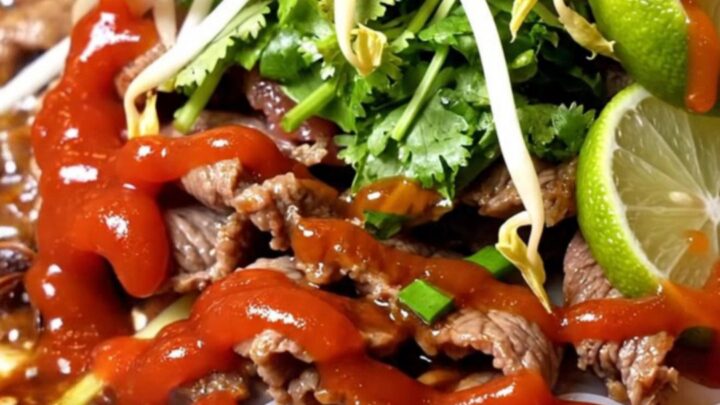
- Return the beef and garnishNestle the rested beef and any collected juices back over the noodles, then pull the skillet off the heat. Fish out the star anise and cinnamon stick. Shower the top with Thai basil, cilantro and bean sprouts, squeeze a lime wedge over everything and offer sriracha at the table.Look for The herbs wilt just slightly from the steam while the sprouts stay crisp and the pan still hisses.Tip Serve straight from the skillet while it is still sizzling; the contrast of hot noodles and cold sprouts is the point.
The final phase ends with a glossy, amber skillet of noodles and a steaming pile of garnishes. The concentrated broth hits the hot pan, deglazing every browned fleck, and with the hoisin it reduces to a sauce that coats a spoon. The noodles go in and toss over high heat until each strand is shiny, slightly caramelized at the edges and free of any chalky core. The rested beef returns just to warm through and pick up glaze, then the whole star anise and cinnamon stick come out.
Common mistakes
Three failures account for almost every weak version of this dish. First, soggy noodles: boiling them until soft before the skillet means they collapse into the glaze later — soak them in hot water only until pliable with a firm core, and let the sauce finish the job.
Second, crowded searing: piling all the brisket in at once drops the pan temperature and steams the meat gray instead of browning it caramel-brown; use a wide skillet or work in two batches. Third, rushing the glaze: adding noodles before the broth has reduced slightly leaves the dish soupy and pale instead of glossy and clinging.
How to tell it’s done
The dish is done when three signs line up. The noodles are fully pliable, glossy and amber from the glaze, with no chalky core when a strand is bitten — they finish cooking in the sauce, not in a pot. The sauce has reduced until it clings to the noodles instead of pooling in the pan. And the beef is cooked through: seared to 145°F (63°C) at the center, verified with an instant-read thermometer, then rested at least 3 minutes so the juices redistribute before it returns to the skillet.
- Steaks, chops and roasts: 145°F (63°C) in the thickest part, then a 3-minute rest
Up next · Part 3 of 3
4 variations · storage & make-ahead · 5 answers · printable card
Tips, FAQ & printable recipe (Part 3)← Back to the ingredients (Part 1)