Dinner · Part 1 of 3: Ingredients
Crockpot Pork Birria Tacos with Rich Consomme
- Prep
- Cook
- Total
- Serves
- 6
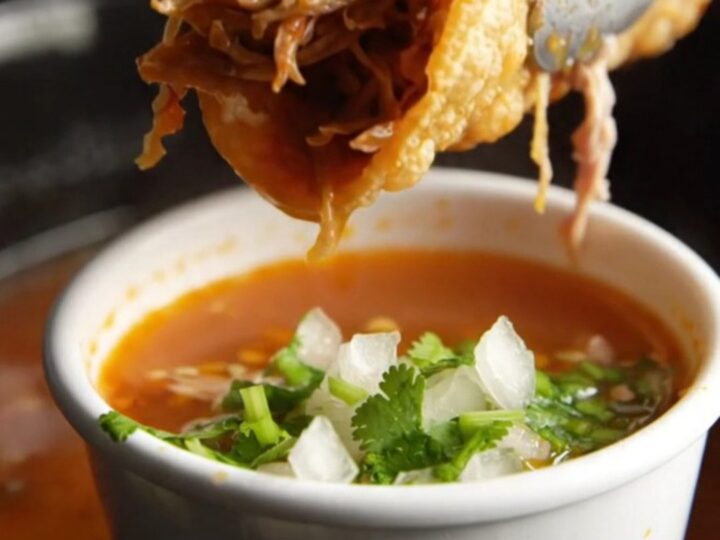
Ruby-red chili oil floating on bubbling consomme, pork so tender it shreds with a fork, and crispy cheese-stuffed tacos dunked straight into the cup: this is birria, made in a slow cooker with pork instead of the usual beef.
Four pounds of shoulder, four guajillo and four ancho chiles, a cinnamon stick, a splash of vinegar, and three cups of broth go into the pot. Eight hours on low does the rest, and the blender turns the braising liquid into the consomme everyone dips for.
Birria has become the most requested taco on any street-food menu, and the reason is the dunk: a crisp, cheese-lined tortilla filled with braised meat, dipped into a steaming cup of red chile broth. This version swaps beef for pork shoulder, a fattier, more forgiving cut that slow-cookers love, and it skips the stovetop entirely.
The chiles, tomato, cinnamon, and vinegar cook right alongside the meat, so the braising liquid becomes the consomme with one blend at the end. There is no searing, no roasting, and no sauce made separately. The only real work is rehydrating the chiles, shredding the pork, and crisping the tacos in a skillet when you are ready to eat.
Ingredients
- 4 lb pork shoulder, trimmed of excess fat and cut into large chunks
Chile base
- 4 dried guajillo chiles, stemmed and seeded
- 4 dried ancho chiles, stemmed and seeded
- 1 roma tomato, quartered
- 1 cinnamon stick
- 1 tbsp apple cider vinegar
- 3 cups beef broth
Tacos
- 10 oz Oaxaca cheese, torn into strands (mozzarella works too)
- 12 corn tortillas
For serving
- 1 white onion, finely chopped, for serving
- 1/2 cup fresh cilantro, chopped, for serving
Why this recipe works
Pork shoulder is built for this method. It carries enough fat and connective tissue to stay juicy through eight hours of gentle heat, and it absorbs the guajillo-ancho base deeply, staining the meat that signature brick red. Cooking the chiles in the same liquid as the pork means the broth and the meat season each other; nothing is made apart, so every flavor ends up in both places.
Blending the aromatics into the braising liquid at the end is what creates a true consomme rather than a thin broth. The rehydrated chiles give body, the tomato rounds the acidity of the vinegar, and the cinnamon ties it together.
A long, low cook also renders the pork's fat into the liquid, which is why that glossy red layer forms on top. Dipping a crisp tortilla into it delivers the contrast that makes birria tacos worth the wait.
Notes and substitutions
Buy guajillo and ancho chiles from a store with turnover; old pods taste dusty and bitter. Look for supple, glossy skins. Oaxaca cheese is the traditional choice and melts into long strands, but low-moisture mozzarella behaves almost identically if the Latin market run is out of the question. Corn tortillas matter here: thin, fresh ones crisp into crackly shells where thick ones turn leathery.
A 6-quart slow cooker fits the 4 pounds of pork comfortably with the broth; smaller models will be tight, so trim the shoulder harder or cut it smaller. The blender does the heavy lifting for the consomme, so any model that handles hot liquid works.
If the finished consomme tastes flat, a pinch of salt and a short re-blend with a splash of the chile soaking water wakes it up without changing the recipe.
- Oaxaca cheese: Low-moisture mozzarella melts and pulls the same way; a brick of Monterey Jack also works well in these tacos.
- Guajillo and ancho chiles: Use 8 of either one chile alone if the other is unavailable; the flavor stays deep and red either way.
- Beef broth: Chicken broth or a mix of broth and water keeps the chiles front and center if beef broth is not on hand.
- Pork shoulder: Boneless pork butt is the same cut under a different name; bone-in shoulder needs no extra cooking time on low.
Equipment
- 6-quart or larger slow cooker
- blender
- two forks
- large skillet or griddle
- small saucepan for warming consomme
- cutting board and sharp knife
Up next · Part 2 of 3
8 steps · 8 h of cooking · what to look for at each stage
Step-by-step instructions (Part 2)