Dinner · Part 3 of 3: Tips & recipe card
Tuscan Salmon with Scallops in Vodka Cream Sauce Tips, FAQ & printable recipe
- Prep
- Cook
- Total
- Serves
- 2
Tips for success
Keep the skillet on a steady medium-low heat once the sauce is in. A gentle simmer lets the cream reduce slowly and stay smooth, while a hard boil can make it separate or turn greasy. Stir the sauce every minute or so, especially along the bottom, where cream can catch and brown. If the sauce tightens too much, add a spoonful of water to loosen it instead of more cream. Taste it before serving, because the aged cheese already adds salt, and season carefully at the end.
Work in the order of the steps so the seafood cooks at the right time. Have the cheese grated, the basil torn and the shrimp and scallops ready before the salmon goes into the sauce. This keeps the pan from sitting idle while you prep, and it prevents the seafood from waiting out of the refrigerator. Spoon sauce over the fillets as they cook so the tops do not dry out, and check the thickest part of the salmon with an instant-read thermometer before you take the skillet off the heat.
Variations
- Lemon Zest Finish: Add a little finely grated lemon zest to the sauce just before the seafood goes in, for a brighter citrus note that cuts through the cream and complements the scallops and shrimp.
- Extra Garlic: Use a few more whole garlic cloves in the butter base for a deeper garlic flavor, and remove them before serving if you prefer a milder taste in the finished sauce.
- Chili Flakes: Stir a pinch of red pepper flakes into the warm butter and garlic for gentle heat that runs through the orange sauce without overpowering the delicate seafood.
- Pasta on the Side: Serve the seafood and sauce over cooked spaghetti or linguine tossed with a little pasta water for a heartier plate, keeping the same aged cheese and basil garnish on top.
Storage and make-ahead
- Fridge
- Refrigerate leftovers in an airtight container for up to 2 days, after cooling for no more than 2 hours.
- Reheat
- Reheat gently in a skillet over low heat with a splash of water, stirring until just warm; avoid boiling.
Leftover Tuscan salmon with scallops is best eaten the same day, because seafood loses its tender texture once it cools and reheats. Let the skillet cool for no more than 2 hours at room temperature, then transfer the salmon, scallops, shrimp and sauce to a shallow airtight container.
Keep the cheese and basil separate if you can, so the garnish stays fresh. Refrigerated portions keep for up to 2 days. Use a clean spoon each time you serve from the container, and do not leave the dish out on the counter during a meal. Label the container with the date so you can track freshness easily and avoid keeping it longer than recommended.
Much of this dish can be prepared in advance, which makes the final cooking quick. The vodka tomato sauce can be made up to 2 days ahead and kept in the refrigerator until you are ready to cook. Grate the hard aged cheese and store it covered in the refrigerator, where it stays fresh for several days.
Pat the salmon, scallops and shrimp dry and keep them chilled on a plate lined with paper towels until the skillet is hot. Tear the basil just before serving, because it darkens and loses aroma when it sits. Assemble and cook the seafood only at the last minute, so each piece stays tender and the sauce remains glossy.
Serving ideas
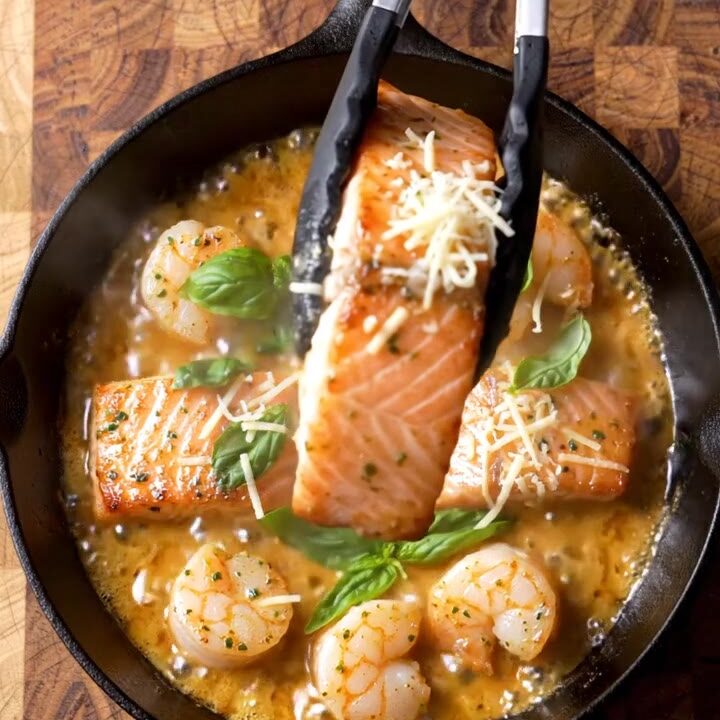
Serve Tuscan salmon with scallops straight from the cast-iron skillet, so the sauce stays hot and glossy and every guest can see the golden fillets. Spoon the sauce generously over each portion, making sure each plate receives a piece of salmon, a few scallops and some shrimp.
A final pinch of grated aged cheese and a few torn basil leaves on top add color and a fresh finish. Place the skillet in the center of the table with a serving spoon so people can help themselves, and keep a trivet underneath to protect the table.
Pair the dish with crusty bread or warm sliced bread, which is ideal for soaking up the orange sauce left in the skillet. A simple green salad with lemon and olive oil balances the richness of the cream, and a crisp dry white wine complements the seafood well.
For a relaxed meal, serve a light side of lightly steamed green vegetables or roasted asparagus. Keep the menu simple so the salmon and sauce remain the focus, and serve everything while the skillet is still warm for the best flavor and texture.
Frequently asked questions
Can the vodka tomato sauce be made ahead?
What is the best cheese to use?
Why do the scallops and shrimp go in after the salmon?
How do you know when the salmon is cooked through?
Can you use frozen seafood instead of fresh?
Tuscan Salmon with Scallops in Vodka Cream Sauce
Ingredients
- 2 fresh salmon fillets, about 6 oz each, skin removed
- 6 oz fresh sea scallops, side muscle removed
- 4 oz peeled raw shrimp
- 4 cloves garlic, peeled and left whole
- 2 tbsp unsalted butter
- 1 cup creamy vodka tomato sauce, store-bought or made ahead
- 1/2 cup finely grated hard aged cheese, such as Parmigiano-Reggiano
- 8 fresh basil leaves, torn, for garnish
- kosher salt and black pepper, to taste
- 1 tbsp olive oil
Instructions
- Pat the salmon fillets, scallops and shrimp dry with paper towels, then season them with kosher salt and black pepper. Grate the hard aged cheese over the board with a box grater so it forms a fine pile. Keep the seafood in the refrigerator until the pan is ready.
- Set the cast-iron skillet over medium heat with the olive oil and butter. Add the whole garlic cloves and warm them until the butter melts and the garlic softens and smells fragrant, about 2 minutes.
- Pour the creamy vodka tomato sauce into the skillet and stir it into the garlic butter. Simmer over medium-low heat until the sauce turns glossy and reduces slightly, about 5 minutes.
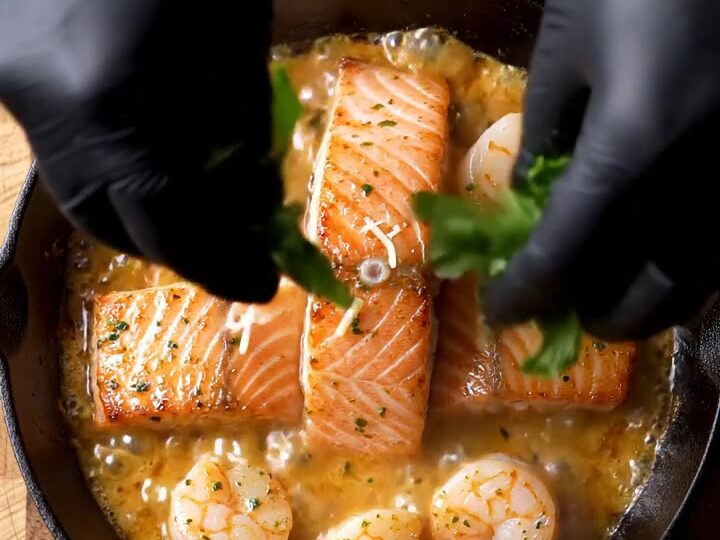
- Nestle the seasoned salmon fillets into the sauce, skin side up if any skin remains. Simmer gently for about 6 minutes, then add the scallops and shrimp around the fillets and continue simmering until the seafood turns opaque and firm.
- Sprinkle the grated aged cheese over the salmon, then spoon the sauce over the fillets so they are coated. Let the cheese melt for about 1 minute, then tear the basil leaves over the top and add a final dusting of grated cheese.
- Bring the skillet straight to the table and serve the salmon, scallops and shrimp with plenty of sauce spooned over each portion. Add a final pinch of cheese and basil just before serving.
Estimated nutrition per serving
- Calories
- 640
- Protein
- 45 g
- Carbohydrates
- 14 g
- Fat
- 42 g
- Fiber
- 2 g
- Sugar
- 5 g
- Sodium
- 1100 mg
Next recipe
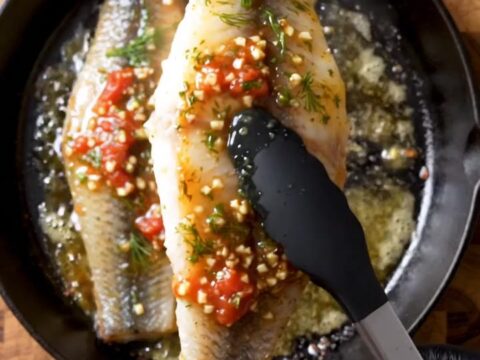
Garlic Herb Butter Pan-Seared Arctic Char with Blistered Tomatoes
See the recipe → →This recipe is based on a short cooking video and is published under the pen name Clara Weller. It was checked before publication, but errors can slip through. Nutrition, when shown, is an estimate. Read more in our editorial policy and on our food safety page.
More recipes to try
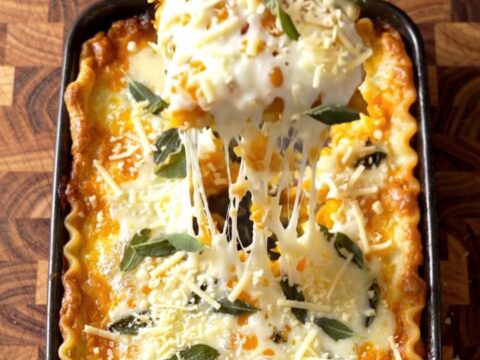
Butternut Sage Lasagna in a Brown Butter Fontina Skillet
Total time: 1 h 50 min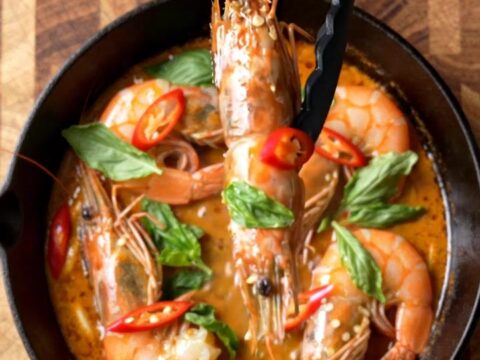
Thai Red Curry Prawn Skillet in One Pan in Under 30 Minutes
Total time: 32 min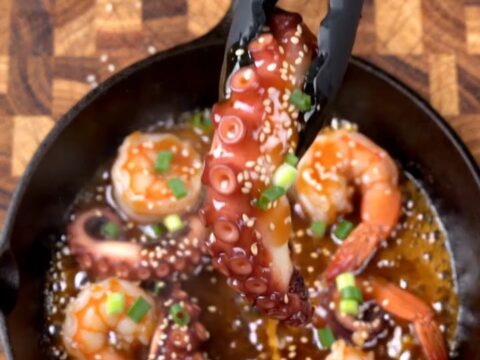
Honey Gochujang Shrimp and Charred Octopus Skillet in Garlic Butter
Total time: 35 min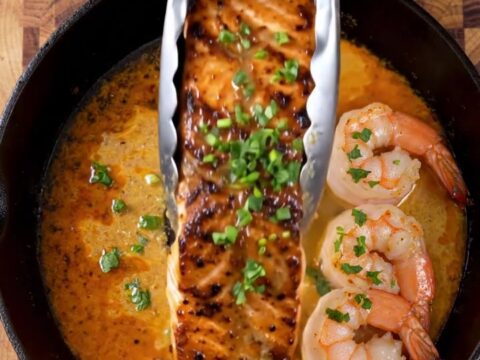
Cajun Blackened Salmon with Creamy Shrimp Skillet
Total time: 35 min
Crispy Smashed Potatoes with Molten Raclette Cheese
Total time: 45 min