Dinner · Part 1 of 3: Ingredients
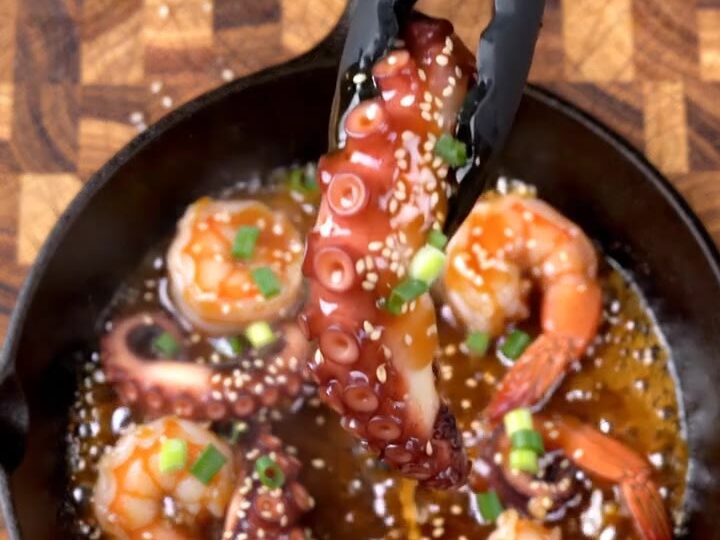
Honey Gochujang Shrimp and Charred Octopus Skillet in Garlic Butter
- Prep
- Cook
- Total
- Serves
- 4
Sizzling garlic butter, tender shrimp and charred octopus, then a sticky honey and gochujang glaze that turns deep red-brown in a single cast-iron skillet. This seafood dinner comes together quickly, looks dramatic on the table and tastes sweet, savory and gently spicy in every bite.
This honey gochujang shrimp and charred octopus skillet is a seafood dinner built on contrast. Shrimp and octopus are seared in a pool of melted butter infused with fresh garlic, which gives the seafood a golden, nutty crust and a deep savory base. Then a glaze of gochujang and honey goes into the same pan, reducing into a glossy, sticky coating that clings to every piece.
The method is simple: prepare everything first, then move quickly from the garlic butter to the glaze so the seafood stays juicy and the sauce never burns. Green onions and toasted sesame seeds add freshness and crunch at the finish. Serve it straight from the skillet with plenty of warm bread or steamed rice to catch the glossy sauce.
Ingredients
- 4 green onions, thinly sliced
- 1 lb raw shrimp, peeled and deveined
- 12 oz cooked octopus tentacles, cut into bite-size pieces
- 6 cloves garlic, finely grated
- 3 tbsp unsalted butter
Honey gochujang glaze
- 2 tbsp gochujang
- 2 tbsp honey
- 1 tbsp toasted sesame seeds, for serving
- kosher salt and black pepper, to taste
Why this recipe works
The method starts with garlic butter rather than oil because butter carries flavor into the seafood and browns to a deep golden color. Grating the garlic on a fine-hole grater is important: the tiny particles melt into the fat, so the butter becomes fragrant and evenly flavored instead of leaving harsh chunks in the pan.
As the butter bubbles, spooning the golden fat over the shrimp and octopus helps them cook evenly and gives the tentacles their curled, charred edges without drying out the shrimp.
The honey and gochujang glaze goes in only after the seafood is seared. Gochujang is a fermented chili paste with sweetness, salt and depth, and honey makes it sticky and glossy as it reduces.
Adding the glaze at the end means it coats the seafood instead of burning on a dry pan, and a short reduction thickens it into the deep red-brown sauce that defines this dish. Tossing the seafood at the end distributes the glaze evenly so every piece is lacquered.
Notes and substitutions
Buy shrimp that are raw, peeled and deveined, and buy octopus that is already cooked and tender, which is easier to char quickly in a skillet. Keep both cold until cooking, and pat the shrimp dry so they sear rather than steam. Gochujang varies in heat and sweetness, so taste the glaze before pouring it in and adjust the honey if your paste is very spicy. Choose a good-quality unsalted butter so you can control the seasoning yourself.
A 12-inch cast-iron skillet is the best tool here because it holds high, even heat and goes from the stove to the table. A chef's knife and cutting board make portioning quick, a fine-hole grater turns the garlic into a fluffy pile that melts into the butter, and tongs make it easy to toss the seafood in the sticky glaze.
If you do not have a cast-iron pan, use a heavy stainless-steel skillet with a similar width and heat it well before adding the butter.
- gochujang: Gochujang is essential to the flavor; if you cannot find it, use a mix of hot sauce and a little miso for a similar savory heat, though the color will be paler.
- unsalted butter: Use the same amount of ghee or a neutral oil with a small knob of butter if you prefer a higher smoke point.
- sesame seeds: Toasted sesame seeds are the finish; sliced toasted nori or chopped roasted peanuts can be used if sesame is unavailable.
Equipment
- 12-inch cast-iron skillet
- Chef's knife
- Cutting board
- Fine-hole grater
- Tongs
- Small bowl
Up next · Part 2 of 3
6 steps · 15 min of cooking · what to look for at each stage
Step-by-step instructions (Part 2)