Dinner · Part 1 of 3: Ingredients
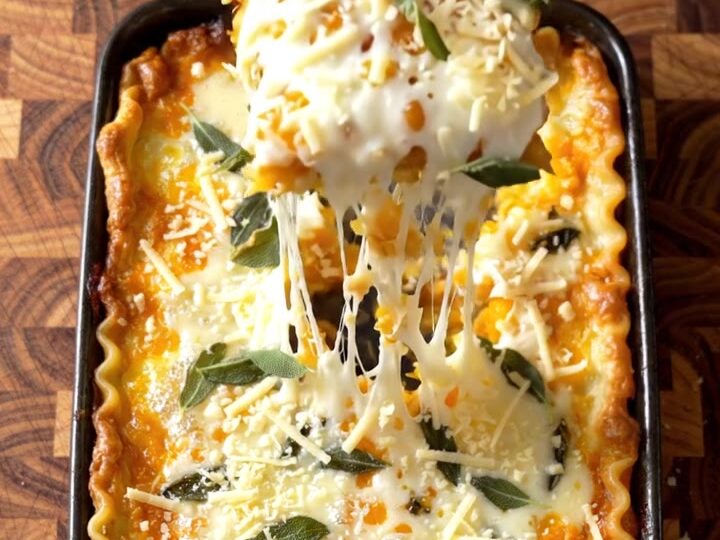
Butternut Sage Lasagna in a Brown Butter Fontina Skillet
- Prep
- Cook
- Total
- Serves
- 6
Brown butter, sweet roasted squash, and a fluffy blanket of fontina come together in one cast iron skillet. The result is a golden, rustic lasagna that slices cleanly and tastes like autumn. Crisp fried sage on top adds the final crunch and a savory note that ties the dish together.
This butternut sage lasagna is built entirely in a single cast iron skillet, which means fewer dishes and a dramatic presentation at the table. The method starts with butter cooked until it turns golden brown and smells nutty, then a simple egg and cream custard is whisked into it.
Cubed butternut squash and torn sage go into that foamy base, where the squash turns tender and picks up light caramelization at the edges. Lasagna sheets are layered over the squash with generous handfuls of grated fontina, pressed down so the pasta soaks up the custard. The finished lasagna then bakes until the top is deep golden and bubbling, with ruffled, crisp pasta edges.
Ingredients
- 1 butternut squash (about 2 lb), halved, seeded, and cut into small cubes
Brown butter custard
- 6 tbsp unsalted butter
- 2 cloves garlic, minced
- 2 large eggs
- 1 cup heavy cream
- 1/2 cup whole milk
- 1 tsp kosher salt, plus more to taste
- 1/4 tsp freshly ground black pepper
- 12 fresh sage leaves
- 9 no-boil lasagna sheets, broken to fit the skillet
- 8 oz fontina cheese, finely grated, plus 2 oz for the top
- 2 tbsp olive oil, for frying the sage
Why this recipe works
The brown butter does more than add flavor. As the milk solids toast, they give the custard a deep, nutty character that plain melted butter cannot match. Whisking the eggs and cream into this warm base creates a thick, moist custard that coats every layer of pasta and squash.
Because the custard is cooked gently in the skillet on the stove before it goes into the oven, the squash begins to soften and caramelize before the pasta is added, so each bite has tender vegetable pieces rather than hard cubes.
Layering the grated fontina between the pasta sheets is the second key step. Fontina melts smoothly and stretches without turning greasy, so each slice holds together. Pressing the sheets down into the custard lets them absorb moisture evenly, which keeps them tender in the middle while the top bakes to a crisp, golden finish. Finishing in the oven gives the surface its color and the pasta edges their ruffled crunch, while the interior stays creamy and set enough to cut cleanly after a short rest.
Notes and substitutions
Butternut squash is the star here, and buying it pre-cubed saves time, but whole squash has better flavor and texture. Choose a squash with a long neck and a smooth, matte skin, since the neck yields the most flesh and the fewest seeds.
Fontina is the classic choice because it melts into a silky layer and has a mild, nutty taste that complements the browned butter. Grate it from a block rather than buying pre-shredded cheese, which contains anti-caking agents that keep it from melting smoothly. Use no-boil lasagna sheets so they soften in the custard without needing to be cooked first.
A 10-inch cast iron skillet is the key piece of equipment. Cast iron holds heat evenly, so the butter browns steadily, the squash caramelizes, and the bottom of the lasagna develops a light crust. It also goes straight from the stove to the oven, which is why this recipe needs no separate baking dish.
If you do not have cast iron, use an oven-safe skillet of similar size or transfer the assembled lasagna to a 9-by-13-inch baking dish. A box grater, a sharp chef's knife, and a sturdy cutting board make the prep quick and safe.
- fontina cheese: Gruyère or low-moisture mozzarella, grated, for a similar melt
- heavy cream and whole milk: Use 1 1/2 cups whole milk and 2 extra eggs for a lighter custard
- no-boil lasagna sheets: Oven-ready lasagna sheets, or cooked and drained regular sheets
Equipment
- 10-inch cast iron skillet
- box grater
- cutting board
- chef's knife
- medium saucepan
- whisk
- small baking dish or the skillet for the oven
- slotted spoon
Up next · Part 2 of 3
8 steps · 1 h of cooking · what to look for at each stage
Step-by-step instructions (Part 2)