Dinner · Part 1 of 3: Ingredients
Thai Red Curry Prawn Skillet in One Pan in Under 30 Minutes
- Prep
- Cook
- Total
- Serves
- 4
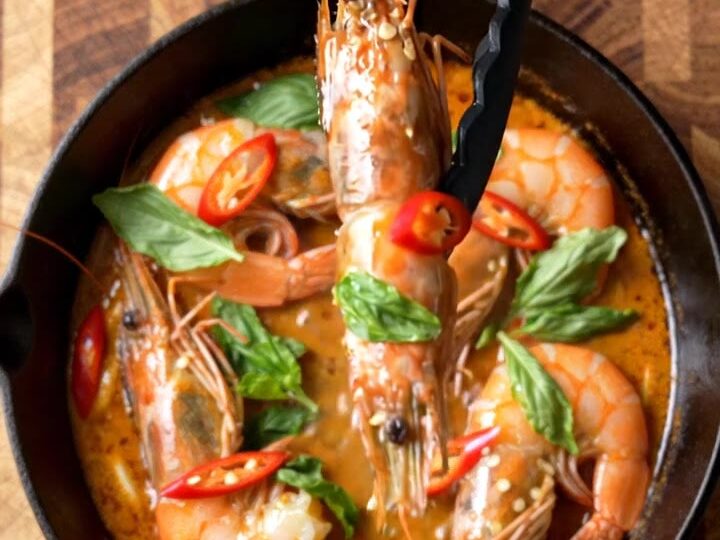
Think of a curry that comes together in one skillet, with a deep orange-red sauce, pink prawns curled on top and bright pepper strips scattered through. This Thai red curry prawn skillet takes about half an hour from start to finish and needs only a single pan, a grater and a ladle to make. It is the kind of weeknight dinner that feels like a takeout order, served bubbling and fragrant straight from the cast iron.
Thai red curry is one of the most rewarding dishes to build in a single pan, because each layer adds flavor to the sauce before the prawns arrive. You start by simmering coconut milk with red curry paste until the fragrance rises and a thin ribbon of red oil separates at the edges. That moment tells you the paste has bloomed and the base is ready for everything else.
From there, grated fresh coconut and a little galangal or ginger go in, followed by fish sauce and a pinch of sugar to balance the heat and salt. Sliced red bell peppers and snap peas join the pan, and the sauce thickens as you stir it with a ladle until it turns a glossy, deep orange-red. The prawns cook right in that sauce, so every piece picks up the curry.
Ingredients
- 1 lb raw prawns, peeled and deveined
- 1 can (13.5 oz) full-fat coconut milk
- 3 tbsp red curry paste
- 1/2 cup fresh coconut, finely grated
- 1 tbsp fresh galangal or ginger, finely grated
- 2 tbsp fish sauce
- 1 pinch sugar
- 2 red bell peppers, thinly sliced
- 1 cup snap peas
- 1/2 cup Thai basil leaves, torn
- 2 red chilies, sliced
Why this recipe works
The method works because it builds flavor in stages inside one pan. Simmering the coconut milk with the curry paste first draws out the aroma of the spices and separates the oil, which gives the sauce its characteristic color and depth. Adding the grated coconut and aromatic root next lets their flavors melt into the liquid, so the curry tastes rounded instead of sharp.
Fish sauce and a pinch of sugar then season the base in the same pan, which means no flavor is lost between steps and nothing needs to be transferred or kept warm. The vegetables and prawns follow the same logic. The thin pepper strips and snap peas soften in the simmering sauce while keeping some bite, and the prawns, which cook in only a few minutes, go in last so they stay plump and tender.
Adding the Thai basil and chilies after the heat is reduced keeps their aroma bright. Basil loses its perfume quickly in a hot sauce, so a brief toss at the end brings the fresh, peppery scent to the table. Arranging the prawns on top at the very end, rather than stirring them through, keeps the shapes intact and gives the dish its finished look.
Notes and substitutions
Coconut milk is the backbone of the sauce. A full-fat can gives the richest texture and the clearest separation of oil, which is the visual cue that the curry paste has cooked. Light coconut milk works but produces a thinner sauce that takes longer to thicken. Shake the can well before opening so the cream and liquid blend evenly.
Red curry paste varies a great deal from brand to brand in heat and salt, so start with 3 tablespoons and taste the sauce before adding more. Fish sauce is salty, so add it gradually and adjust with sugar. Fresh coconut is traditional here; if it is unavailable, unsweetened shredded coconut soaked briefly in warm water works well in the same spot in the recipe.
The cast-iron skillet is the right tool because it holds heat evenly and keeps the curry bubbling at a steady pace. Any wide, heavy skillet or sauté pan with a lid will work.
A box grater is the simplest way to turn fresh coconut and aromatic root into the fine, fluffy shreds that melt into the sauce. A ladle lets you stir the thickening base and scrape the bottom of the pan without splashing, and tongs make it easy to arrange the prawns neatly on top before serving.
- Thai basil: regular basil, added at the very end so it keeps its scent
- fresh coconut: unsweetened shredded coconut, soaked in 2 tbsp warm water for 5 minutes
- fresh galangal: fresh ginger, finely grated
Equipment
- 12-inch cast-iron skillet
- box grater
- wooden cutting board
- chef's knife
- ladle
- tongs
Up next · Part 2 of 3
5 steps · 12 min of cooking · what to look for at each stage
Step-by-step instructions (Part 2)