Desserts · Part 3 of 3: Tips & recipe card
Turkish Sütlü Nuriye: Milk-Soaked Hazelnut Baklava Tips, FAQ & printable recipe
- Prep
- Cook
- Total
- Serves
- 12
Tips for success
For the crispest results, use a very sharp knife and cut the diamonds before baking. This allows the butter to seep into the cuts and helps the pieces separate cleanly after baking.
If you prefer a more pronounced hazelnut flavor, lightly toast the crushed hazelnuts in a dry skillet before using, but keep an eye on them — they burn quickly.
When pouring the milk syrup, do it while the baklava is still hot out of the oven. The contrast between the hot pastry and warm syrup helps the absorption.
If the syrup cools too much, it will not soak in as well. Let the baklava cool completely in the pan, then refrigerate — this step is non-negotiable for the best texture.
Variations
- Pistachio Sütlü Nuriye: Replace the hazelnuts with finely crushed pistachios for a vibrant green filling. The milk syrup pairs beautifully with the delicate pistachio flavor. Toast the pistachios lightly to enhance their aroma.
- Walnut Sütlü Nuriye: Use finely chopped walnuts instead of hazelnuts. Walnuts offer a slightly bitter, earthy note that contrasts nicely with the sweet milk syrup. Toast them briefly for extra depth.
- Rosewater Infusion: Add 1 teaspoon of rosewater to the milk syrup after it has simmered. The floral aroma complements the nuts and adds a Middle Eastern twist. Be careful not to overdo it — rosewater is potent.
- Chocolate Drizzle: After the baklava has chilled, drizzle melted dark chocolate over the top. The chocolate sets into a crisp shell, adding a luxurious contrast to the tender, milky layers. Use a high-quality chocolate with at least 70% cocoa.
Storage and make-ahead
- Fridge
- Store in an airtight container in the refrigerator for up to 5 days. Serve chilled or at room temperature.
- Freezer
- Freeze the baked, syrup-soaked baklava in an airtight container for up to 1 month. Thaw in the refrigerator overnight before serving.
- Reheat
- Reheat individual pieces in a 300°F (150°C) oven for 5 minutes to restore some crispness, or enjoy cold.
Store leftover baklava in an airtight container in the refrigerator for up to 5 days. The layers will soften slightly, but the flavor deepens. Bring to room temperature or serve chilled, as preferred.
If you like a crisper texture, reheat individual pieces in a 300°F (150°C) oven for 5 minutes, but note that the milk syrup may make them softer.
This baklava is an ideal make-ahead dessert. Prepare it fully, then refrigerate for up to 2 days before serving. The chilling time allows the syrup to fully permeate the layers, resulting in a more cohesive texture.
You can also freeze the unbaked, cut pastry (before pouring syrup) for up to 1 month; bake directly from frozen, adding 10 minutes to the baking time.
Serving ideas
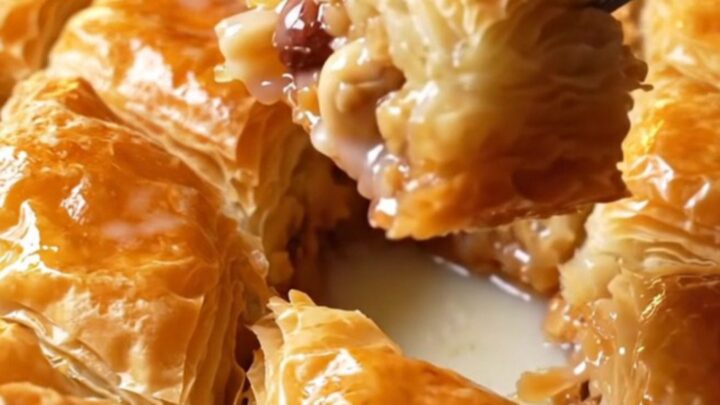
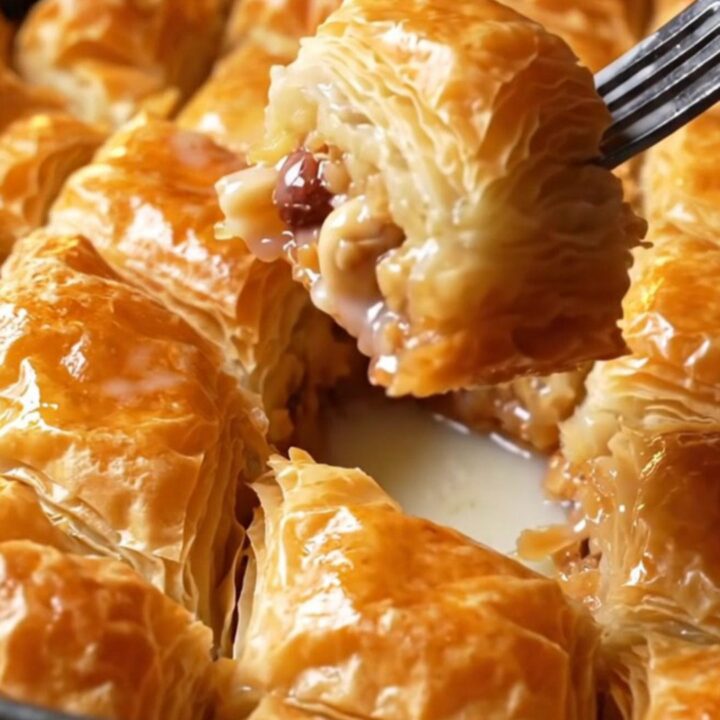
Serve Sütlü Nuriye chilled or at room temperature, arranged on a platter. Each diamond piece can be lifted with a fork, showing the flaky layers. A sprinkle of extra crushed hazelnuts on top adds a pleasant crunch and visual appeal. For a traditional touch, serve with Turkish tea or strong coffee.
This baklava is rich but lighter than classic versions, making it a lovely ending to a festive meal. It pairs beautifully with a dollop of clotted cream or a scoop of vanilla ice cream, though it is equally delicious on its own. The milk syrup keeps the pastry moist, so leftovers stay enjoyable for days.
Frequently asked questions
Can this baklava be made ahead of time?
Why is the milk syrup poured over the hot baklava?
Can you use regular butter instead of clarified butter?
How do you prevent the phyllo from drying out?
Can you skip the refrigeration step?
Turkish Sütlü Nuriye: Milk-Soaked Hazelnut Baklava
Ingredients
- 30 sheets paper-thin phyllo dough
- 1 cup clarified butter (sade yağ), melted
- 2 1/2 cups finely crushed roasted hazelnuts
- 2 cups whole milk
- 1 cup granulated sugar
- 1/2 cup water
Instructions
- Preheat the oven to 340°F (170°C). Brush the bottom and sides of a 9x13-inch baking pan with some of the melted clarified butter. Lay one sheet of phyllo in the pan, pressing it gently into the corners. Brush the sheet lightly with butter. Repeat with 14 more sheets, brushing each layer with butter, for a total of 15 buttered phyllo sheets.
- Evenly scatter the finely crushed roasted hazelnuts over the buttered phyllo base, covering the entire surface. Press the nuts gently into the butter so they adhere.
- Place another sheet of phyllo over the hazelnuts and brush with butter. Repeat with the remaining 14 phyllo sheets, brushing each layer with butter. Make sure the top layer is well-brushed to promote golden browning.
- Using a sharp knife, carefully cut the layered pastry into diamond shapes. Make cuts all the way through to the bottom of the pan, first in one diagonal direction, then the opposite, forming diamonds.
- Pour any remaining melted clarified butter evenly over the entire surface, especially into the cut lines. This ensures every layer gets butter and helps create crisp, flaky layers.
- Place the pan in the preheated oven and bake for 45 minutes, until the top is deep golden amber and the pastry is crisp. Rotate the pan halfway through for even browning.
- While the baklava bakes, combine the whole milk, granulated sugar, and water in a small saucepan. Bring to a gentle simmer over medium heat, stirring until the sugar dissolves. Simmer for 5 minutes, then remove from heat.
- Remove the baklava from the oven and immediately ladle the warm milk syrup evenly over the hot pastry. The syrup will sizzle as it is absorbed. Let the baklava cool completely in the pan, allowing the syrup to soak into every layer.
- Once the baklava has cooled to room temperature, refrigerate for at least 2 hours or overnight. This allows the milk syrup to fully infuse the layers. Serve chilled or at room temperature, lifting each diamond piece with a fork.
Estimated nutrition per serving
- Calories
- 420
- Protein
- 6 g
- Carbohydrates
- 35 g
- Fat
- 30 g
Next recipe
Crispy Turkish Tulumba Tatlısı in Lemon Syrup
See the recipe → →This recipe is based on a short cooking video and is published under the pen name Clara Weller. It was checked before publication, but errors can slip through. Nutrition, when shown, is an estimate. Read more in our editorial policy and on our food safety page.
More recipes to try
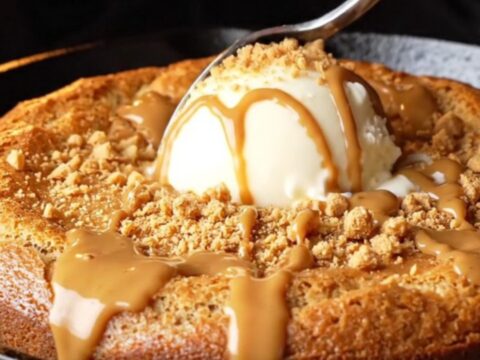
Molten Biscoff Skillet Lava Cake
Total time: 28 min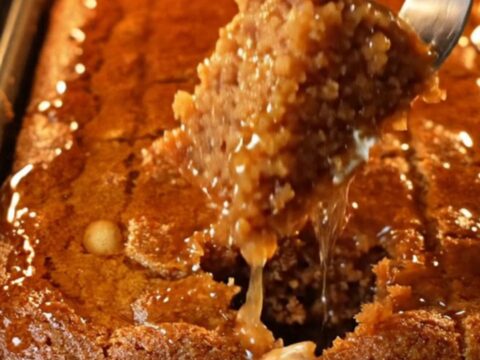
Turkish Şambali Tatlısı: Street-Style Semolina Cake with Roasted Peanuts
Total time: 1 h 30 min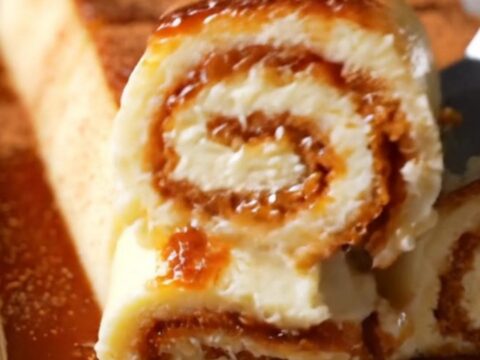
Turkish Kazandibi Burnt Milk Pudding with Caramelized Crust
Total time: 4 h 45 min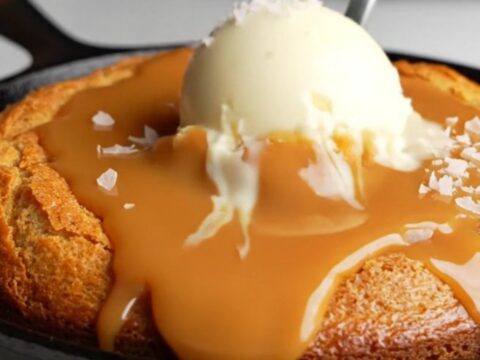
Molten Dulce de Leche Skillet Lava Cake
Total time: 23 min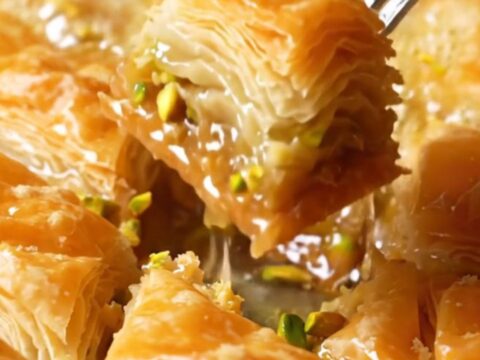
Crispy Antep Pistachio Baklava with Forty Phyllo Layers
Total time: 2 h 5 min