Desserts · Part 1 of 3: Ingredients
Turkish Şambali Tatlısı: Street-Style Semolina Cake with Roasted Peanuts
- Prep
- Cook
- Total
- Serves
- 12
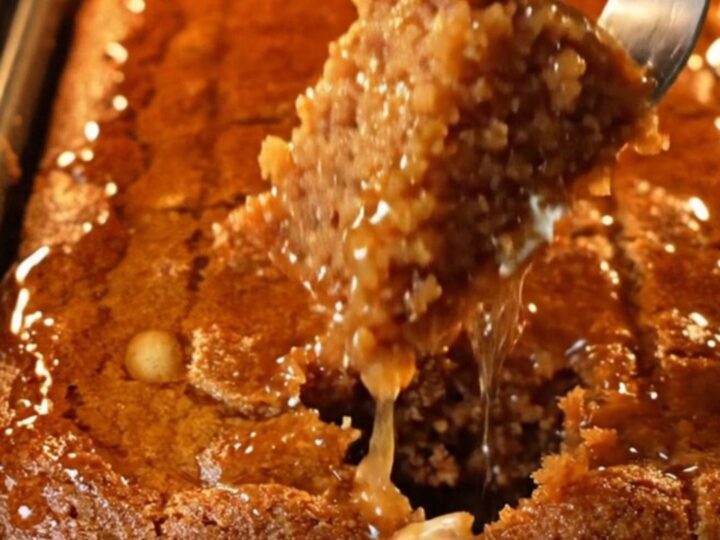
Imagine a dessert that sizzles when it meets syrup, a dense, chewy cake with a caramelized mahogany crust and roasted peanuts in every bite. That's Şambali Tatlısı, a beloved street food from Izmir, Turkey.
This recipe brings that authentic experience home: coarse semolina, yogurt, and sugar form a thick dough that bakes into a crackly-topped cake, then soaks up a bright lemon syrup while still hot. The result is a texture unlike any other—crisp edges, tender crumb, and a sweet-tart finish.
Şambali Tatlısı is a classic Turkish dessert that's popular on the streets of Izmir, where vendors sell it from trays gleaming with syrup. The cake is made from coarse semolina, which gives it a distinctive gritty-chewy texture, and it's studded with blanched peanuts for crunch.
The magic happens when hot cake meets cool syrup: the cake absorbs the liquid, becoming moist and intensely flavored. This recipe stays true to the street-style version, using simple ingredients and a straightforward method. The result is a dessert that's both rustic and sophisticated, perfect for anyone who loves Middle Eastern sweets.
Ingredients
- 3 cups coarse semolina
- 1 cup plain yogurt
- 1 cup granulated sugar
- 1 tsp baking soda
- 1 tsp fresh lemon juice
- 1/2 cup blanched split peanuts
Lemon Syrup
- 2 cups water
- 2 cups granulated sugar
- 1 tbsp fresh lemon juice
Why this recipe works
The combination of coarse semolina and yogurt creates a batter that bakes into a dense, sturdy cake—ideal for absorbing syrup without turning mushy.
The semolina's gritty texture provides a pleasant chew, while the yogurt adds moisture and a subtle tang that balances the sweetness. Baking at high heat caramelizes the top, forming a crackly, dark crust that contrasts beautifully with the syrup-soaked interior.
Pouring cool syrup over a hot cake is the key technique in many Turkish desserts. The temperature difference causes the cake to drink up the syrup evenly, infusing every bite with lemony sweetness.
Letting the cake rest after soaking allows the flavors to meld and the texture to stabilize, so each slice is perfectly moist and cohesive. This method yields a dessert that's both indulgent and refreshing.
Notes and substitutions
Coarse semolina is essential for the authentic texture; it's available in Middle Eastern or Mediterranean markets, or online. If you can only find fine semolina, mix it with a little all-purpose flour to mimic the graininess. Plain whole-milk yogurt gives the best flavor and moisture, but low-fat works too. The peanuts should be blanched (skins removed) and split; if unavailable, use blanched almonds.
A metal baking pan is recommended because it conducts heat well, helping the top caramelize evenly. The syrup should be completely cool before pouring over the hot cake—this is crucial for proper absorption. You can adjust the lemon juice to taste, but keep the syrup balanced so the sweetness doesn't overwhelm. For a nut-free version, omit the peanuts entirely; the cake will still be delicious.
- blanched split peanuts: blanched almonds, roughly chopped, for a different nutty crunch
- plain yogurt: Greek yogurt thinned with a little water, for a similar tang and moisture
- coarse semolina: fine semolina mixed with 1/4 cup all-purpose flour to mimic the texture
- fresh lemon juice: bottled lemon juice, if fresh is unavailable
Equipment
- 9x13-inch rectangular metal baking pan
- Mixing bowl
- Rubber spatula
- Knife for scoring
- Small saucepan for syrup
- Ladle
- Wire rack
Up next · Part 2 of 3
6 steps · 40 min of cooking · what to look for at each stage
Step-by-step instructions (Part 2)