Desserts · Part 3 of 3: Tips & recipe card
Turkish Şöbiyet Baklava with Clotted Cream & Pistachios Tips, FAQ & printable recipe
- Prep
- Cook
- Total
- Serves
- 12
Tips for success
For the most dramatic crispness, serve the baklava the same day it's made. The phyllo will stay crisp for up to two days, but the texture is best within the first 24 hours.
If you must store it, keep it in an airtight container at room temperature, and reheat in a 300°F (150°C) oven for 5 minutes to refresh the crispness. Avoid refrigerating, as it will make the layers soft.
When folding the triangles, don't be afraid to press the edges firmly to seal them. This prevents the filling from leaking out during baking.
Also, make sure the triangles are placed snugly in the pan; this helps them hold their shape and absorb the syrup evenly. For an extra touch, you can brush the tops with a little extra butter before baking for a deeper golden color.
Variations
- Chocolate Swirl: Add 2 tablespoons of unsweetened cocoa powder to the clotted cream mixture for a chocolate-pistachio version. Drizzle melted dark chocolate over the finished baklava for extra indulgence.
- Rosewater Aroma: Add 1 teaspoon of rosewater to the syrup along with the lemon juice. This floral note is classic in Middle Eastern desserts and pairs beautifully with pistachios.
- Almond Filling: Replace the pistachios with finely ground blanched almonds. Toast the almonds lightly before grinding to enhance their nutty flavor. Proceed with the recipe as written.
- Mini Bites: Instead of cutting 3-inch squares, cut smaller 1 1/2-inch squares and fold into tiny triangles. Reduce baking time to 25 minutes. Perfect for parties and finger food.
Storage and make-ahead
- Fridge
- Store in an airtight container at room temperature for up to 3 days.
- Freezer
- Freeze unbaked triangles on a baking sheet, then transfer to a freezer bag for up to 2 months.
- Reheat
- Reheat leftover baklava in a 300°F (150°C) oven for 5-7 minutes until crisp and warmed through. Avoid microwaving, which makes the phyllo soggy.
Store leftover baklava in an airtight container at room temperature for up to 3 days. To refresh crispness, reheat in a 300°F (150°C) oven for 5-7 minutes. Do not refrigerate, as the phyllo will become soggy. If the syrup has made the bottom layers soft, that's normal; the top layers should remain crisp.
You can assemble the baklava up to the point of baking, cover it with plastic wrap, and refrigerate for up to 24 hours. When ready to bake, let it sit at room temperature for 30 minutes, then bake as directed.
The syrup can also be made ahead and stored in the refrigerator for up to a week. Bring it to room temperature before using.
Serving ideas
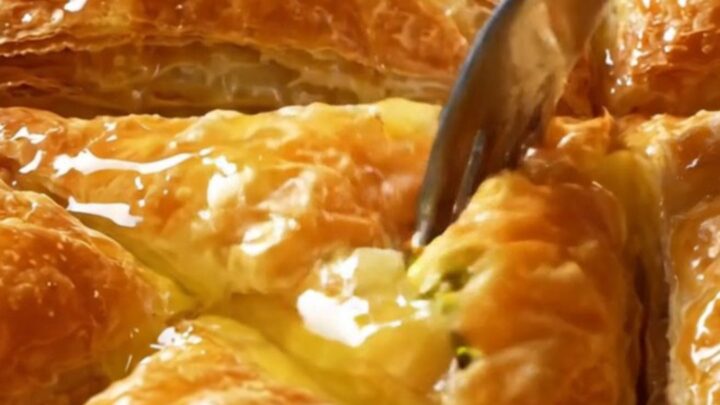
Serve the baklava warm or at room temperature. A fork is essential to break through the crisp layers without making a mess. Pair it with a cup of strong Turkish coffee or a glass of cold milk to balance the sweetness.
For a special presentation, place each triangle on a small plate and garnish with a dollop of kaymak or a scoop of vanilla ice cream.
The contrast of textures is the star: the shattering phyllo, the creamy center, and the crunchy pistachios. If you're serving a crowd, cut the triangles into smaller pieces before baking. This recipe makes 12 generous triangles, but they are rich, so smaller portions are often welcome. Store any leftovers as directed.
Frequently asked questions
Can this recipe be made without clarified butter?
What is the best substitute for kaymak (Turkish clotted cream)?
Why is the syrup poured cold over hot baklava?
Can this baklava be made ahead and frozen?
Why do the edges of your phyllo crack when folding?
Turkish Şöbiyet Baklava with Clotted Cream & Pistachios
Ingredients
- 20 sheets phyllo dough (about 14x18 inches each)
- 2/3 cup clarified butter, melted (150g)
- 7 oz Turkish clotted cream (kaymak) or thick semolina pudding, at room temperature
- 1/2 cup raw pistachios, finely ground, plus more for garnish
- 1 cup granulated sugar
- 1/2 cup water
- 1 tbsp fresh lemon juice
Instructions
- Heat the oven to 350°F (180°C). Brush a 9x13-inch baking pan with some of the clarified butter. Lay one sheet of phyllo in the pan, brush it evenly with butter. Repeat with 10 sheets, brushing each layer. Keep the remaining phyllo covered with a damp towel to prevent drying.
- In a small bowl, mix the clotted cream (or semolina pudding) with the ground pistachios until well combined. Spread this filling evenly over the phyllo stack, leaving a 1/2-inch border on all sides.
- Place the remaining 10 sheets of phyllo over the filling, brushing each sheet with clarified butter as before. Brush the top sheet generously with butter. Cover the pan with plastic wrap and refrigerate for 15 minutes to firm up the layers for easier cutting.
- Using a sharp knife, cut the chilled phyllo stack into 3-inch squares. You should get about 12 squares. Cut all the way through to the bottom of the pan.
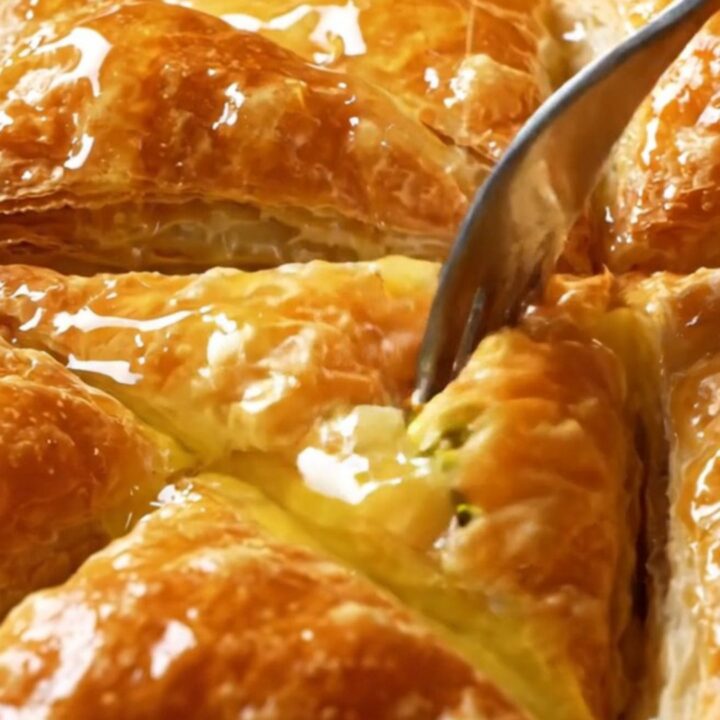
- Working with one square at a time, fold it diagonally to form a triangle, leaving one edge open so the creamy filling is exposed. Press the edges gently to seal the two closed sides. Place the triangles snugly in the pan, open edge facing up.
- Bake the baklava in the preheated oven for 35 minutes, or until the phyllo is puffed and deep golden brown all over. The filling should be hot and bubbling slightly at the edges.
- While the baklava bakes, combine the sugar, water, and lemon juice in a small saucepan. Bring to a boil over medium heat, stirring until the sugar dissolves. Reduce the heat and simmer for 5 minutes. Remove from heat and let cool completely.
- Remove the baklava from the oven and immediately ladle the cooled syrup evenly over the hot pastries. You'll hear a satisfying sizzle as the syrup hits the hot phyllo. Let the baklava absorb the syrup for at least 30 minutes before serving.
- Sprinkle the baklava with additional ground pistachios. Serve warm or at room temperature, with a fork to easily break through the crisp layers.
Estimated nutrition per serving
- Calories
- 420
- Protein
- 6 g
- Carbohydrates
- 45 g
- Fat
- 24 g
Next recipe
Antep Katmer with Maraş Ice Cream: Warm Crisp & Cold Stretch
See the recipe → →This recipe is based on a short cooking video and is published under the pen name Clara Weller. It was checked before publication, but errors can slip through. Nutrition, when shown, is an estimate. Read more in our editorial policy and on our food safety page.
More recipes to try
Crispy Pistachio Katmer: Quick Turkish Filo Pastry
Total time: 23 min
Crispy Pistachio Kadayıf with Stretchy Ice Cream
Total time: 50 min
Korean Candied Sweet Potatoes with Crispy Sugar Shell
Total time: 30 min
Pistachio Kunefe with Rose Cardamom Syrup
Total time: 55 min
Skillet Cinnamon Peach Cobbler with Buttermilk Biscuits
Total time: 1 h