Desserts · Part 3 of 3: Tips & recipe card
Tropical Mango Danish with Passionfruit Cream: Flaky, Golden and Ready in About One Hour Tips, FAQ & printable recipe
- Prep
- Cook
- Total
- Serves
- 6
Tips for success
Work quickly once the pastry is cut, and keep the cream cold while you assemble. Warm pastry becomes soft and loses its layers, so chill the tray for ten minutes before baking if the kitchen is warm. Pastry that has been chilled bakes higher and holds its shape better on the board.
Choose the sweetness by adjusting the sugar in the cream rather than the fruit. Ripe mango already carries a lot of natural sweetness, so taste the cream before folding in the whipped cream. A slightly tart cream balances the richness of the pastry and brings out the flavour of the passionfruit, which is the star of the topping.
Variations
- Mascarpone cream: Replace the cream cheese with mascarpone for a softer, slightly less tangy cream. Keep the same amount of confectioners' sugar and whipped cream, and fold gently so the filling stays light and smooth on the pastry.
- Vanilla passionfruit: Add a few drops of pure vanilla extract to the cream cheese mixture before folding in the whipped cream. The vanilla rounds the tartness of the passionfruit and gives the cream a warmer, more rounded flavour.
- Lime zest topping: Finely grate the zest of one lime over the passionfruit before serving. The bright citrus adds a fresh edge to the sweet mango and cream, and it works especially well with the toasted coconut on top.
- Mini danish: Cut the puff pastry into smaller squares for bite-sized danish. Bake them for a shorter time, checking after 10 minutes, and reduce the cream and fruit per piece so they stay neat and crisp.
Storage and make-ahead
- Fridge
- Refrigerate leftover danish in an airtight container for up to two days. Keep the cream and fresh fruit toppings separate until serving.
- Freezer
- Freezing is not recommended for the finished danish, because the cream and fresh fruit lose their texture.
- Reheat
- Warm the danish in a 350°F (175°C) oven for 5 to 8 minutes to refresh the pastry.
Store leftover danish in an airtight container at room temperature for up to one day, or in the refrigerator for up to two days. Refrigerate any leftover cream separately, and keep the diced mango and passionfruit covered in the refrigerator.
Cool the baked pastries for no more than two hours before they go into the refrigerator, so the crisp layers do not steam. When you store them, keep the fresh fruit toppings separate from the pastry if possible, which keeps the base crisp and the mango fresh for the next serving.
You can prepare the passionfruit cream up to one day ahead and keep it covered in the refrigerator. Toast the coconut a day before and store it in an airtight jar. Cut the pastry and score the borders in advance, then keep the rectangles chilled on the parchment until you are ready to fill them.
Dice the mango and cut the passionfruit on the day you bake, so the fruit stays bright. Assemble and bake the danish just before serving, since the pastry is best eaten warm with a crisp base and a fresh topping.
Serving ideas
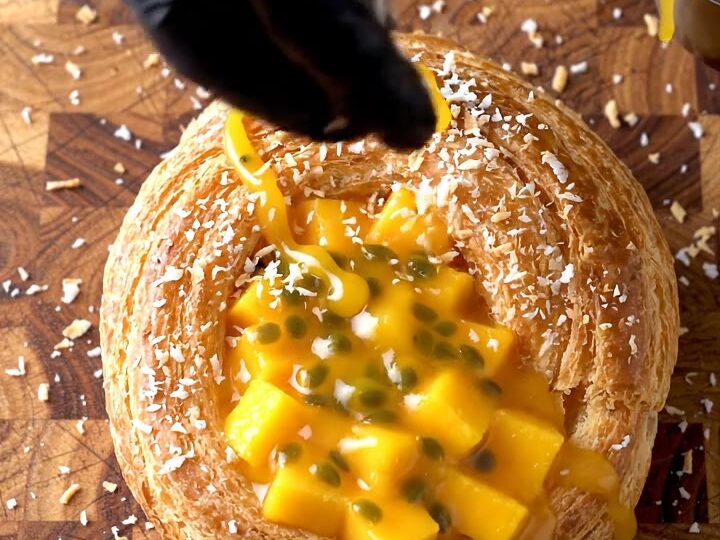
Serve the danish warm or at room temperature on a wooden board, with the golden pastry, glossy juices and bright passionfruit visible on top.
Arrange the pieces in a single layer so each layer of pastry stays crisp, and set a small spoon beside them for the extra passionfruit. A plate of fresh fruit or a small bowl of extra toasted coconut makes an attractive addition for guests who like more texture.
These danish pair well with coffee, iced tea or a light sparkling drink for an afternoon treat. For a dessert table, cut the pastry into smaller squares so guests can take one or two pieces.
Because the topping is fresh, present the danish soon after the final garnish and keep any leftover fruit covered until guests have taken their share.
Frequently asked questions
Can you use frozen mango for this recipe?
How do you know when the pastry is baked through?
Can the cream be made without whipping cream?
Why did your pastry come out soggy underneath?
Can the danish be made in advance for a party?
Tropical Mango Danish with Passionfruit Cream: Flaky, Golden and Ready in About One Hour

Ingredients
- 1 sheet store-bought puff pastry, thawed
- 2 ripe mangoes, peeled and pitted
- 3 ripe passionfruit, halved
- 4 oz cream cheese, softened
- 1/2 cup heavy cream, cold
- 1/4 cup confectioners' sugar
- 1/4 cup shredded coconut, toasted
- 1 egg, beaten, for brushing
Instructions
- Wearing gloves, peel the mangoes and cut the flesh away from the stone. Score the flesh into cubes without piercing the skin, then cut half of the mango into small dice for the topping. Slice the rest into thin wedges. Halve the passionfruit and scoop the pulp and seeds into a small bowl.
- Toast the shredded coconut in a dry pan over medium heat until pale golden, then set it aside. In a bowl, beat the softened cream cheese with the confectioners' sugar until smooth. In a separate bowl, whip the cold heavy cream to soft peaks, then fold it gently into the cream cheese mixture.
- Unroll the puff pastry on a lightly floured board and cut it into six rectangles. Arrange them on a parchment-lined tray and score a border about 1/2 inch inside each edge. Spread a layer of the passionfruit cream inside each border.
- Fan the mango wedges over the cream on each pastry. Spoon a little passionfruit pulp with seeds across the mango and cream. Brush the pastry borders lightly with the beaten egg.
- Bake the danish in the middle of the oven at 400°F (200°C) for 15 to 20 minutes, until the pastry is deeply golden and puffed around the cream. Cool on the tray for 10 minutes before moving them to a board.
- Scatter the diced mango over the warm danish, spoon over the remaining passionfruit pulp and seeds, and sprinkle with the toasted coconut. Serve on a board while the pastry is still crisp.
Estimated nutrition per serving
- Calories
- 420
- Protein
- 5 g
- Carbohydrates
- 44 g
- Fat
- 25 g
- Fiber
- 2 g
- Sugar
- 22 g
- Sodium
- 280 mg
Next recipe

Honeycomb Dark Chocolate Bark Bars for Easy Make-Ahead Treats
See the recipe → →This recipe is based on a short cooking video and is published under the pen name Clara Weller. It was checked before publication, but errors can slip through. Nutrition, when shown, is an estimate. Read more in our editorial policy and on our food safety page.
More recipes to try

Chai-Spiced Pear Cake with Salted Caramel Mascarpone
Total time: 2 h 5 min
Chocolate Almond Kringle: Flaky Braided Danish Ring with Dark and Milk Chocolate
Total time: 1 h 30 min
Triple Chocolate Salted Caramel Brownie Bars with Caramel Swirls
Total time: 3 h
Pistachio Rose Milk Chocolate Bars You Can Make in One Afternoon
Total time: 1 h 35 min
Pistachio Kataifi Croissant Bake with Dark Chocolate Shards
Total time: 1 h