Desserts · Part 3 of 3: Tips & recipe card
Torched Banana Brûlée Custard Tart with Dark Rum Caramel Tips, FAQ & printable recipe
- Prep
- Cook
- Total
- Serves
- 8
Tips for success
For the best banana flavor, use very ripe bananas with brown spots for the puree—they are sweeter and more aromatic. Roasting them intensifies their natural sugars and adds a subtle caramel note.
If you don't have a kitchen torch, you can caramelize the sugar under a preheated broiler, but watch it closely to avoid burning. Place the tart on a baking sheet and broil for 1-2 minutes, rotating as needed, until the sugar is melted and golden.
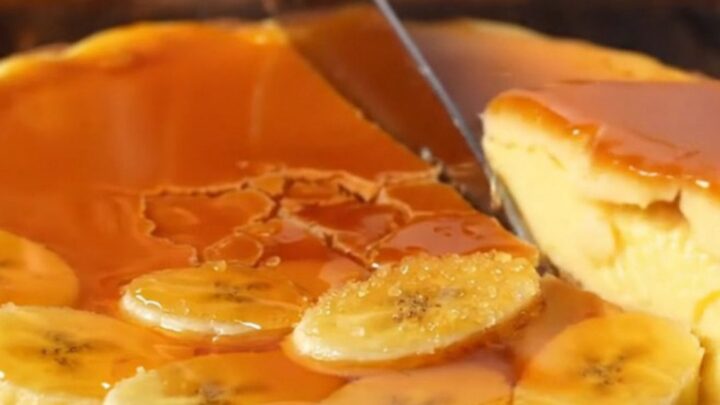
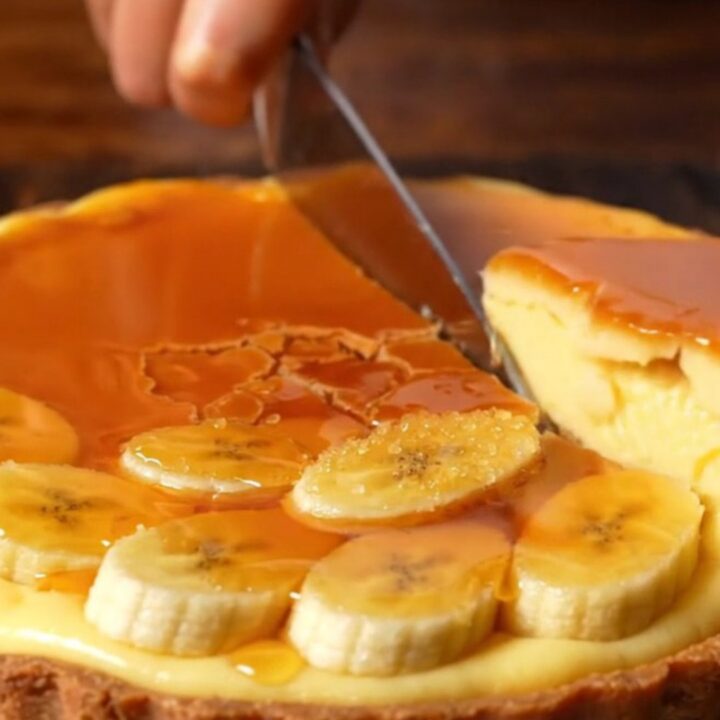
To get clean slices, use a sharp, thin-bladed knife and wipe it clean between cuts. You can also dip the knife in hot water and dry it before each slice. If the sugar crust cracks while slicing, that's part of the charm—each wedge will have its own unique crackle pattern.
Serve the tart at room temperature for the best texture, and if you have leftovers, store them in the refrigerator and re-crisp the sugar with a torch before serving.
Variations
- Chocolate Banana Brûlée: Add 60 g (2 oz) chopped dark chocolate to the warm cream before whisking into the custard. Omit the rum and add 1/2 teaspoon vanilla extract. The chocolate pairs beautifully with the roasted banana and caramelized sugar.
- Spiced Rum Tart: Replace the aged dark rum with spiced rum and add 1/4 teaspoon ground cinnamon and a pinch of nutmeg to the custard. The warm spices complement the banana and add a cozy, autumn feel.
- Caramel Sauce Drizzle: After torching the sugar, drizzle the tart with a little warm salted caramel sauce just before serving. The extra caramel adds a rich, buttery note that enhances the banana and rum flavors. Use a store-bought sauce or make a quick homemade one.
- Nutty Crunch: Sprinkle 2 tablespoons of finely chopped toasted pecans or walnuts over the banana slices before adding the turbinado sugar. The nuts add a toasty crunch that contrasts with the creamy custard and crackling sugar.
Storage and make-ahead
- Fridge
- Store leftover tart in the refrigerator for up to 3 days. Cover loosely with plastic wrap or foil.
- Freezer
- The baked, cooled tart (without banana topping and sugar) can be frozen for up to 1 month. Wrap tightly in plastic wrap and foil.
- Reheat
- To restore the crisp sugar crust, use a kitchen torch to re-caramelize the topping.
Store leftover tart in the refrigerator, loosely covered, for up to 3 days. The sugar crust will soften over time, so if you want to restore the crackle, re-torch the sugar just before serving. Keep the tart away from strong odors in the fridge, as it can absorb them. For best quality, serve within 24 hours.
The tart can be fully assembled and baked a day ahead. Cool completely, then cover and refrigerate without the sugar topping. When ready to serve, let the tart come to room temperature, arrange the banana slices, and torch the sugar just before serving. The custard can also be made a day ahead and stored in the refrigerator, but bring it to room temperature before baking.
Serving ideas
Serve the tart as the grand finale to a dinner party, cut into elegant wedges. A dollop of lightly sweetened whipped cream or a scoop of vanilla ice cream would be lovely, but the tart is also delicious on its own.
Pair it with a small glass of dark rum or a strong coffee to echo the flavors in the custard. The contrast of the crackling sugar and the creamy custard is best enjoyed immediately after torching.
For a casual gathering, you can pre-slice the tart and let guests help themselves. The tart can be served at room temperature, but the sugar crust is most dramatic when freshly torched.
If you're serving a crowd, consider making two tarts—this one tends to disappear quickly. The tart also makes a beautiful centerpiece on a dessert table, with its glossy amber top and golden custard visible in each slice.
Frequently asked questions
Can this tart be made without a kitchen torch?
What is the best way to get clean slices?
Can the custard be made with regular milk instead of heavy cream?
Why does your custard sometimes curdle or become watery?
Can this tart be frozen after baking?
Torched Banana Brûlée Custard Tart with Dark Rum Caramel
Ingredients
- 1 baked sweet tart shell (9-inch)
- 300 g roasted banana puree
- 4 large egg yolks
- 300 ml heavy cream
- 70 g brown sugar
- 20 ml aged dark rum
- 2 ripe bananas, sliced
- 50 g turbinado sugar
Instructions
- In a large bowl, whisk the roasted banana puree, egg yolks, heavy cream, brown sugar, and aged dark rum until completely smooth and the sugar has dissolved. The mixture should look like a thick, creamy milkshake with no streaks of yolk or sugar.
- Heat the oven to 330°F (165°C). Place the baked tart shell on a baking sheet to catch any drips.
- Pour the custard mixture into the baked tart shell, filling it to just below the rim. Smooth the top with a spatula if needed.
- Bake for 30 minutes, or until the custard is set around the edges but still slightly wobbly in the center. The top should be lightly golden. Remove from the oven and let cool completely on a wire rack, about 2 hours. The custard will continue to set as it cools.
- Once the tart is completely cool, arrange the banana slices in a spiral pattern on top, starting from the outside edge and working inward. Overlap them slightly for full coverage.
- Sprinkle the turbinado sugar evenly over the banana slices. Use a kitchen torch to caramelize the sugar until it melts and turns deep amber, moving the flame constantly to avoid burning. Let the sugar harden for a minute before serving.
- Slice the tart with a sharp knife, dipping it in hot water and wiping it dry between cuts for clean slices. Serve immediately while the sugar crust is crisp.
Estimated nutrition per serving
- Calories
- 420
- Protein
- 5 g
- Carbohydrates
- 52 g
- Fat
- 21 g
Next recipe

Silky Hong Kong Egg Tarts with Flaky Pastry
See the recipe → →This recipe is based on a short cooking video and is published under the pen name Clara Weller. It was checked before publication, but errors can slip through. Nutrition, when shown, is an estimate. Read more in our editorial policy and on our food safety page.
More recipes to try
Silky French Crème Caramel Flan with Amber Caramel
Total time: 7 h 5 min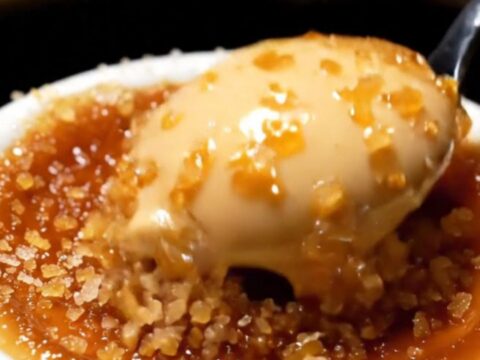
Espresso Kahlúa Crème Brûlée with Torched Sugar Crust
Total time: 55 min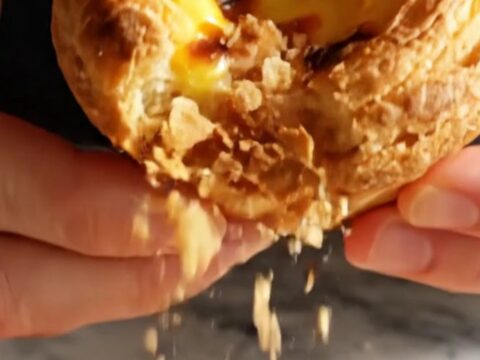
Crispy Portuguese Pastel de Nata Tarts from Scratch
Total time: 1 h 27 min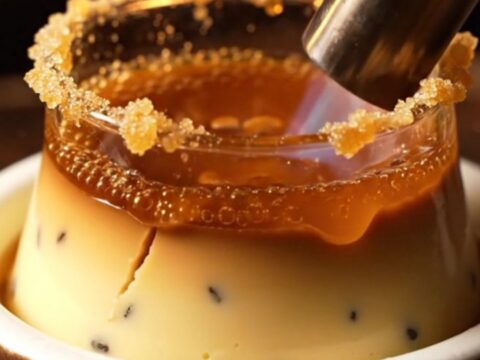
Classic Crème Brûlée with a Perfect Glassy Sugar Crust
Total time: 4 h 55 min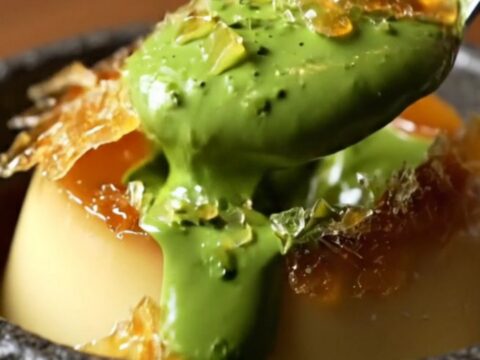
Earthy Uji Matcha Crème Brûlée with a Shattering Sugar Crust
Total time: 4 h 55 min