Desserts · Part 1 of 3: Ingredients
Silky Hong Kong Egg Tarts with Flaky Pastry
- Prep
- Cook
- Total
- Serves
- 12
Achieving the perfect Hong Kong egg tart is a balance of craftsmanship and precision, resulting in a dessert that is as beautiful to look at as it is to eat. This recipe brings the authentic experience of a traditional bakery right into your home, focusing on the essential techniques that define this beloved classic.
By mastering the delicate pastry and the silky custard, you can recreate that iconic melt-in-your-mouth sensation that defines high-quality egg tarts found in the heart of Hong Kong.
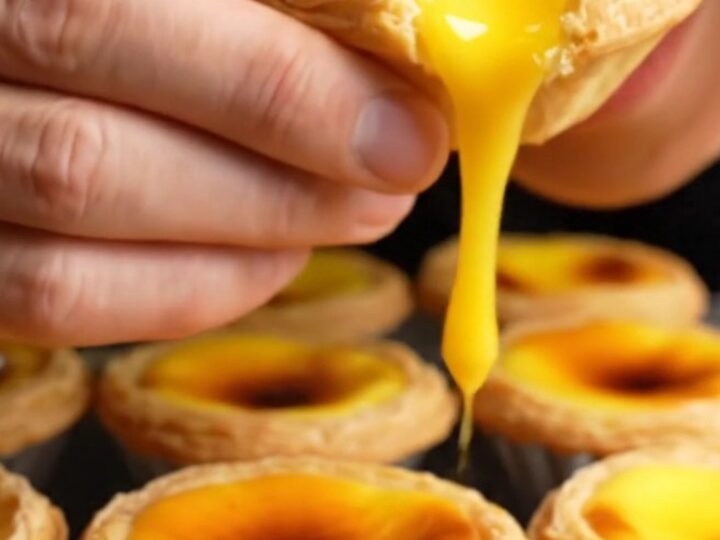
The Hong Kong egg tart, or dan tat, is a masterpiece of texture and flavor. It is defined by its two primary components: a shell that is incredibly flaky and buttery, and a custard that is smooth, glossy, and light. Unlike some versions that are dense, the goal here is a custard that trembles when touched and offers a pure, eggy richness that is never overly sweet.
This recipe follows the traditional method of straining the custard multiple times to ensure that the final result is completely free of bubbles and imperfections, providing that signature mirror-like finish that every baker strives for. Whether you are serving these for a special afternoon tea or simply indulging in a homemade treat, these tarts are sure to impress.
Ingredients
Pastry
- 300 g butter-lard flaky pastry
Custard
- 4 eggs
- 100 g sugar
- 200 ml hot water
- 80 ml evaporated milk
Why this recipe works
The method of triple-straining the custard is the most important step for achieving a professional-grade result. By removing all air bubbles and tiny protein strands from the egg mixture, the custard is able to set into a perfectly smooth and uniform gel.
This ensures that when the tart is bitten into, the texture is consistent from the first bite to the last, without any grainy patches or air pockets that can ruin the mouthfeel.
Propping the oven door slightly ajar during the final minutes of baking is a clever baker's trick that manages the internal oven temperature. By allowing a small amount of heat to escape, the custard is prevented from boiling or bubbling as it sets. This slow, gentle finish is what gives the surface its iconic, mirror-like gloss and prevents the custard from cracking or puffing up, keeping it perfectly flat and elegant.
Notes and substitutions
For the best results, use high-quality butter-lard pastry. The combination of butter and lard provides a superior flake compared to using butter alone, giving the crust its characteristic light and crispy texture. If you are unable to find this specific pastry, a high-quality puff pastry can be used as a substitute, though the final texture may vary slightly in its complexity and richness.
The equipment used here is quite simple, but using the right size fluted tart tins is essential for the baking time to be accurate. Ensure your tins are clean and lightly greased if necessary, though the fat content in the pastry usually prevents sticking.
A fine mesh strainer is non-negotiable; do not skip the triple-straining step, as it is the only way to guarantee that professional, bubble-free, silky custard that defines the authentic Hong Kong style.
- butter-lard flaky pastry: store-bought puff pastry
Equipment
- fluted tart tins
- mixing bowl
- whisk
- fine mesh strainer
- oven
Up next · Part 2 of 3
3 steps · 20 min of cooking · what to look for at each stage
Step-by-step instructions (Part 2)