Desserts · Part 1 of 3: Ingredients
Crispy Portuguese Pastel de Nata Tarts from Scratch
- Prep
- Cook
- Total
- Serves
- 12
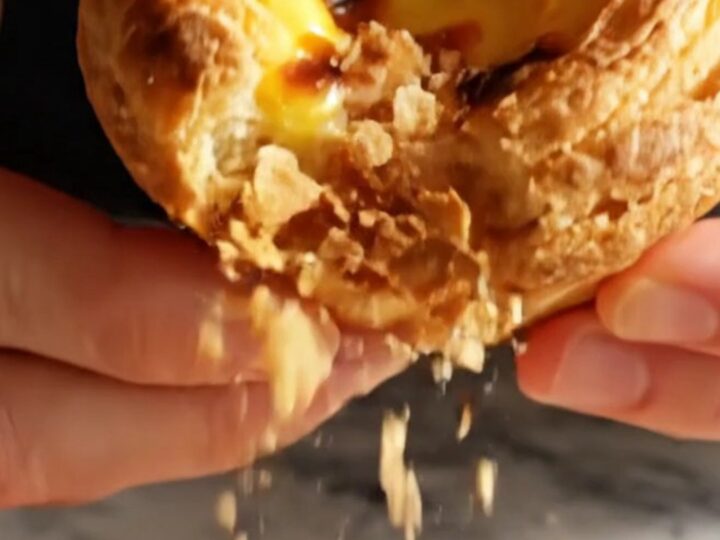
These homemade Portuguese custard tarts deliver the same shattering, blistered magic as the ones from a Lisbon pasteleria. The spiral pastry is buttery and crisp, while the custard is silky with cinnamon and lemon.
Baked at a scorching 500°F, they develop dark caramelized spots and a satisfying crunch. A dusting of cinnamon and confectioners' sugar seals the deal.
Pastel de nata is Portugal's most famous pastry: a crisp, flaky shell filled with a creamy, caramelized egg custard. The key is a very hot oven that blisters the top while keeping the center soft.
This recipe uses store-bought puff pastry to simplify the process, but the results are remarkably authentic. The spiral shape and the cinnamon-lemon infusion give the tarts their signature look and flavor.
Ingredients
- 1 lb all-butter puff pastry, thawed
- 4 tbsp unsalted butter, melted
Custard
- 1 cup whole milk
- 1 cinnamon stick
- 1 strip lemon peel
- 1 cup granulated sugar
- 1/4 cup water
- 6 large egg yolks
- 1 tsp ground cinnamon, for dusting
- 1 tbsp confectioners' sugar, for dusting
Why this recipe works
The high oven temperature is non-negotiable. At 500°F, the pastry puffs rapidly into hundreds of delicate layers, while the custard sets quickly, creating a blistered, caramelized top.
The contrast between the crunchy shell and the creamy filling is what makes pastel de nata so addictive.
Using a cinnamon stick and lemon peel in the milk infuses the custard with a subtle warmth that complements the rich egg yolks.
The sugar syrup ensures the custard is sweet but not cloying, and the straining step guarantees a silky texture without any lumps.
Notes and substitutions
Use a high-quality all-butter puff pastry for the best flavor and flakiness. Avoid puff pastry made with oils, as it won't crisp as well. Make sure the pastry is properly thawed but still cold before rolling and shaping.
The custard can be made ahead and refrigerated for up to a day, but the tarts are best baked fresh. If you have a convection oven, reduce the temperature to 475°F and check for doneness a minute earlier.
- all-butter puff pastry: Use a high-quality frozen puff pastry (look for one with butter as the first ingredient). Avoid puff pastry made with oils, as it won't shatter as crisply.
- whole milk: For a richer custard, substitute 1/2 cup whole milk and 1/2 cup heavy cream. The texture will be even silkier.
- cinnamon stick: Use 1/2 teaspoon ground cinnamon in the milk if you don't have a stick, but the flavor will be more diffuse.
- granulated sugar: You can use superfine sugar for the syrup; it dissolves faster and the syrup is less likely to crystallize.
Equipment
- 12-cup muffin tin
- rolling pin
- medium saucepan
- whisk
- pastry brush
- fine-mesh strainer
Up next · Part 2 of 3
8 steps · 12 min of cooking · what to look for at each stage
Step-by-step instructions (Part 2)