Desserts · Part 2 of 3: Instructions
Torched Banana Brûlée Custard Tart with Dark Rum Caramel Step-by-step instructions
- Prep
- Cook
- Total
- Serves
- 8
Before you start
Before starting, make sure the tart shell is fully baked and cooled. Roast the bananas for the puree if you haven't already—this can be done up to two days ahead and stored in the refrigerator. The custard ingredients should be at room temperature to ensure a smooth mixture.
Have all your equipment ready: a large mixing bowl, a whisk, a baking sheet, and a kitchen torch. If you're using a homemade tart shell, blind-bake it and let it cool completely.
Preheat the oven to 330°F (165°C) when you're ready to bake. The tart will need to cool completely after baking, so plan for at least two hours of cooling time before topping and serving.
Ingredients at a glance (8)
- 1 baked sweet tart shell (9-inch)
- 300 g roasted banana puree
- 4 large egg yolks
- 300 ml heavy cream
- 70 g brown sugar
- 20 ml aged dark rum
- 2 ripe bananas, sliced
- 50 g turbinado sugar
Instructions
Mixing the Custard
- Prepare the CustardIn a large bowl, whisk the roasted banana puree, egg yolks, heavy cream, brown sugar, and aged dark rum until completely smooth and the sugar has dissolved. The mixture should look like a thick, creamy milkshake with no streaks of yolk or sugar.Look for The custard is smooth and slightly thickened, with a pale tan color from the banana.Safe temperature 160°F (71°C) internal temperature (egg dishes)Tip Make sure the banana puree is not too hot when whisking with the yolks, or the eggs may curdle. Let it cool to room temperature first.
- Preheat the OvenHeat the oven to 330°F (165°C). Place the baked tart shell on a baking sheet to catch any drips.Look for The oven is ready when the temperature is steady.Tip Using a baking sheet makes it easier to move the tart in and out of the oven.
The custard mixture should be smooth and uniform, with a pale golden color from the banana and brown sugar. It should coat the back of a spoon lightly. The aroma is sweet and slightly boozy from the rum. Whisk until no streaks of yolk or sugar remain. If you see any lumps, strain the mixture through a fine-mesh sieve before pouring into the shell.
Baking to Velvety Set
- Fill the Tart ShellPour the custard mixture into the baked tart shell, filling it to just below the rim. Smooth the top with a spatula if needed.Look for The shell is filled but not overflowing.Tip If you have extra custard, do not overfill—bake the extra in a small ramekin.
- Bake the TartBake for 30 minutes, or until the custard is set around the edges but still slightly wobbly in the center. The top should be lightly golden. Remove from the oven and let cool completely on a wire rack, about 2 hours. The custard will continue to set as it cools.Look for The custard is set at the edges and barely jiggles in the center when gently shaken.Safe temperature 160°F (71°C) internal temperature (egg dishes)Tip Do not overbake—the center should be just set, as it will firm up as it cools.
After baking, the custard should be set around the edges and slightly soft in the center. The top should be lightly browned and the kitchen will smell of roasted banana and caramel. Let the tart cool completely on a wire rack. The custard will firm up as it cools, becoming velvety and sliceable. Check that the center is not liquid before proceeding.
Torching the Sugar Crust
- Arrange the BananasOnce the tart is completely cool, arrange the banana slices in a spiral pattern on top, starting from the outside edge and working inward. Overlap them slightly for full coverage.Look for The bananas cover the entire surface in a neat spiral.Tip Use ripe but firm bananas so they hold their shape during torching.
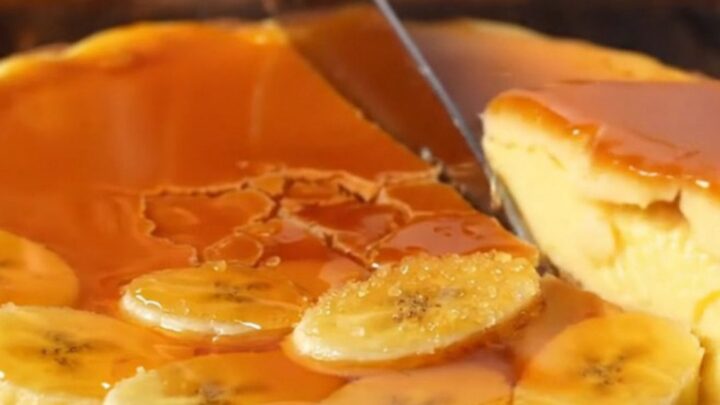
- Torch the SugarSprinkle the turbinado sugar evenly over the banana slices. Use a kitchen torch to caramelize the sugar until it melts and turns deep amber, moving the flame constantly to avoid burning. Let the sugar harden for a minute before serving.Look for The sugar is melted, bubbling, and a deep golden brown.Tip Keep the torch moving in small circles for even caramelization. If the sugar starts to burn in spots, lift the flame higher.
- Slice and ServeSlice the tart with a sharp knife, dipping it in hot water and wiping it dry between cuts for clean slices. Serve immediately while the sugar crust is crisp.Look for The knife cuts through the crackling sugar and creamy custard.Tip For the cleanest cuts, use a thin-bladed knife and press down gently.
After torching, the sugar should be melted into a glassy, deep amber crust. Tap it gently with a spoon to hear a crisp crack. The banana slices underneath should remain intact and not overcooked. The tart is ready to slice and serve immediately, while the sugar is still brittle and the custard is cool and creamy.
Common mistakes
One common mistake is overbaking the custard, which can cause it to curdle or become rubbery. The center should still have a slight jiggle when you remove it from the oven; it will set as it cools. Another issue is using cold ingredients, which can cause the custard to separate. Let the cream and eggs come to room temperature before whisking.
When torching the sugar, be careful not to hold the flame too close to the bananas, or they will cook and become mushy. Move the torch constantly and keep the flame about two inches away. Finally, don't skip the cooling step—a warm custard will make the sugar melt unevenly and the tart may fall apart when sliced.
How to tell it’s done
The tart is done when the custard is set around the edges and the center is just barely wobbly—it should not look liquid. A knife inserted near the center should come out mostly clean, with a slightly moist tip. The internal temperature of the custard should reach 160°F (71°C) to ensure the eggs are fully cooked.
After cooling, the custard should be firm enough to slice cleanly. The torched sugar should be deep amber and hard to the touch; it will crack when you tap it with a spoon. Let the tart cool completely before slicing, and serve at room temperature for the best texture.
- Egg dishes: 160°F (71°C) in the thickest part
Up next · Part 3 of 3
4 variations · storage & make-ahead · 5 answers · printable card
Tips, FAQ & printable recipe (Part 3)← Back to the ingredients (Part 1)