Dinner · Part 3 of 3: Tips & recipe card
Taiwan Mazesoba with Five-Spice Pork Chop — a No-Broth Noodle Bowl in Under an Hour Tips, FAQ & printable recipe
- Prep
- Cook
- Total
- Serves
- 2
Tips for success
Speed comes from sequencing, not from rushing. Cook the minced pork sauce first and let it sit in the skillet off the heat — it reheats in a minute while the noodles boil, and a sauce that rests tastes rounder. Warm the garlic-scallion oil in the smallest pan available so the aromatics stay submerged and gentle. Warm the serving bowls under hot tap water; a cold bowl steals heat from the noodles in seconds, and lukewarm noodles lose their grip on the sauce.
Taste as you layer salt. Doubanjiang, soy sauce, and fish powder each bring their own salinity, and together they can overshoot fast. Build the sauce to taste slightly strong, then judge the finished bowl only after the toss, when the noodles have diluted everything.
If the heat needs taming, an extra yolk does the job more gracefully than sugar. If the bowl needs brightness at the end, a scatter of the reserved scallion greens does it without touching the salt balance.
Variations
- Extra fire: Stir a teaspoon of chili oil or a pinch of ground Sichuan pepper into the finished minced pork sauce, and add a few extra drops of chili crisp over the yolk just before mixing for a bowl that runs noticeably hotter.
- Melted cheese style: In the Nagoya fashion, scatter a small handful of shredded mozzarella over the hot tossed noodles before adding the toppings, let it soften for a minute, then assemble — the cheese stretches through the tangle and mellows the chili heat.
- Mushroom version: Replace the pork chop with thick slices of king oyster mushroom seared in the same five-spice rub, and simmer finely chopped mushrooms with the doubanjiang in place of the ground pork for a deeply savory meatless bowl.
- Double yolk: Add a second yolk to each bowl and a touch less soy sauce in the sauce; the extra yolk stretches the sauce further and turns the whole tangle richer and glossier without any added salt.
Storage and make-ahead
- Fridge
- Components keep 3 days refrigerated in separate airtight containers; assemble only at serving time.
- Freezer
- The minced pork sauce freezes well for 2 months; thaw overnight in the refrigerator. Noodles and chop are best fresh.
- Reheat
- Reheat the sauce in a skillet with a splash of water until glossy; warm the chop in a 350°F (175°C) oven for 8 minutes to keep the crust crisp.
Mazesoba is a cook-and-eat dish, and the assembled bowl does not keep — tossed noodles turn dense within the hour. Store components instead: within two hours of cooking, move the minced pork sauce, sliced chop, and garlic-scallion oil to separate airtight containers and refrigerate them.
Keep the noodles unsauced in a lightly oiled container so they stay separable. Everything holds well for three days, and the yolk stays in its shell until the moment of serving.
The minced pork sauce is the ideal make-ahead component: cook it up to three days in advance and reheat it gently in a skillet with a splash of water until it loosens and glosses again.
The garlic-scallion oil also keeps three days refrigerated in a jar; warm it briefly before tossing so it flows. The chop is best fried the day it is eaten, but the five-spice rub can go on the night before, held covered in the refrigerator. Noodles and yolks wait until serving time.
Serving ideas
Serve the bowls the second the yolk is pierced. Give each diner chopsticks and set a spoon on the side for anyone who prefers to scoop the last of the sauce; a mazesoba bowl should be lifted to the lips at the end, a small ritual that rewards the cook.
The reserved scallion greens scattered over the top at the table add a fresh snap against the rich, glossy noodles, and the reserved chop juices drizzled during the mix deepen everything without any extra work.
Round out the meal with something cold and plain on the side — a simple cucumber salad or a glass of iced barley tea cuts the chili heat and resets the palate between bites. Because the bowl is rich and assertive, keep the rest of the table quiet: steamed rice is unnecessary, and one bold dish served loud is the point. Two bowls feed two hungry adults as a full dinner; halved portions make a striking starter for four.
Frequently asked questions
Why does mazesoba have no broth?
Can the minced pork sauce be made ahead?
Is the raw egg yolk safe to eat?
What noodles work best for this recipe?
Can the pork chop be cooked in an air fryer?
Taiwan Mazesoba with Five-Spice Pork Chop — a No-Broth Noodle Bowl in Under an Hour
Ingredients
- 8 oz bone-in pork chop, about 1 inch thick
- 1 tsp five-spice powder
- 7 oz ground pork
- 3 garlic cloves, minced
- 1 tbsp doubanjiang (chili bean paste)
- 2 tbsp soy sauce
- 3 tbsp neutral oil, divided
- 3 scallions, whites sliced, greens reserved
- 12 oz thick ramen-style noodles
- 2 tsp fish powder
- 2 nori sheets, torn
- 2 egg yolks, kept cold until serving
Instructions
- Pat the pork chop completely dry with paper towels, then rub it on both sides with the five-spice powder and a pinch of salt. Slide it onto a small plate, cover, and keep it in the refrigerator while the sauce comes together rather than leaving it on the counter.
- Set a skillet over medium heat and add the ground pork, breaking it up with a spatula. Once it loses its pink color, stir in the garlic, doubanjiang, and soy sauce. Simmer five to six minutes, until the sauce is dark, thick, and glossy and the pork registers 160°F (71°C) throughout.
- Heat a tablespoon of the neutral oil in a second skillet over medium-high. Lay the chop in and leave it undisturbed for three to four minutes, until deeply golden, then flip and cook the other side. Check with an instant-read thermometer: 145°F (63°C) at the thickest point, then let it rest at least 3 minutes before slicing.
- Pour the remaining oil into a small saucepan set over low heat. Add the sliced scallion whites and half the minced garlic, then warm gently for three to four minutes, swirling often, until the oil smells sweet and the scallions soften without taking on any color.
- Slice the rested pork chop crosswise into half-inch strips, working parallel to the bone so each piece keeps a strip of crust. Set the slices aside and reserve any juices that collect on the board for drizzling over the finished bowls.
- Bring a large pot of salted water to a rolling boil and cook the noodles until springy with a firm bite, about three to four minutes for fresh, longer for dried. Drain well and shake the colander hard — wet noodles dilute the sauce and kill the toss.
- Return the hot drained noodles to the empty pot off the heat. Add the garlic-scallion oil and the fish powder and toss with tongs for a full thirty seconds, until every strand glistens and the fish powder dissolves into a thin, even sheen.
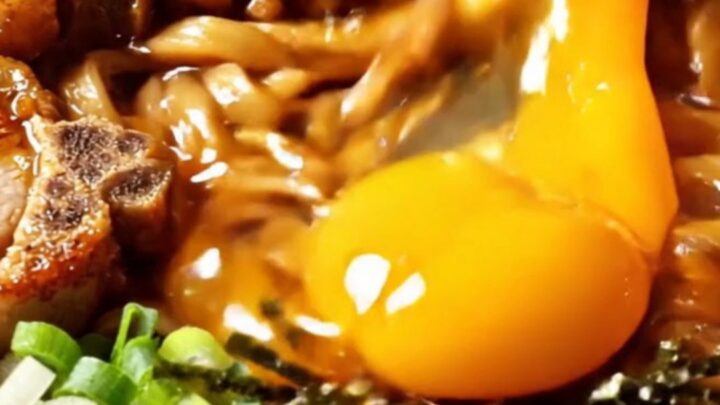
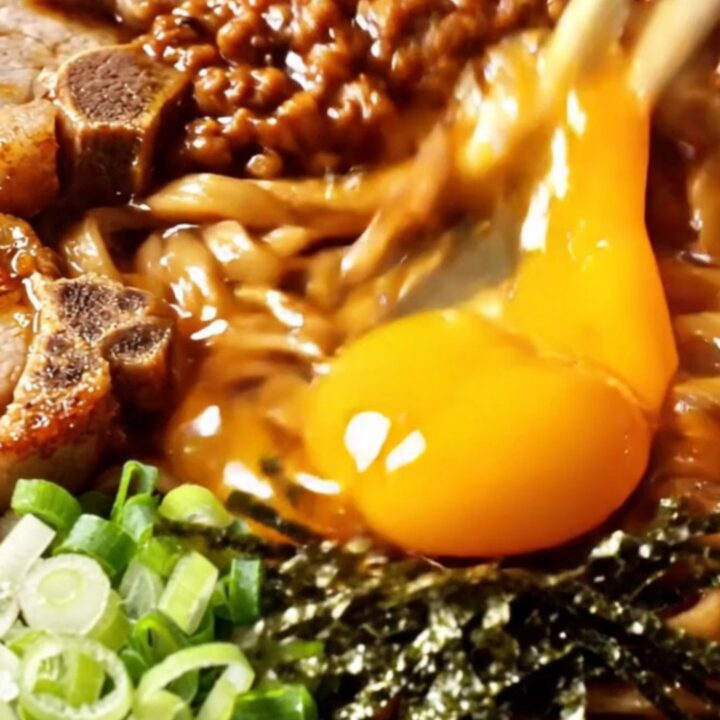
- Divide the noodles between two warm bowls. Arrange the minced pork sauce, pork chop slices, and torn nori around the edges, then settle an egg yolk in the center of each. Pierce the yolks, drizzle over any reserved chop juices, and mix everything into one glossy tangle before eating.
Estimated nutrition per serving
- Calories
- 780
- Protein
- 42 g
- Carbohydrates
- 68 g
- Fat
- 35 g
- Sodium
- 1450 mg
Next recipe
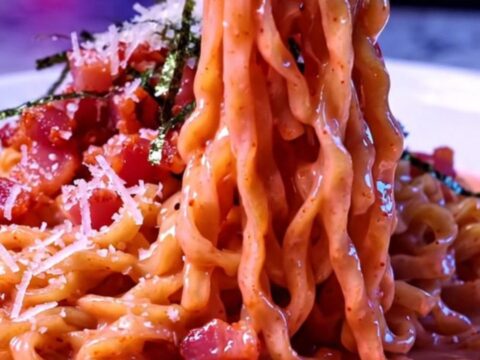
Creamy Spicy Korean Ramen Carbonara in 10 Minutes
See the recipe → →This recipe is based on a short cooking video and is published under the pen name Clara Weller. It was checked before publication, but errors can slip through. Nutrition, when shown, is an estimate. Read more in our editorial policy and on our food safety page.
More recipes to try
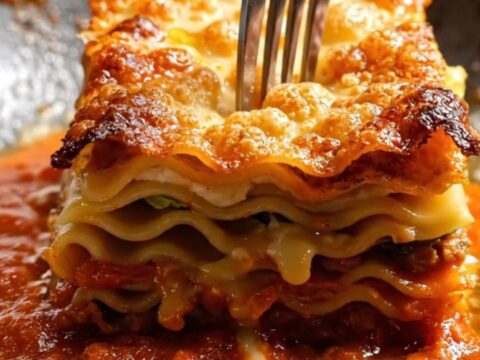
Crispy 100-Layer Lasagna Bolognese with Shattering Golden Edges
Total time: 3 h 45 min
Montreal Duck-Fat Poutine with Bone-Marrow Gravy
Total time: 1 h 15 min
Crockpot Creamy Dill Pork Chops and Potatoes — One-Pot Dinner
Total time: 6 h 13 min
Crockpot Italian Sausage and Green Beans in Red Sauce — One Pot, Zero Fuss
Total time: 4 h 10 min
Crockpot Cream Cheese Taco Chicken, Set It and Forget It
Total time: 4 h 10 min