Dinner · Part 1 of 3: Ingredients
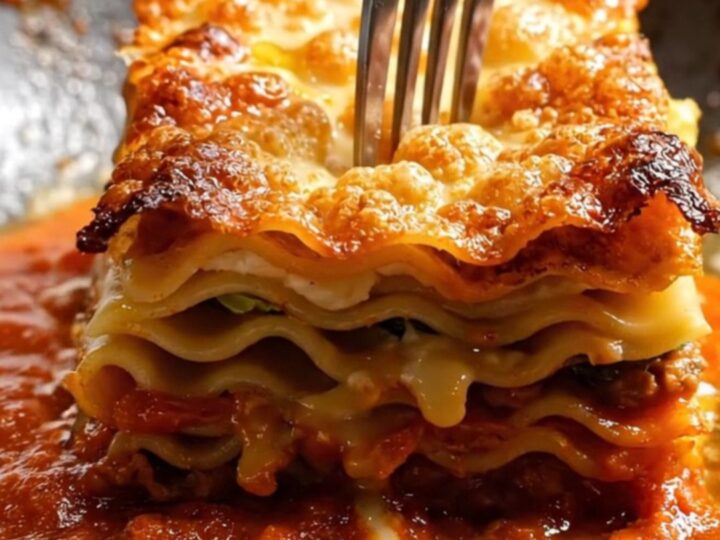
Crispy 100-Layer Lasagna Bolognese with Shattering Golden Edges
- Prep
- Cook
- Total
- Serves
- 6
Thirty-five sheets of paper-thin spinach pasta, a deeply savory Bolognese, and nutmeg-scented béchamel stack into one towering loaf, then get baked, chilled, sliced, and seared until every edge shatters. Each architectural block delivers hundreds of delicate layers: a glass-crisp crust giving way to tender ribbons of pasta and rich meat sauce. Served over warm marinara, it is the kind of dinner that silences the table for a moment.
This is lasagna rebuilt as an engineering project. Instead of wide noodles draped in a casserole dish, thin fresh sheets are layered vertically in a loaf pan with pork-and-beef Bolognese, silky béchamel, and plenty of Parmigiano, then baked under a weight so the strata fuse into a dense, sliceable block.
The twist comes after the oven: the chilled block is cut into thick slabs and the faces seared in hot butter until glass-crisp, so every serving gets the coveted crunchy corner that pan lasagna rations out stingily. The dough comes together in a stand mixer, the sauces can be made ahead, and the whole project breaks into three calm stages with no last-minute rush.
Ingredients
Fresh spinach pasta
- 3 cups 00 flour, plus more for dusting
- 4 large eggs
- 5 oz spinach, wilted and squeezed very dry
- 1/2 tsp kosher salt
- 28 oz (800 g) Bolognese sauce, pork-and-beef, made ahead or good-quality store-bought
- 2 cups (500 ml) béchamel sauce, made ahead, nutmeg-scented
- 7 oz (200 g) Parmigiano-Reggiano, finely grated
For searing
- 4 tbsp unsalted butter
For serving
- Marinara sauce, warmed, for serving
Why this recipe works
Weighted baking is the secret to the architecture. Compressing the loaf under a second pan squeezes out air pockets and forces the thin sheets, ragù, and béchamel to bond into one cohesive block, the way pressed terrines set.
Without the weight, steam lifts the layers apart and the slice crumbles. The loaf pan itself matters: its depth turns a modest amount of sauce into a tall cross-section, so every cut face shows a dramatic striped pattern instead of a shallow smear.
The sear is the second half of the method. Chilling the baked block firms the béchamel and ragù so the slabs cut cleanly, and a cold, dense interior sears without falling apart. Hot butter at a screaming surface temperature drives off moisture from the cut faces and browns the pasta starch rapidly, building a glassy, shattering crust in minutes while the inside gently reheats. Two contrasting textures, one slice: that contrast is the entire point of the dish.
Notes and substitutions
Use 00 flour for the most tender, extensible sheets; all-purpose works but benefits from the full 30-minute rest. Squeeze the wilted spinach aggressively dry, since extra water makes sticky dough that tears on the roller.
The Bolognese and béchamel should both be thick and cool when layering: a slow-simmered ragù that holds its shape, and a spreadable béchamel that coats a spoon. Freshly grated Parmigiano melts into the layers far better than pre-shredded, which is coated to resist clumping.
A 9x5-inch loaf pan, a second loaf pan for the weight, and a pasta roller are the core equipment here; a rolling pin can stand in for the roller, but expect a longer session. Roll one cardboard template to the pan's footprint and cut every sheet to match.
If a sheet tears, patch it; the weight and the bake fuse small flaws invisibly. All amounts for the sauces and cheese come straight from the source video, so measure them precisely to keep the layering balanced.
- 00 flour: Use all-purpose flour; the sheets will be slightly less silky but roll just as thin with a longer rest.
- fresh spinach pasta sheets: Use 35 fresh plain egg pasta sheets, or about 1 1/2 lb store-bought fresh lasagna sheets rolled thinner.
- pork-and-beef Bolognese: Use an all-beef Bolognese or a mushroom-and-beef ragù; keep the same weight so the layers stay balanced.
- béchamel: Use a thick béchamel made with 2% milk; keep it spreadable so the thin sheets do not tear when layering.
Equipment
- stand mixer with dough hook
- pasta roller
- 9x5-inch loaf pan
- instant-read thermometer
- heavy skillet
- wire rack
- kitchen scale
Up next · Part 2 of 3
9 steps · 45 min of cooking · what to look for at each stage
Step-by-step instructions (Part 2)