Dinner · Part 2 of 3: Instructions
Taiwan Mazesoba with Five-Spice Pork Chop — a No-Broth Noodle Bowl in Under an Hour Step-by-step instructions
- Prep
- Cook
- Total
- Serves
- 2
Before you start
Start with an organized counter, because the final assembly moves fast. Mince the garlic, slice the scallion whites and set the greens aside, and measure the doubanjiang, soy sauce, and fish powder into small bowls. Tear the nori sheets into rough pieces.
Pat the pork chop dry and rub it with the five-spice, then return it to the refrigerator rather than the counter — raw meat waits safely in the cold, and no more than thirty minutes out of the fridge before it hits the pan. Separate the eggs and keep the yolks in a small bowl in the refrigerator so they stay intact and glossy until the moment they land in the noodles.
Ingredients at a glance (12)
- 8 oz bone-in pork chop, about 1 inch thick
- 1 tsp five-spice powder
- 7 oz ground pork
- 3 garlic cloves, minced
- 1 tbsp doubanjiang (chili bean paste)
- 2 tbsp soy sauce
- 3 tbsp neutral oil, divided
- 3 scallions, whites sliced, greens reserved
- 12 oz thick ramen-style noodles
- 2 tsp fish powder
- 2 nori sheets, torn
- 2 egg yolks, kept cold until serving
Instructions
Build the sauces
- Season the pork chopPat the pork chop completely dry with paper towels, then rub it on both sides with the five-spice powder and a pinch of salt. Slide it onto a small plate, cover, and keep it in the refrigerator while the sauce comes together rather than leaving it on the counter.Look for The spice should coat the surface evenly, with no wet or patchy spots left.Tip Dry meat browns; wet meat steams. Blotting now is what builds the golden crust later.
- Simmer the minced pork sauceSet a skillet over medium heat and add the ground pork, breaking it up with a spatula. Once it loses its pink color, stir in the garlic, doubanjiang, and soy sauce. Simmer five to six minutes, until the sauce is dark, thick, and glossy and the pork registers 160°F (71°C) throughout.Look for Look for a brick-red sauce that sizzles rather than weeps, with small bubbles at the edges.Safe temperature 160°F (71°C) internal temperature (ground meat)Tip Doubanjiang is salty; hold back any extra salt until the end and taste the sauce first.
By the end of the first phase, the kitchen already smells like a night market. The minced pork sauce sits dark and thick in the skillet, brick red with small bubbles at the edges, and it mounds on the spatula instead of running off.
The pork chop sits rubbed and covered in the refrigerator, its surface evenly coated in five-spice with no wet patches. Taste the sauce now: it should be assertively salty and pleasantly hot, slightly louder than you want, because the bland noodles will mellow it. If it tastes flat, a few extra drops of soy sauce fix it now, not later.
Fry and slice
- Pan-fry the pork chopHeat a tablespoon of the neutral oil in a second skillet over medium-high. Lay the chop in and leave it undisturbed for three to four minutes, until deeply golden, then flip and cook the other side. Check with an instant-read thermometer: 145°F (63°C) at the thickest point, then let it rest at least 3 minutes before slicing.Look for The crust should be mahogany and crackling, the fat edge crisp and fully rendered.Safe temperature 145°F (63°C) internal temperature (steaks, chops and roasts)Tip Bone-in chops cook unevenly; press the thermometer into the meat right beside the bone for an honest reading.
- Warm the garlic-scallion oilPour the remaining oil into a small saucepan set over low heat. Add the sliced scallion whites and half the minced garlic, then warm gently for three to four minutes, swirling often, until the oil smells sweet and the scallions soften without taking on any color.Look for A bare simmer only — if the garlic sizzles loudly or browns, the heat is too high.Tip Pale gold garlic tastes nutty; brown garlic tastes bitter. Low and slow wins here.
- Slice the rested chopSlice the rested pork chop crosswise into half-inch strips, working parallel to the bone so each piece keeps a strip of crust. Set the slices aside and reserve any juices that collect on the board for drizzling over the finished bowls.Look for The meat should be blushing pink at the center and juicy, never chalky gray.Tip Cut with one long stroke of a sharp knife; sawing back and forth shreds the crust.
The second phase ends with the two things that make the bowl dramatic. The chop comes out mahogany and crackling, reading 145°F (63°C) beside the bone, and after its three-minute rest it slices into clean strips with blushing, juicy centers and no chalky gray rings.
The garlic-scallion oil smells sweet and allium-rich, pale gold, with softened scallion whites and not a single browned fleck of garlic. Everything is now staged around the stove: sliced chop, sauce in the skillet, oil in the saucepan, nori torn, yolks cold. Nothing left to do but boil water and move fast.
Toss and assemble
- Boil the noodlesBring a large pot of salted water to a rolling boil and cook the noodles until springy with a firm bite, about three to four minutes for fresh, longer for dried. Drain well and shake the colander hard — wet noodles dilute the sauce and kill the toss.Look for A strand bitten in half should show a thin pale line at its center.Tip Reserve a splash of noodle water in case the toss tightens up later.
- Toss noodles in the tareReturn the hot drained noodles to the empty pot off the heat. Add the garlic-scallion oil and the fish powder and toss with tongs for a full thirty seconds, until every strand glistens and the fish powder dissolves into a thin, even sheen.Look for The noodles should squeak softly against the pot and shine without pooling oil.Tip Tossing while the noodles are hot lets the surface starch drink in the tare.
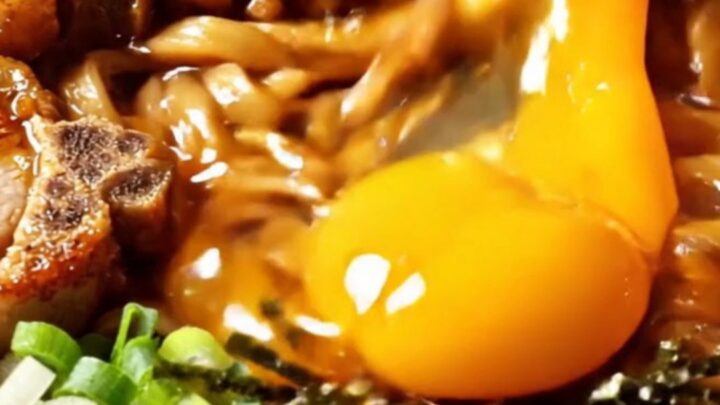
- Assemble and break the yolkDivide the noodles between two warm bowls. Arrange the minced pork sauce, pork chop slices, and torn nori around the edges, then settle an egg yolk in the center of each. Pierce the yolks, drizzle over any reserved chop juices, and mix everything into one glossy tangle before eating.Look for The sauce should coat the noodles in a uniform amber gloss, with no dry strands at the bottom.Tip Mix fast and eat immediately; mazesoba waits for no one.
The final phase is pure theater and it should end within five minutes. The tossed noodles squeak against the pot and shine with an even amber sheen, no oil pooling at the bottom. In the bowl, the toppings ring the rim, the yolk sits whole and glossy in the center, and the first mix turns everything into one cohesive, sauce-coated tangle. A strand lifted on chopsticks should carry sauce, a fleck of minced pork, and a shine of yolk without dripping. Serve immediately — within a minute or two the noodles drink up the sauce and the texture peaks.
Common mistakes
The failures are predictable and all avoidable. A chop cooked straight from a wet surface steams instead of searing, so blot it and give it the full three to four undisturbed minutes per side. Garlic scorched over high heat turns the whole oil bitter in a minute — keep that saucepan on low and pull it the moment the smell turns sweet.
Noodles boiled past firm go slack and refuse to hold the sauce, so taste one early and often. Over-salting is the silent killer: doubanjiang, soy sauce, and fish powder all carry salt, so season in layers and taste the sauce before adding anything more. Finally, do not assemble ahead of time — tossed noodles left sitting go dense and clumpy within minutes.
How to tell it’s done
The dish is done when three things line up. The chop reads 145°F (63°C) at its thickest point beside the bone and has rested at least three minutes, so it slices juicy with a blushing center and a crackling crust. The minced pork sauce reads 160°F (71°C), looks brick red and glossy, and mounds on a spoon instead of running off it. The noodles bounce back when bitten, with a thin pale line at the center, and after the toss they glisten evenly with no pooled oil.
- Steaks, chops and roasts: 145°F (63°C) in the thickest part, then a 3-minute rest
- Ground meat: 160°F (71°C) in the thickest part
- Egg dishes: 160°F (71°C) in the thickest part
Up next · Part 3 of 3
4 variations · storage & make-ahead · 5 answers · printable card
Tips, FAQ & printable recipe (Part 3)← Back to the ingredients (Part 1)