Dinner · Part 1 of 3: Ingredients
Taiwan Mazesoba with Five-Spice Pork Chop — a No-Broth Noodle Bowl in Under an Hour
- Prep
- Cook
- Total
- Serves
- 2
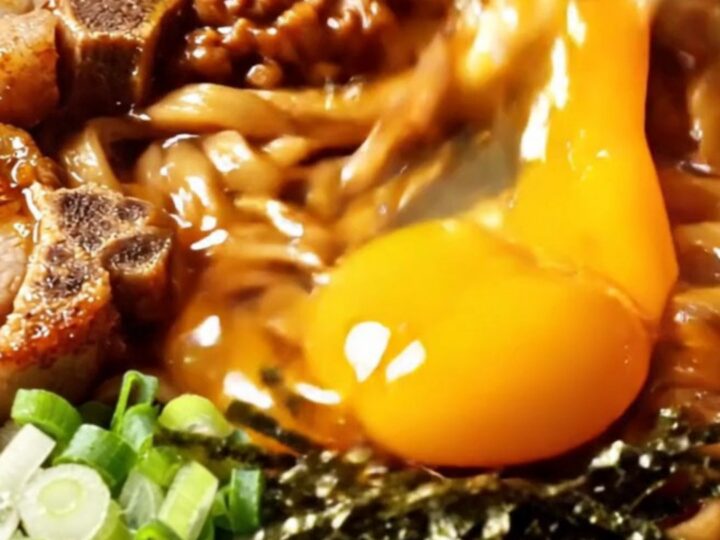
Break the golden yolk and let it slide into a tangle of chewy noodles, five-spice pork chop, and chili-laced minced meat. That single move turns a bowl of dry noodles into an umami bomb worth every second at the stove. No broth, no long simmer, no waiting: mazesoba comes together in under an hour with one skillet, one pot of water, and toppings arranged right in the bowl. Save this one for a night when takeout feels like the lazy option.
Mazesoba — literally mixed noodles — is the brothless cousin of ramen, born in Nagoya and now a street-food favorite across Taiwan and Japan. Thick, springy noodles take the place of soup: they get tossed in fragrant garlic-scallion oil and a savory fish-powder tare, then piled with toppings.
This version follows the viral night-market style: a crispy five-spice pork chop, sliced and fanned over the noodles; a spoonful of minced pork simmered in doubanjiang until dark and glossy; a sheet of nori; and an egg yolk parked in the center. Puncture the yolk, mix everything into a cohesive, glossy tangle, and every strand carries sauce. The whole dish runs about an hour, most of it hands-on but simple: two pans, one pot of water, and an assembly that takes less time than the noodles take to boil.
Ingredients
- 8 oz bone-in pork chop, about 1 inch thick
- 1 tsp five-spice powder
Spicy minced pork sauce
- 7 oz ground pork
- 3 garlic cloves, minced
Spicy minced pork sauce
- 1 tbsp doubanjiang (chili bean paste)
- 2 tbsp soy sauce
- 3 tbsp neutral oil, divided
- 3 scallions, whites sliced, greens reserved
- 12 oz thick ramen-style noodles
- 2 tsp fish powder
- 2 nori sheets, torn
- 2 egg yolks, kept cold until serving
Why this recipe works
The method stands on starch and heat. Fresh from the boiling pot, thick noodles carry a coat of surface starch that behaves like edible glue: the moment garlic-scallion oil hits them, that starch emulsifies the fat into a thin, clinging sheen instead of letting it slide to the bottom of the bowl.
Tossing while hot matters, because starch is most absorbent when the noodles are still steaming; cooled noodles turn slippery and the tare pools. The fish powder dissolves into that same sheen, seasoning every strand from the inside rather than sitting on top like a garnish. This is why mazesoba eats rich without a single drop of broth — the sauce is built directly on the noodle surface, in the pot, in under a minute.
The toppings do the rest of the work through contrast and distribution. The minced pork sauce brings heat, salt, and fermented depth; the pork chop brings crunch and a clean, spiced sweetness; the nori brings a whisper of the sea; and the yolk brings fat that coats everything it touches.
Breaking the yolk and mixing turns it into an emulsifier of its own, rounding the chili heat and stretching the sauce so no bite tastes one-note. Arranging the toppings around the rim instead of piling them in the middle means the first few turns of the chopsticks combine everything evenly, without a clump of plain noodles hiding at the bottom of the bowl.
Notes and substitutions
Shop for the noodles first, because they define the dish. Look for fresh thick ramen-style noodles, the kind sold near the tofu or in the refrigerated case of Asian grocery stores; dried works in a pinch but cook it shy of the package time.
Doubanjiang, the fermented chili bean paste, is worth seeking out — it delivers a deep, salty heat that hot sauce cannot fake. Fish powder, sold as ground dried fish in Japanese and Taiwanese markets, gives the tare its savory backbone; fish sauce stands in acceptably. Choose a bone-in pork chop about an inch thick so it stays juicy through a hard sear.
Equipment is deliberately modest: one large pot for the noodles, one heavy skillet for both the minced pork and the chop, and a small saucepan for the oil. An instant-read thermometer is the one tool that earns its keep here — it takes the guesswork out of both the chop and the sauce, and it prevents the most common failure, an overcooked chop. If the doubanjiang in the jar looks very dark and oily, stir it before measuring. Leftover fish powder keeps for months in a jar, so a small bag goes a long way across several mazesoba nights.
- doubanjiang (chili bean paste): Stir together 2 tsp miso, 1 tsp hot sauce, and a pinch of cayenne; the flavor leans sweeter but keeps the fermented heat.
- fish powder: Use 2 tsp fish sauce instead; add it to the warm oil off the heat so it blooms without scorching.
- thick ramen-style noodles: Fresh udon or lo mein noodles hold the oil-based sauce well; avoid thin dried noodles, which go limp.
- bone-in pork chop: A boneless chop works; check for doneness a minute earlier since the bone is what slows the heat.
Equipment
- large pot
- heavy skillet
- small saucepan
- colander
- instant-read thermometer
- kitchen tongs
Up next · Part 2 of 3
8 steps · 25 min of cooking · what to look for at each stage
Step-by-step instructions (Part 2)