Dinner · Part 3 of 3: Tips & recipe card
Slow-Cooker Kimchi Jjigae with Tender Pork Belly Tips, FAQ & printable recipe
- Prep
- Cook
- Total
- Serves
- 4
Tips for success
To enhance the depth of the flavor, you can sauté the pork belly and kimchi in a separate pan before adding them to the slow cooker. This extra step caramelizes the fats and intensifies the flavor of the kimchi, providing an even more robust base for the stew. If you have the time, this small investment in effort pays off with a significantly more complex and savory final result that will impress any dinner guest or family member.
Consistency is key when working with silken tofu. If you find the tofu is too fragile, you can lightly dust it with a small amount of cornstarch before adding it to the stew, which helps it hold its shape slightly better during the final warming stage.
Always use a very gentle motion when folding the tofu into the hot broth to avoid breaking the delicate curds, as keeping the slices intact is essential for the visual appeal of the dish when serving.
Variations
- Seafood Kimchi Jjigae: Replace the pork belly with a mix of fresh seafood such as shrimp, clams, and squid. Add these to the pot during the last 30 minutes of cooking to ensure the seafood stays tender and does not become rubbery.
- Vegetarian Kimchi Jjigae: Omit the pork belly and use a robust mushroom-based broth. Add extra varieties of mushrooms like shiitake or oyster mushrooms to provide a hearty texture that replaces the richness of the pork.
Storage and make-ahead
- Fridge
- Store in an airtight container in the refrigerator for up to 3 days.
- Freezer
- Freeze in a freezer-safe container for up to 1 month.
- Reheat
- Reheat on the stove over medium heat until steaming hot, stirring gently to avoid breaking the tofu.
Store any leftovers in an airtight container. Allow the stew to cool at room temperature for no more than 2 hours before transferring it to the refrigerator. Keeping it in the coldest part of the fridge ensures it remains safe and fresh for up to three days. As the stew sits, the flavors will continue to develop and meld, often making the leftovers taste even better the next day.
This dish is an excellent candidate for making ahead, as the flavors improve significantly after sitting for twenty-four hours. You can prepare the base of the stew, including the pork and kimchi, up to two days in advance and keep it in the refrigerator.
When you are ready to serve, simply heat the stew on the stove or in the slow cooker until it is hot, then add the silken tofu and sesame oil as instructed in the final step to ensure the best texture.
Serving ideas
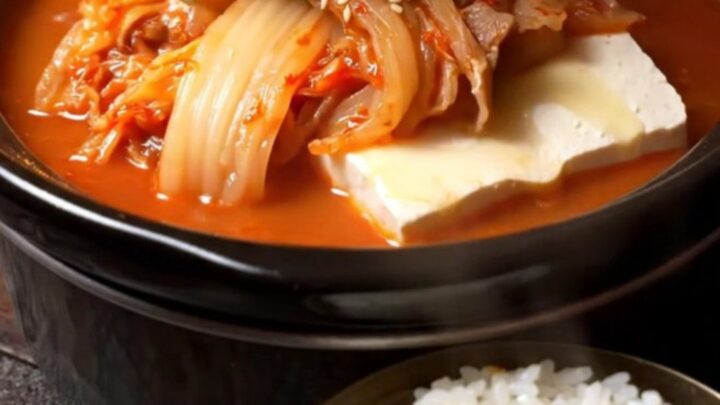
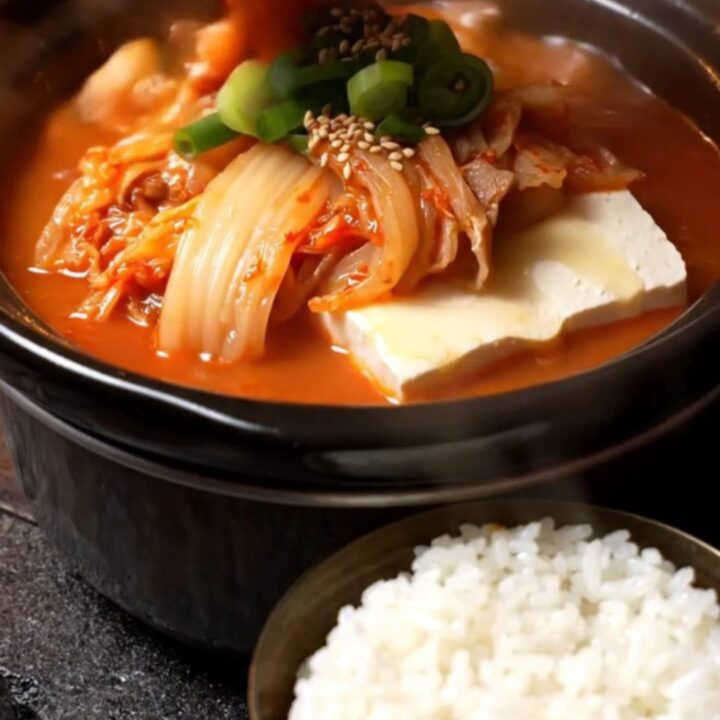
Serve this kimchi jjigae in traditional stone bowls if available, as they retain heat exceptionally well, keeping the stew bubbling at the table. Accompany the meal with a bowl of steamed short-grain white rice, which acts as the perfect neutral canvas to balance the intense, spicy, and tangy flavors of the stew.
The combination of the hot, savory broth and the cool, fluffy rice is a classic pairing that creates a complete and comforting dining experience for any occasion.
Provide a variety of traditional Korean side dishes, such as pickled vegetables or seasoned bean sprouts, to add texture and variety to the meal. The contrast between the soft, rich stew and the crunch of fresh side dishes elevates the dining experience, making it feel like an authentic home-cooked Korean feast.
Encourage guests to scoop the stew over their rice, allowing the broth to soak into every grain for the ultimate bite of flavor and comfort in every single mouthful.
Frequently asked questions
Can this stew be made ahead of time?
What can be used if gochugaru is not available?
Why is the tofu added at the end?
Slow-Cooker Kimchi Jjigae with Tender Pork Belly
Ingredients
- 1.5 lb thick-sliced pork belly
- 2 cups aged napa cabbage kimchi with juice
- 1 onion, sliced
- 5 garlic cloves
- 2 tbsp gochujang
- 2 tbsp gochugaru
- 3.5 cups anchovy or beef broth
- 14 oz silken tofu, sliced
- 1 tbsp toasted sesame oil
- sliced scallions, for serving
- sesame seeds, for serving
- steamed short-grain rice, for serving
Instructions
- Place the thick-sliced pork belly into the bottom of the slow cooker. Add the aged napa cabbage kimchi along with its juice, the sliced onion, garlic cloves, gochujang, and gochugaru. Pour the anchovy or beef broth over the top to submerge the ingredients evenly.
- Cover the slow cooker and cook on the low setting for 5 hours. This long, gentle simmer allows the pork belly to become butter-tender and the broth to develop a deep, complex flavor from the fermented kimchi and seasonings. Ensure the pork reaches 145°F (63°C) and let it rest for 5 minutes before serving.
- Gently lay the sliced silken tofu into the hot stew and drizzle with the toasted sesame oil. Allow the tofu to warm through for a few minutes. Ladle the stew into traditional stone bowls and top with sliced scallions and sesame seeds. Serve immediately alongside steamed short-grain rice.
Estimated nutrition per serving
- Calories
- 420
- Protein
- 22 g
- Carbohydrates
- 12 g
- Fat
- 32 g
- Fiber
- 3 g
- Sugar
- 5 g
- Sodium
- 950 mg
Next recipe

Easy Slow Cooker Cioppino Seafood Stew
See the recipe → →This recipe is based on a short cooking video and is published under the pen name Clara Weller. It was checked before publication, but errors can slip through. Nutrition, when shown, is an estimate. Read more in our editorial policy and on our food safety page.
More recipes to try

Crockpot Chili with Cornbread Topping
Total time: 5 h 50 min
Slow-Cooker Cuban Black Bean Soup with Smoked Ham
Total time: 6 h 15 min
Creamy Basil Pesto Chicken Gnocchi Soup
Total time: 4 h 20 min
Creamy Slow-Cooker Chicken Piccata Soup
Total time: 4 h 20 min
Creamy Crockpot Beer Cheese Mac and Cheese Soup
Total time: 3 h 20 min