Dinner · Part 2 of 3: Instructions
Slow-Cooker Kimchi Jjigae with Tender Pork Belly Step-by-step instructions
- Prep
- Cook
- Total
- Serves
- 4
Before you start
Before you begin, ensure you have all your ingredients measured and ready. Slice the onion and garlic cloves thinly to ensure they integrate well into the broth. Prepare your pork belly by slicing it into bite-sized pieces, ensuring the fat is evenly distributed for the best texture.
If your kimchi is in large chunks, you may wish to cut it into more manageable pieces, though leaving some larger leaves adds a nice texture to the final stew. Having your slow cooker clean and positioned on a level, heat-safe surface will make the assembly process seamless.
Ingredients at a glance (12)
- 1.5 lb thick-sliced pork belly
- 2 cups aged napa cabbage kimchi with juice
- 1 onion, sliced
- 5 garlic cloves
- 2 tbsp gochujang
- 2 tbsp gochugaru
- 3.5 cups anchovy or beef broth
- 14 oz silken tofu, sliced
- 1 tbsp toasted sesame oil
- sliced scallions, for serving
- sesame seeds, for serving
- steamed short-grain rice, for serving
Instructions
Preparation and Layering
- Layering the IngredientsPlace the thick-sliced pork belly into the bottom of the slow cooker. Add the aged napa cabbage kimchi along with its juice, the sliced onion, garlic cloves, gochujang, and gochugaru. Pour the anchovy or beef broth over the top to submerge the ingredients evenly.Look for The slow cooker should be filled with the layered ingredients and broth.Tip Ensure the kimchi is well distributed for maximum flavor extraction during the long cooking process.
At this stage, the slow cooker is filled with the layered ingredients, ready for the slow-cooking process. The aroma of raw garlic, kimchi, and gochujang is prominent, signaling the start of the flavor development. Ensure that the pork belly is at the bottom and that the broth has been poured in to cover the solids, as this arrangement is critical for the proper rendering of the fat and the infusion of flavors during the long, gentle simmer that follows.
Slow Cooking Transformation
- Slow Cooking the StewCover the slow cooker and cook on the low setting for 5 hours. This long, gentle simmer allows the pork belly to become butter-tender and the broth to develop a deep, complex flavor from the fermented kimchi and seasonings. Ensure the pork reaches 145°F (63°C) and let it rest for 5 minutes before serving.Look for The pork belly is tender and the broth is a deep, vibrant crimson.Safe temperature 145°F (63°C) internal temperature (steaks, chops and roasts)Tip Keep the lid closed during the cooking process to maintain a consistent temperature and moisture level.
The stew has finished its long simmer, and the kitchen should be filled with a rich, savory aroma. The pork belly will have rendered its fat, turning the broth into a thick, glossy, and deeply flavorful liquid. The kimchi should be soft and translucent, having released its tangy essence into the stew. Before proceeding, check that the pork is fork-tender and the overall consistency of the stew is thick enough to coat a spoon, indicating that the reduction is sufficient.
Finishing and Serving
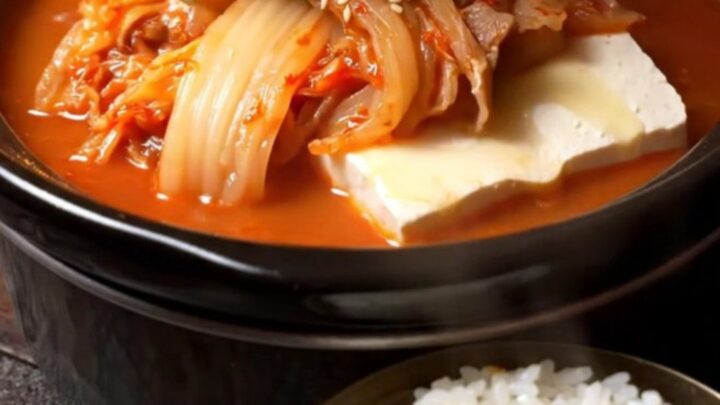
- Final Touches and ServingGently lay the sliced silken tofu into the hot stew and drizzle with the toasted sesame oil. Allow the tofu to warm through for a few minutes. Ladle the stew into traditional stone bowls and top with sliced scallions and sesame seeds. Serve immediately alongside steamed short-grain rice.Look for The tofu is heated through and the aroma of toasted sesame oil is present.Tip Handle the silken tofu with care to prevent it from breaking apart into the broth.
The final stage involves gently warming the silken tofu and adding the finishing touches. The stew should be bubbling lightly, and the tofu should be heated through without falling apart.
The final dish should look vibrant, with the red broth contrasting against the white tofu and the bright green of the fresh scallions. Check the seasoning one last time, ensuring the balance between the spicy gochujang and the tangy kimchi is to your preference before transferring to bowls.
Common mistakes
A common mistake is overcrowding the slow cooker or failing to use enough liquid, which can lead to uneven cooking or the stew drying out. Always ensure the ingredients are fully submerged in the broth to maintain consistent moisture throughout the cooking process.
Another error is adding the silken tofu too early; silken tofu is extremely delicate and will disintegrate if subjected to five hours of slow cooking. Always add the tofu during the final stages of the process to preserve its structure and silky texture for the final presentation.
How to tell it’s done
The dish is ready when the pork belly is exceptionally tender and can be easily pierced with a fork. The broth should be a deep, vibrant red, indicating that the flavors have fully melded. The pork must reach an internal temperature of 145°F (63°C) to ensure it is cooked through and safe to consume.
Because the stew is slow-cooked, the pork will likely be well beyond this minimum temperature, resulting in the desired meltingly soft consistency. Let the stew rest for 5 minutes before serving to allow the flavors to stabilize.
- Steaks, chops and roasts: 145°F (63°C) in the thickest part, then a 3-minute rest
Up next · Part 3 of 3
2 variations · storage & make-ahead · 3 answers · printable card
Tips, FAQ & printable recipe (Part 3)← Back to the ingredients (Part 1)