Dinner · Part 3 of 3: Tips & recipe card
Sheet Pan Sausage and Onion Bake: One-Pan Dinner in 45 Minutes Tips, FAQ & printable recipe
- Prep
- Cook
- Total
- Serves
- 4
Tips for success
Rendering fat is the whole engine of this recipe, so treat it as a feature. The sausages season the onions as they cook, and the wedges need steady contact with that fat to caramelize properly.
If the pan looks dry at the halfway turn because the links are unusually lean, shift the onion wedges toward the spots where fat has pooled so every piece gets its share before going back into the oven.
Oven calibration varies more than most cooks expect. If the onions are browning faster than the sausages are cooking through, lower the heat to 400°F (200°C) for the second stretch and add a few minutes.
If nothing is taking color at the twenty-minute mark, the oven may run cool; bump it to 450°F (230°C) and watch the edges closely from then on. The thermometer, not the clock, decides when dinner is ready.
Variations
- Hot Italian version: Use hot Italian sausages instead of mild ones. The rendered fat carries the heat through the whole pan, and the sweet caramelized onions balance the spice nicely without any extra seasoning needed.
- Chicken sausage bake: Swap in fresh chicken sausages and roast as directed, but cook to 165°F (74°C) instead. They render less fat, so shift the onion wedges toward the leaner spots on the pan to keep the caramelization on track.
- Apple and onion pan: Toss in two firm apples, cored and cut into wedges, alongside the onions. They roast into soft, sweet-tart pieces that soak up the sausage fat and pair beautifully with pork links.
- Bratwurst pan: Roast fresh bratwurst with the onions as written. Their slightly milder, wheaty flavor suits the caramelized wedges well, and the casings blister just the same at 425°F.
Storage and make-ahead
- Fridge
- Airtight container, refrigerate within 2 hours of cooking; keeps 3 to 4 days.
- Freezer
- Freeze cooked sausages and onions in a freezer-safe container for up to 2 months; thaw overnight in the refrigerator before reheating.
- Reheat
- Reheat on a sheet pan at 350°F (175°C) for about 10 minutes, or in short microwave bursts, until steaming hot throughout.
Cool any leftovers on the pan for no more than 2 hours, then transfer the sausages and onions to an airtight container and refrigerate. They keep well for 3 to 4 days, and the flavor of the onions actually deepens overnight.
The onions can be cut into wedges up to a day ahead; store them in a covered container in the refrigerator so they stay crisp and do not smell up the fridge.
The full pan is best assembled just before roasting, since raw sausages should not sit on the sheet for hours. With the onions ready, the hands-on time drops to about five minutes on cooking night.
Serving ideas
Serve the bake straight from the sheet pan at the table, set on a trivet with tongs alongside, for the most generous, least fussy presentation.
Spoon the glossy onions and pan juices over each sausage; that juice is the sauce, and it needs no help. The dish pairs naturally with crusty bread to catch the juices, mashed potatoes, or a simple mustard on the side for dipping the links.
For a fuller plate, add a sharp green element: a handful of arugula dressed with lemon, or a crisp cucumber salad, cuts through the richness of the sausage. Beer, a dry cider, or a medium-bodied red all stand up well to the caramelized sweetness. Leftover sausages and onions also make an excellent next-day sandwich on a toasted roll.
Frequently asked questions
Can this be made with fully cooked sausages instead of raw ones?
Why did the onions turn out pale and limp instead of caramelized?
Can the sausages and onions be roasted at a lower temperature?
How is doneness checked without an instant-read thermometer?
Can this be doubled for a crowd?
Sheet Pan Sausage and Onion Bake: One-Pan Dinner in 45 Minutes
Ingredients
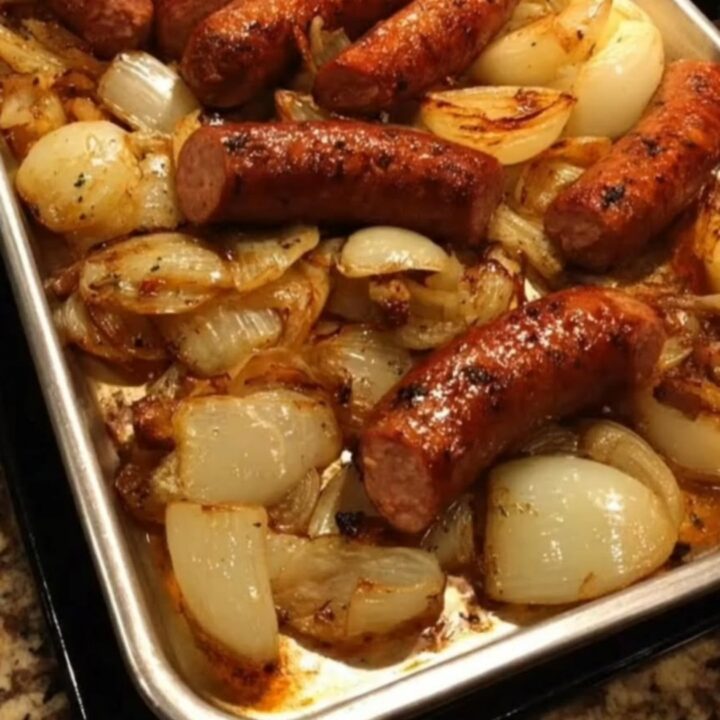
- 1 1/2 lb fresh Italian sausages (about 4 to 6 links)
- 2 large yellow onions, cut into thick wedges
Instructions
- Position a rack in the center of the oven and heat it to 425°F (220°C). Pull out a rimmed baking sheet and set it aside for a moment; there is no need to line it, since the sausages release a little fat that keeps the onions from sticking and helps them brown.
- Trim the ends of each onion, halve it pole to pole, and peel off the papery skin. Cut each half into three or four thick wedges, keeping the root end intact where possible so the layers hold together as they roast and caramelize instead of scattering across the pan.
- Spread the onion wedges over the baking sheet in a single, even layer, cut sides down where possible. Leave deliberate gaps between the wedges; those open spaces are where the sausages will sit, and they also let hot air reach every surface of the onions as they roast.
- Set the sausages directly on the pan between the onion wedges, leaving a finger's width of space around each link so hot air can circulate and the casings brown instead of steaming. Do not prick them; intact casings keep the juices inside the links where they belong.
- Slide the pan onto the center rack and roast for 20 minutes. Fat will render from the sausages and pool around the onions, which is exactly what you want: the wedges fry gently in that flavorful fat and start taking on a golden edge along their cut sides.
- Pull the pan out and, using metal tongs, turn each sausage and flip the onion wedges so their pale sides meet the hot metal and the rendered fat. Return the pan to the oven and roast another 12 to 15 minutes, until the onions are deeply golden and the sausages are browned all over.
- Insert an instant-read thermometer into the center of the thickest sausage. It must read at least 160°F (71°C), the safe internal temperature for fresh sausage. If any link reads lower, return the pan to the oven for 5 more minutes and test again in the same spot.
- Transfer the sausages and onions to warm plates with tongs, spooning the glossy pan juices and onions over the top. Give the sausages a minute or two before cutting so the juices settle into the meat instead of running onto the plate at the first slice.
Estimated nutrition per serving
- Calories
- 440
- Protein
- 22 g
- Carbohydrates
- 7 g
- Fat
- 36 g
- Fiber
- 2 g
- Sugar
- 4 g
- Sodium
- 940 mg
Next recipe
French Onion Pork Tenderloin — One Pan, Glossy Onion Sauce
See the recipe → →This recipe is based on a short cooking video and is published under the pen name Clara Weller. It was checked before publication, but errors can slip through. Nutrition, when shown, is an estimate. Read more in our editorial policy and on our food safety page.
More recipes to try
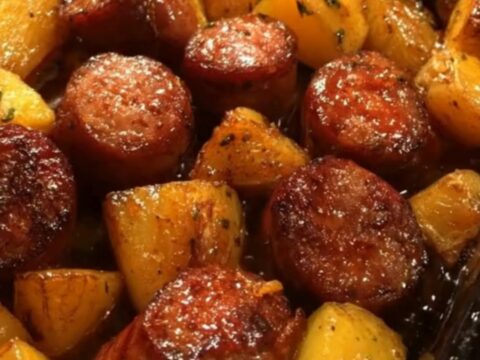
Honey Garlic Sausage Bake with Crispy Potatoes, One Pan
Total time: 55 min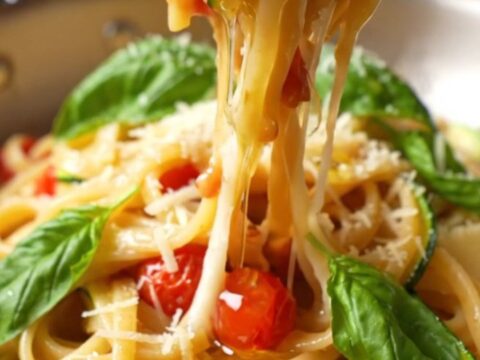
One-Pan Zucchini And Tomato Pasta Ready In 15 Minutes
Total time: 15 min
Crispy Cheese-Skirt Carnitas Tacos
Total time: 30 min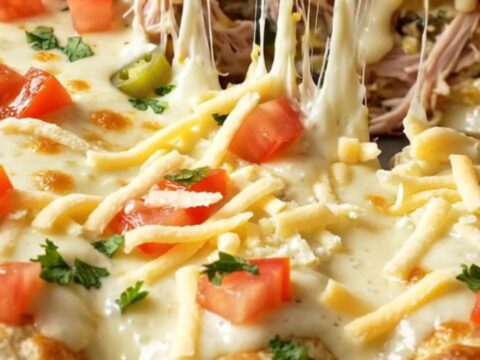
Spinach Artichoke Queso Chicken Enchiladas in 45 Minutes
Total time: 50 min
Crispy Birria Cones in the Air Fryer in 6 Minutes
Total time: 21 min