Dinner · Part 1 of 3: Ingredients
Sheet Pan Sausage and Onion Bake: One-Pan Dinner in 45 Minutes
- Prep
- Cook
- Total
- Serves
- 4
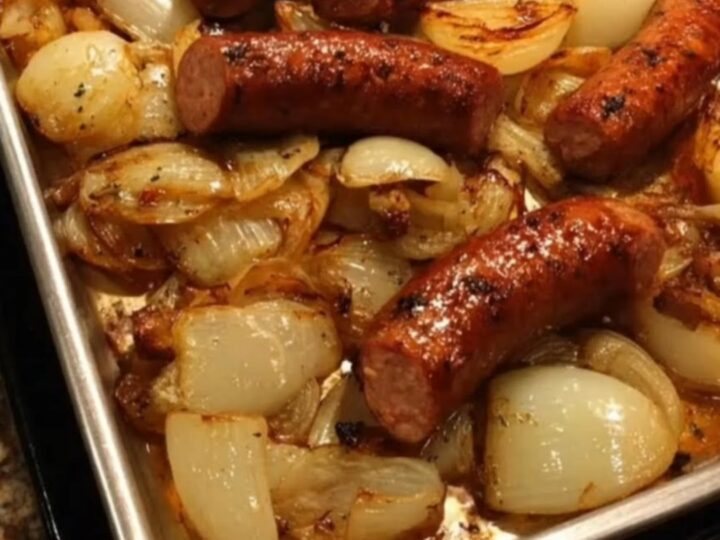
Some dinners practically cook themselves, and this is one of them. Plump fresh sausages and thick onion wedges roast side by side on a single sheet pan until the casings brown and the onions melt into sweet, amber, caramelized wedges. Two ingredients, ten minutes of hands-on work, one pan to wash, and a dinner that tastes far more considered than the effort behind it.
This sausage and onion bake is the kind of recipe that earns a permanent spot in the weeknight rotation. Everything goes onto one rimmed baking sheet: sausages nestled between thick onion wedges, nothing else. The oven handles the rest, rendering fat from the links so the onions essentially braise and fry in it at the same time, turning glossy and deeply golden at the edges.
There is no stirring a pot, no watching a burner, and no second pan. The result is exactly what the video promises: juicy sausages with taut, browned casings, onions collapsed into silky sweetness, and a pool of flavorful pan juices to spoon over everything. Serve it straight from the pan at the table, or plate it up with tongs while it steams.
Ingredients
- 1 1/2 lb fresh Italian sausages (about 4 to 6 links)
- 2 large yellow onions, cut into thick wedges
Why this recipe works
The method works because it borrows the best of two cooking techniques at once. Roasting at 425°F gives the sausage casings dry, circulating heat that browns them evenly, while the fat that renders out of the links becomes a hot, flavorful bath for the onions below.
Those wedges never dry out; they sit in rendered sausage fat, softening first, then browning where their cut sides touch the hot metal. That combination of fat and high, steady heat is precisely what slow caramelizing in a skillet achieves, only the oven does it unattended.
The single flip halfway through matters more than it sounds. Onion wedges develop their deep golden color only on the surfaces that stay in firm contact with the hot pan, so turning each wedge once exposes the pale side and evens out the browning.
Turning the sausages at the same moment prevents flat, pale strips on the casings and lets every side blister slightly. One interruption, one pan swap of position, and the whole tray browns uniformly instead of only where it touched the metal first.
Notes and substitutions
Choose fresh, raw sausages in casings rather than fully cooked or smoked links; the raw ones render fat as they cook, and that fat seasons the onions. Mild or hot Italian sausages are the classic choice, but any fresh pork link works. Keep the casings intact: pricking them lets the juices escape and leaves the meat dry. Yellow onions are the standard here because they turn sweet and jammy when roasted, but sweet onions caramelize even faster.
A heavy, light-colored rimmed baking sheet browns most evenly; very dark pans can overbrown the onion edges, so start checking a few minutes early if that is what is on hand. Metal tongs are the only real tool needed for turning.
If the pan looks crowded, use two sheets rather than piling everything onto one, since crowding steams the onions instead of caramelizing them. No thermometer yet? One pays for itself the first time it confirms a sausage is safely done.
- fresh Italian sausages: Use bratwurst, kielbasa-style fresh links, or chicken sausages; cook chicken sausages to 165°F (74°C).
- yellow onions: Sweet Vidalia onions or red onions both work; red onions turn slightly darker and a little more jammy.
- two large onions: Three medium onions work when large ones are unavailable; cut them into the same thick, even wedges so they roast at the same pace.
Equipment
- Rimmed baking sheet
- Metal tongs
- Sharp chef's knife
- Cutting board
- Instant-read thermometer
Up next · Part 2 of 3
8 steps · 35 min of cooking · what to look for at each stage
Step-by-step instructions (Part 2)