Dinner · Part 3 of 3: Tips & recipe card
Seared Miso Butter Halibut in One Skillet, Ready in Under 30 Minutes Tips, FAQ & printable recipe
- Prep
- Cook
- Total
- Serves
- 2
Tips for success
Keep the halibut as cold as possible until the moment it goes into the pan. Cold fish holds its shape and gives the skin a chance to crisp in the hot butter without tearing. Pat the skin completely dry before you season the flesh, because surface moisture will stop the skin from browning and make the butter spatter. Work quickly once the fish is in the skillet, and have the tongs and spoon within reach so that you can baste and flip without leaving the pan.
Make the miso butter ahead for convenience. Beat one part white miso into two parts softened butter until smooth, then spoon it onto parchment, roll it into a log and refrigerate it. A single tablespoon melts into the foaming butter in seconds and gives the sauce a savory depth.
Use the same pan for the mushrooms and fish so the fond on the bottom adds flavor to the sauce. Serve the dish straight from the skillet to keep it hot and glossy, and bring extra sesame seeds and green onions to the table.
Variations
- Spicy Chili Crisp Butter: Stir one teaspoon of chili crisp into the foaming butter along with the miso butter. The heat builds gradually and turns the sauce a deep reddish-gold. Serve with extra chili crisp at the table for those who want more heat.
- Garlic Shiitake Version: Add two thinly sliced garlic cloves to the butter with the mushrooms and ginger. The garlic turns golden and sweet, deepening the savory flavor of the sauce. Remove any garlic that darkens too quickly to keep the sauce from tasting bitter.
- Lemon Zest Finish: Finish the plated fish with a little grated lemon zest and a squeeze of fresh lemon juice. The bright citrus cuts through the rich miso butter and lifts the sweetness of the halibut. Use only a small amount so the ginger and miso still come through clearly.
- Swap for Salmon: Use skin-on salmon fillets in place of halibut and follow the same method. Salmon has more fat and needs slightly less time in the pan. Sear skin-side down until the skin crisps, then flip briefly until the center is just cooked and flakes easily.
Storage and make-ahead
- Fridge
- Store leftover halibut and sauce in an airtight container for up to 1 day in the refrigerator, cooled first to room temperature within 2 hours.
- Freezer
- Freezing is not recommended, because halibut becomes dry and the butter sauce separates after thawing.
- Reheat
- Reheat gently in a covered skillet over low heat with a spoonful of water or butter, just until warmed through, to protect the texture.
Leftover halibut should be cooled for no more than 2 hours at room temperature before it goes into the refrigerator. Transfer the fish, mushrooms and sauce to a shallow airtight container so they chill quickly and evenly. Refrigerated, the fish keeps for up to one day, and the mushrooms and sauce hold for up to three days if stored separately.
Do not leave the dish out on the counter during dinner for long periods. Once cooled, cover the container tightly and label it with the date. Leftovers are best eaten within a day because the halibut loses its delicate texture as it sits in the sauce. If the fish has been out of the fridge for more than two hours, discard it.
Several parts of this dish can be prepared hours in advance, which makes weeknight cooking much easier. Portion the halibut, wrap it in paper towels and keep it covered in the refrigerator until you cook it. Slice the shiitake mushrooms, halve the bok choy and thinly slice the green onions up to one day ahead, storing each in a separate sealed container.
Make the miso butter a few days ahead and keep it chilled. Grate the ginger on the day you cook, because it loses its aroma when stored. Measure the butter and the seasonings in advance so that the actual cooking takes less than fifteen minutes. The halibut itself is best cooked just before serving, since the texture is at its best when freshly seared.
Serving ideas
Serve the halibut right in the cast iron skillet, placing it on a wooden board or a trivet so the pan stays warm. Spoon the mushrooms, bok choy and butter sauce over and around the fillets, so every portion gets fish, vegetables and sauce.
Steamed short-grain rice is a classic partner, because it soaks up the buttery miso sauce, and a simple cucumber salad with rice vinegar adds crispness. Offer extra sesame seeds and green onions at the table so each person can finish their plate to taste.
For a relaxed dinner, present the skillet in the center of the table with warm bread or steamed rice alongside. Pour a glass of crisp, dry white wine or a light lager, which pair well with the savory butter and delicate fish. Keep the sauce spooned over the fillets while serving, and wipe the rim of the skillet before presenting it. Let each guest help themselves, and keep the pan on a heatproof surface so the butter stays glossy throughout the meal.
Frequently asked questions
Can you use frozen halibut for this recipe?
What is miso butter and where do you find it?
Why does the halibut stick to the skillet?
How do you know when the halibut is cooked through?
Can you make this dish without a cast iron skillet?
Seared Miso Butter Halibut in One Skillet, Ready in Under 30 Minutes
Ingredients
- 2 skin-on halibut fillets (about 6 oz each), portioned
- 4 oz fresh shiitake mushrooms, stems removed and sliced
- 2 baby bok choy, halved lengthwise
- 1 tbsp fresh ginger, grated on a box grater
- 4 tbsp unsalted butter
- 1 tbsp miso butter (white miso blended with softened butter)
- kosher salt, to taste
- freshly ground black pepper, to taste
- 2 green onions, thinly sliced, for serving
- toasted sesame seeds, for serving
Instructions
- Set the halibut fillets on a cutting board and portion them with a chef's knife into two equal pieces if needed. Slice the shiitake mushrooms, halve the baby bok choy lengthwise and thinly slice the green onions. Keep the fish refrigerated until it goes into the pan.
- Grate the fresh ginger over the cutting board with a box grater, using the small holes so the pieces melt into the sauce. Keep it close to the board so the fine pulp is caught with the mushrooms.
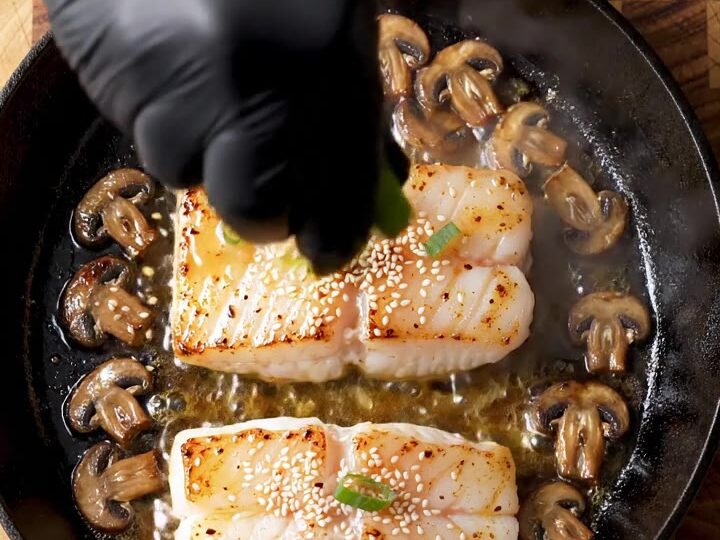
- Melt the butter in the cast iron skillet over medium heat until it is foaming. Add the sliced shiitake mushrooms around the edges of the pan, then add the grated ginger and one tablespoon of miso butter, stirring until the miso melts into the butter.
- Place the fillets skin-side down in the bubbling butter, season the flesh with kosher salt and black pepper, and spoon the butter over the fish. Baste steadily until the flesh turns opaque and the edges look golden.
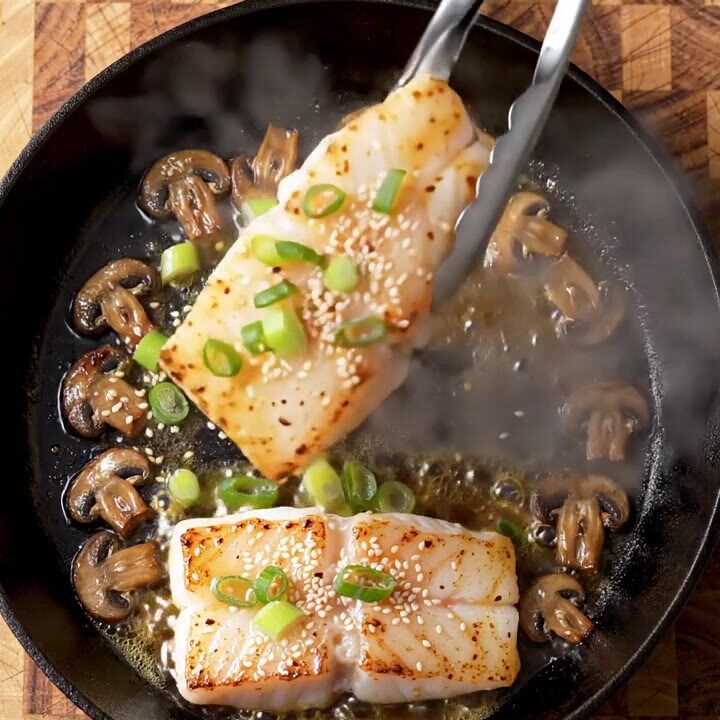
- Flip the fillets with tongs and sear the top side until it is lightly golden. Keep basting for another minute until the fish is just cooked through and flakes easily at the thickest point. Check the thickest part with a thermometer if unsure.
- Arrange the mushrooms, bok choy and butter sauce around the fillets in the skillet, spooning the sauce over the top. Scatter the sliced green onions and toasted sesame seeds over the fish and serve straight from the pan while the butter is still glossy.
Estimated nutrition per serving
- Calories
- 520
- Protein
- 38 g
- Carbohydrates
- 8 g
- Fat
- 36 g
- Fiber
- 2 g
- Sugar
- 2 g
- Sodium
- 780 mg
Next recipe

Blistered Tomato Gnocchi with Molten Brie in One Skillet
See the recipe → →This recipe is based on a short cooking video and is published under the pen name Clara Weller. It was checked before publication, but errors can slip through. Nutrition, when shown, is an estimate. Read more in our editorial policy and on our food safety page.
More recipes to try

Tuscan Salmon and Scallops in Vodka Cream Sauce for One Pan Dinner
Total time: 35 min
Garlic Butter Sea Bass with Chimichurri and Charred Corn Skillet
Total time: 27 min
Garlic Butter Mushroom Creamy Parmesan Polenta Skillet
Total time: 1 h 10 min
Pan-Seared Swordfish with Tomato Caper Sauce in One Skillet
Total time: 38 min
Pan-Seared Arctic Char with Garlic Herb Butter and Blistered Tomatoes
Total time: 27 min