Dinner · Part 1 of 3: Ingredients
Butternut Squash Lasagna Skillet with Brown Butter and Fontina
- Prep
- Cook
- Total
- Serves
- 6
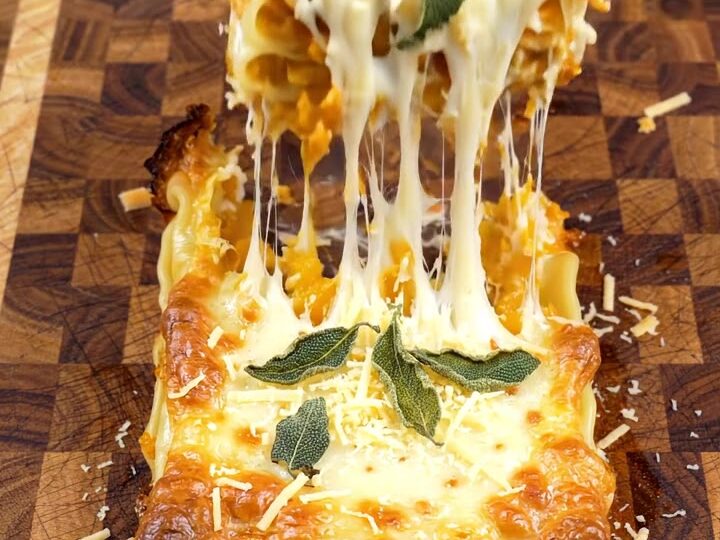
Crisp fried sage, nutty brown butter and a skillet of melted fontina come together in one dish. Thin butternut squash and broad fresh pasta build sweet, tender layers, and sausage-style meat adds savory depth. Every spoonful is creamy, golden and deeply comforting, and the whole dinner cooks in one cast iron pan.
This butternut squash lasagna skillet turns the classic baked pasta into a cast iron dinner built around browned butter and fontina. Thin squash strips soften between layers of broad fresh pasta, while a creamy sauce made with the melted fontina ties the layers together.
Sausage-style ground meat, crisp fried sage and a dusting of grated cheese round out each slice. Work in a 12-inch cast iron skillet, from the first browning to the final bake, so the flavors build in the same pan. The result is a rich, golden lasagna cut into thick slices and served straight from the table.
Ingredients
- 1 1/2 lb butternut squash, peeled, seeded and sliced into thin strips
- 12 fresh sage leaves, plus a few sprigs for garnish
- 2 cloves garlic, thinly sliced
- 8 oz sausage-style ground meat
- 8 oz fresh pasta sheets, broad, such as pappardelle-style
- 4 tbsp unsalted butter
- 8 oz fontina cheese, grated, divided
- 1 1/2 cups whole milk
- 2 tbsp all-purpose flour
- 1 tbsp olive oil
- kosher salt and black pepper to taste
- 1/2 cup finely grated Parmesan cheese
Why this recipe works
Browning the butter first gives the sauce its nutty depth. The milk solids toast in the hot fat and turn the butter a deep golden color, which then carries into the fontina sauce.
Fried sage leaves go into the butter for only a moment, so they turn crisp and fragrant without burning. This simple step adds a toasted, earthy flavor that a plain cream sauce cannot match.
Thin squash strips cook through in the oven while the fresh pasta softens in the sauce. Because the squash is sliced thin, it becomes tender in the same time the cheese needs to bubble and brown. Layering the squash between sheets of pasta and sauce keeps every bite moist. The cast iron skillet holds heat evenly, so the bottom and edges set while the top turns golden.
Notes and substitutions
Choose broad fresh pasta sheets, such as those cut like pappardelle, because they hold a thick layer of sauce and squash without tearing. Fresh sheets soften in the oven and absorb the fontina sauce well.
Fontina is the star cheese here, as it melts smoothly and has a mild, nutty taste. Grate it yourself from a block for the best melt, since pre-shredded cheese often contains anti-caking agents that make the sauce grainy.
A 12-inch cast iron skillet is the best pan for this recipe because it goes from the stovetop to the oven and gives the crispest edges. A box grater is needed for the fontina and Parmesan, and a sharp knife or mandoline makes the thin squash strips easy to cut.
If you do not have cast iron, use any oven-safe skillet of similar size. No-boil lasagna noodles can stand in for fresh pasta, broken to fit the pan, but they will need a little extra sauce so they soften completely.
- sausage-style ground meat: ground beef or ground pork, seasoned with fennel seed and salt
- fresh pasta sheets: no-boil lasagna noodles, broken to fit the skillet
- fontina cheese: Gruyere or young Asiago for a similar melt
Equipment
- 12-inch cast iron skillet
- box grater
- wooden cutting board
- sharp knife or mandoline
- wooden spoon
- medium saucepan
- fine-mesh strainer
- instant-read thermometer
Up next · Part 2 of 3
8 steps · 50 min of cooking · what to look for at each stage
Step-by-step instructions (Part 2)