Dinner · Part 2 of 3: Instructions
Butternut Squash Lasagna Skillet with Brown Butter and Fontina Step-by-step instructions
- Prep
- Cook
- Total
- Serves
- 6
Before you start
Gather everything before you turn on the stove, because the brown butter and the sage move quickly. Halve and peel the butternut squash, scoop out the seeds and slice it into thin strips. Thinly slice the garlic, pat the sage leaves dry and set them near the stove.
Grate the fontina on the large holes of a box grater and divide it into two portions, one for the sauce and one for the top. Measure the milk, flour and butter into small bowls so they are ready for the sauce. Set the oven rack to the middle position and heat the oven to 375°F (190°C). Keep the fresh pasta sheets flat and covered with a clean towel so they do not dry out while you work.
Ingredients at a glance (12)
- 1 1/2 lb butternut squash, peeled, seeded and sliced into thin strips
- 12 fresh sage leaves, plus a few sprigs for garnish
- 2 cloves garlic, thinly sliced
- 8 oz sausage-style ground meat
- 8 oz fresh pasta sheets, broad, such as pappardelle-style
- 4 tbsp unsalted butter
- 8 oz fontina cheese, grated, divided
- 1 1/2 cups whole milk
- 2 tbsp all-purpose flour
- 1 tbsp olive oil
- kosher salt and black pepper to taste
- 1/2 cup finely grated Parmesan cheese
Instructions
Sauce and fried sage made
- Prepare the squash and sageHalve and peel the butternut squash, scoop out the seeds, then slice it into thin strips. Pat the sage leaves dry. Thinly slice the garlic cloves and set everything near the stove.Look for Squash strips are thin enough to bend slightly and the sage leaves are dry to the touch.Tip Thin, even strips cook through at the same rate as the pasta layers.
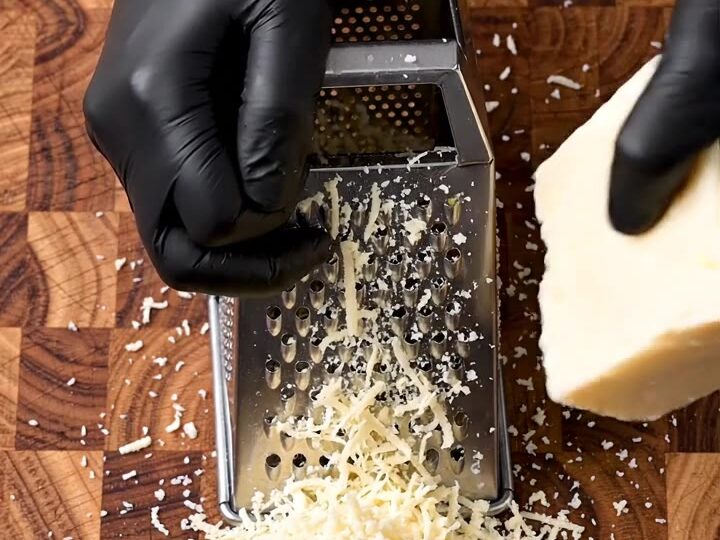
- Grate the fontinaGrate the fontina on the large holes of a box grater. Keep the shreds in a bowl, dividing them into two portions: one for the sauce and one for the top.Look for A fluffy pile of fine shreds, with no large block left.Tip Grate the cheese cold so it shreds cleanly and does not clump.
- Brown the ground meatHeat the olive oil in the skillet over medium-high heat. Add the ground meat, season with salt and pepper, and break it up as it cooks. Cook until browned and no pink remains, then move it to a plate.Look for The meat is crumbled, browned and smells savory, with no pink left.Safe temperature 160°F (71°C) internal temperature (ground meat)Tip Let the meat brown in one layer before stirring for deeper flavor.
At the end of phase one, the ground meat is browned and crumbled, with no pink left, and it sits on a plate beside the skillet. The fontina is shredded into a fluffy pile and the squash strips are thin and ready. Before moving on, check that the skillet is clean of loose meat bits, which would scorch in the brown butter. Melt the butter over medium heat and watch it closely. When it foams and turns golden with nutty specks, the sage can go in for a quick fry, and the sauce base is ready to build.
Lasagna layered and bubbling
- Make the brown butterMelt the butter in the same skillet over medium heat. Swirl until it foams, then cook until the milk solids turn golden brown and smell nutty. Add the sage leaves and fry them for about 30 seconds until crisp. Lift them onto a paper towel.Look for The butter is golden brown with toasted specks and smells nutty.Tip Watch closely at the end, because brown butter turns from nutty to burnt fast.
- Build the fontina sauceStir the flour into the browned butter and cook for 1 minute. Whisk in the milk slowly, then simmer, stirring, until thickened. Remove from the heat and stir in most of the fontina until smooth and glossy.Look for The sauce coats the back of a spoon and the cheese melts into it smoothly.Tip Add the milk gradually to prevent lumps.
- Layer the lasagnaSpread a thin layer of sauce in the skillet. Add a layer of fresh pasta sheets, then squash strips, browned meat and more sauce. Repeat the layers, finishing with pasta and sauce. Scatter the Parmesan and the remaining fontina over the top.Look for Pasta, squash and meat are stacked evenly and the top is covered in cheese.Tip Break the pasta sheets to fit the skillet so no gaps remain.
At the end of phase two, the skillet holds alternating layers of pasta, squash, meat and fontina sauce, finished with a generous layer of cheese. The sauce should coat the back of a spoon and look smooth and glossy, not thin or grainy.
Check that the top is evenly covered and that no pasta edges stick up out of the sauce, as dry pasta will not soften. Once the layers are even, the skillet is ready for the oven, where the cheese will melt and brown into a golden crust over the next 30 to 35 minutes.
Final Glaze and Plating
- Bake until goldenBake the skillet on the middle rack at 375°F (190°C) for 30 to 35 minutes, until the squash is tender, the cheese bubbles and the top turns lightly golden. Let it rest on the counter for 10 minutes before slicing.Look for Cheese bubbles at the edges and the top is lightly browned.Tip Rest the lasagna so the layers hold their shape when cut.
- Slice and serveCut a thick rectangular slice with a sharp knife, lifting out the layers of pasta, squash and melted cheese. Top with the reserved fried sage leaves and a few fresh sprigs, then serve on a wooden board or plate.Look for The slice holds its layers and the cheese is melted and stretchy.Tip Use a thin spatula to lift clean slices from the skillet.
Every ingredient is evenly coated, fragrant and progressing at a steady gentle sizzle without sticking to the pan surface. Take a moment to check the color, texture and aroma before moving on to the next stage.
Common mistakes
The most common mistake is burning the butter. Brown butter moves from nutty to scorched in seconds, so keep the heat at medium and watch the color closely. Pull it off the heat as soon as the specks turn golden. Another frequent problem is a grainy or lumpy sauce, which usually happens when the milk goes in too fast or when pre-shredded cheese is used.
Add the milk slowly while whisking, and grate the fontina from a block for a smooth melt. Layering too thickly can leave the squash undercooked, so spread the layers evenly and keep the squash in thin strips. Finally, avoid cutting the lasagna straight from the oven, as the layers will slide apart. Resting for 10 minutes lets the sauce set so each slice holds its shape.
How to tell it’s done
The lasagna is done when the squash is tender when pierced with a knife, the cheese is bubbling at the edges and the top is lightly golden. The sauce should look thick and glossy, not runny, and the layers should hold their shape when a spatula lifts a slice.
The sausage-style ground meat must reach 160°F (71°C) in the internal temperature check of the cooked meat before it goes into the skillet, and the browned meat should show no pink. Once cooked through, the meat and fontina sauce keep the lasagna moist and tender throughout the slice.
- Ground meat: 160°F (71°C) in the thickest part
Up next · Part 3 of 3
4 variations · storage & make-ahead · 5 answers · printable card
Tips, FAQ & printable recipe (Part 3)← Back to the ingredients (Part 1)