Dinner · Part 2 of 3: Instructions
Seared Miso Butter Halibut in One Skillet, Ready in Under 30 Minutes Step-by-step instructions
- Prep
- Cook
- Total
- Serves
- 2
Before you start
Gather everything before you turn on the stove, because the halibut cooks quickly and the butter should not wait. Take the halibut out of the refrigerator only when you are ready to cook, and keep it no more than 30 minutes out of the fridge. Pat the fillets dry with paper towels, then portion them on a wooden cutting board with a sharp chef's knife.
Slice the shiitake mushrooms, discarding the tough stems, and halve the baby bok choy lengthwise so the leaves stay attached to the base. Thinly slice the green onions and set them aside with the toasted sesame seeds. Grate the fresh ginger over the board with a box grater, so the pulp stays with the prepared ingredients. Measure the butter and the miso butter into small bowls.
Ingredients at a glance (10)
- 2 skin-on halibut fillets (about 6 oz each), portioned
- 4 oz fresh shiitake mushrooms, stems removed and sliced
- 2 baby bok choy, halved lengthwise
- 1 tbsp fresh ginger, grated on a box grater
- 4 tbsp unsalted butter
- 1 tbsp miso butter (white miso blended with softened butter)
- kosher salt, to taste
- freshly ground black pepper, to taste
- 2 green onions, thinly sliced, for serving
- toasted sesame seeds, for serving
Instructions
Build the mushroom and ginger base
- Prepare the halibut and vegetablesSet the halibut fillets on a cutting board and portion them with a chef's knife into two equal pieces if needed. Slice the shiitake mushrooms, halve the baby bok choy lengthwise and thinly slice the green onions. Keep the fish refrigerated until it goes into the pan.Look for Fillets are evenly thick and the mushrooms are cut into even slices.Tip Pat the skin dry with paper towels so it crisps when it meets the hot butter.
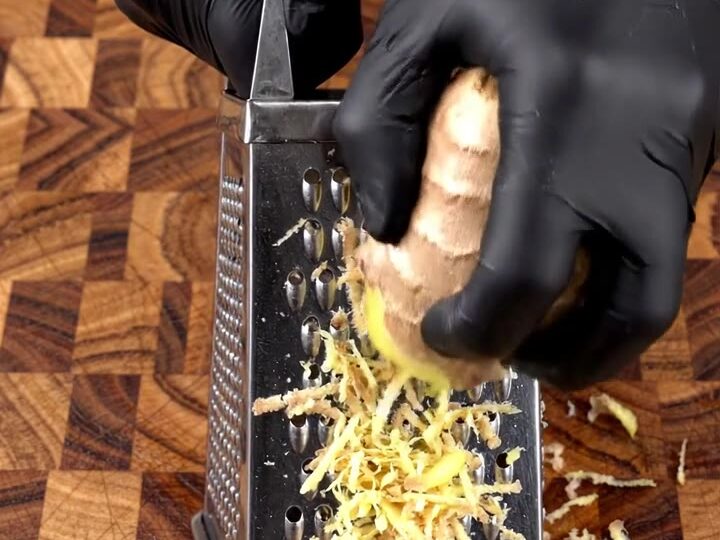
- Grate the gingerGrate the fresh ginger over the cutting board with a box grater, using the small holes so the pieces melt into the sauce. Keep it close to the board so the fine pulp is caught with the mushrooms.Look for A fragrant pile of fine ginger pulp sits on the board.Tip Peel the ginger with the edge of a spoon before grating.
The butter should be melted, foaming and bubbling steadily around the edges of the skillet, with the sliced shiitake spread around the rim and the grated ginger scattered over them. The mushrooms should sizzle and start to take on color at their edges, and the miso butter should melt smoothly into the fat without clumps.
The kitchen should smell warm and savory, with a faint sweetness from the ginger and the miso. Before you add the fish, check that the butter is hot enough to sizzle a small piece of mushroom, and that the pan is not so hot that the butter darkens or smokes. Adjust the heat if needed. A steady bubble is the signal that the base is ready for the halibut to sear without sticking.
Sear the halibut skin-side down
- Melt the butter and build the baseMelt the butter in the cast iron skillet over medium heat until it is foaming. Add the sliced shiitake mushrooms around the edges of the pan, then add the grated ginger and one tablespoon of miso butter, stirring until the miso melts into the butter.Look for Butter bubbles steadily and the mushrooms begin to sizzle at the edges.Tip Keep the mushrooms around the rim so they brown rather than steam.
- Sear the halibut skin-side downPlace the fillets skin-side down in the bubbling butter, season the flesh with kosher salt and black pepper, and spoon the butter over the fish. Baste steadily until the flesh turns opaque and the edges look golden.Look for The edges of the fish turn opaque and golden, and the skin is crisp.Safe temperature 145°F (63°C) internal temperature (fish)Tip Tilt the pan slightly and spoon the foaming butter over the top of each fillet.
- Flip and finish the halibutFlip the fillets with tongs and sear the top side until it is lightly golden. Keep basting for another minute until the fish is just cooked through and flakes easily at the thickest point. Check the thickest part with a thermometer if unsure.Look for The fish flakes easily with a fork and the top is lightly golden.Safe temperature 145°F (63°C) internal temperature (fish)Tip Remove the fish as soon as it flakes to avoid drying it out.
The fillets should be lying skin-side down in the bubbling butter, and the flesh should begin to turn opaque from the edges inward. The skin should look crisp and golden, and the edges of the fish should be starting to brown. You should hear a steady sizzle and see the butter foam around each fillet as you baste it with a spoon. Check the fish by lifting one corner gently with tongs: the skin should release easily and the bottom should be golden. If the skin sticks, leave it alone for another minute, then try again. Once the flesh is mostly opaque, you can move on to the flip, which finishes the fish through and gives the top a light sear.
Flip, finish and plate
- Plate in the skilletArrange the mushrooms, bok choy and butter sauce around the fillets in the skillet, spooning the sauce over the top. Scatter the sliced green onions and toasted sesame seeds over the fish and serve straight from the pan while the butter is still glossy.Look for Sauce is glossy and the mushrooms are tender and browned at the edges.Tip Serve immediately so the butter stays warm and glossy.
The top of the halibut should be lightly golden, and the flesh should flake easily at its thickest point when pressed gently with a fork. The mushrooms should be tender and browned at the edges, and the butter sauce should look glossy and slightly thickened. The bok choy should be softened at the base with its leaves wilted. Before you plate, check that the fish is opaque all the way through, without any translucent center. Spoon the sauce over the fillets, scatter the green onions and toasted sesame seeds, and serve right away while the butter is still warm and bright.
Common mistakes
The most common mistake is cooking the halibut in butter that is not hot enough. If the butter is too cool, the fish releases moisture, steams instead of searing and sticks to the pan, leaving a pale and flabby skin. Wait until the butter is foaming before the fish goes in, and make sure the skillet is not crowded. Another frequent error is flipping the fillets too early.
Give the skin time to crisp and release naturally, and lift gently with tongs. Overcooking is the third problem: halibut dries out quickly once the flesh is opaque and flaky, so pull it from the heat at the first sign of flaking. Finally, avoid burning the miso. Add it to the butter once the heat is steady, and lower the flame if the butter starts to darken or smell bitter.
How to tell it’s done
The halibut is done when the flesh is opaque all the way through and flakes easily when pressed with a fork at the thickest point. The fillets should feel firm but still moist, and the skin should be crisp and golden. For food safety, the fish must reach at least 145°F (63°C) at the thickest part, and an instant-read thermometer makes this easy to confirm.
Insert it into the center of the thickest fillet, not touching the pan. If the reading is below 145°F (63°C), return the fish to the butter for another 30 seconds and check again. Let the fillets rest briefly on the plate, so the flesh finishes setting, then serve. The mushrooms should be tender and browned at the edges, and the sauce should look glossy and slightly thick.
- Fish: 145°F (63°C) in the thickest part
Up next · Part 3 of 3
4 variations · storage & make-ahead · 5 answers · printable card
Tips, FAQ & printable recipe (Part 3)← Back to the ingredients (Part 1)