Dinner · Part 1 of 3: Ingredients
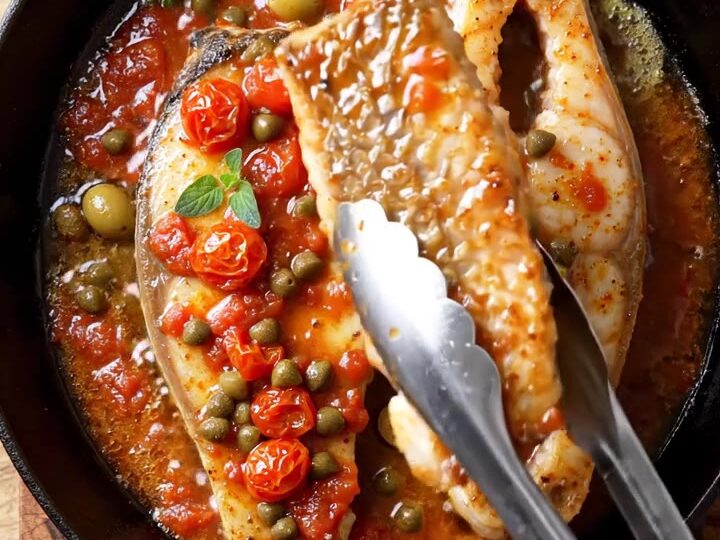
Pan-Seared Swordfish with Tomato Caper Sauce in One Skillet
- Prep
- Cook
- Total
- Serves
- 2
Swordfish is one of those fish that rewards a hot pan. Each steak sears to a golden, lightly crisped edge while the center stays moist and flaky. Add a rustic sauce of cherry tomatoes, two kinds of olives and capers, and the whole dinner comes together in one cast iron skillet.
This recipe builds a complete dinner from a few pantry staples and fresh lemon. You season thick swordfish steaks, sear them in olive oil and butter until golden, then let the pan juices carry the flavor into a simple tomato sauce studded with olives and capers.
The skillet goes straight to the table, so there is little to wash and the dish looks as good as it tastes. The finish is a light snow of finely grated hard cheese and a few thyme sprigs. Allow about 40 minutes from start to finish, including the time to prepare the lemon and tomatoes.
Ingredients
- 2 swordfish steaks, about 6 oz each
- kosher salt, to taste
- 1 lemon, halved and sliced, plus wedges for serving
- 1 cup cherry tomatoes, halved
- 1/4 cup pitted black olives, plus extra for garnish
- 1/4 cup pitted green olives, plus extra for garnish
- finely grated hard cheese, such as Parmigiano-Reggiano, for serving
- 2 tbsp extra-virgin olive oil
- 1 tbsp unsalted butter
- 2 tbsp capers, drained
- fresh thyme sprigs, for garnish, to taste
Why this recipe works
Searing the swordfish in a mixture of olive oil and butter does two jobs at once. The oil tolerates the high heat needed for a crisp golden crust, while the butter adds a nutty, rounded flavor and foams as it browns.
Basting the fish with that melted fat keeps the top surface from drying out while the edges crisp.
Cooking the sauce in the same pan lets the browned bits and fish juices dissolve into the tomatoes. As the cherry tomatoes soften and release their juice, the liquid reduces and turns glossy, coating the olives and capers.
Because the fish rests in the sauce at the end, its flavor soaks in gently instead of being cooked out.
Notes and substitutions
Choose swordfish steaks that are at least three-quarters of an inch thick. Thin steaks overcook before the center sets and can dry out in the sauce. Ask the fishmonger for steaks cut from the loin and check that the flesh is firm and bright, without a strong smell.
A 12-inch cast iron skillet holds two steaks and the sauce in one layer and keeps heat even for a good sear. Use a wooden spoon for stirring the tomatoes so the sauce stays rustic, and an instant-read thermometer to confirm the fish reaches a safe temperature.
Pitted olives save time and keep the bite easy. Drain the capers well so the sauce does not turn watery. If you need a substitute for swordfish, halibut or mahi-mahi of similar thickness will work with the same method.
- swordfish steaks: halibut or mahi-mahi steaks of similar thickness, cooked the same way
- unsalted butter: additional olive oil, though the sauce will be less rich
- hard cheese: finely grated Pecorino Romano, which is saltier
Equipment
- 12-inch cast iron skillet
- four-sided box grater
- wooden cutting board
- sharp knife
- wooden spoon or basting spoon
- instant-read thermometer
Up next · Part 2 of 3
6 steps · 20 min of cooking · what to look for at each stage
Step-by-step instructions (Part 2)