Dinner · Part 2 of 3: Instructions
Pan-Seared Swordfish with Tomato Caper Sauce in One Skillet Step-by-step instructions
- Prep
- Cook
- Total
- Serves
- 2
Before you start
Measure every ingredient into small prep bowls, pat proteins or vegetables dry with paper towels, and preheat your pan thoroughly before adding oil so browning starts cleanly without steaming.
Take your time with each step, and the result will be worth every minute spent in the kitchen.
Ingredients at a glance (11)
- 2 swordfish steaks, about 6 oz each
- kosher salt, to taste
- 1 lemon, halved and sliced, plus wedges for serving
- 1 cup cherry tomatoes, halved
- 1/4 cup pitted black olives, plus extra for garnish
- 1/4 cup pitted green olives, plus extra for garnish
- finely grated hard cheese, such as Parmigiano-Reggiano, for serving
- 2 tbsp extra-virgin olive oil
- 1 tbsp unsalted butter
- 2 tbsp capers, drained
- fresh thyme sprigs, for garnish, to taste
Instructions
Prep and Aromatics
- Season and prepare the fishSet the swordfish steaks on a wooden cutting board and season both sides with kosher salt. Keep them chilled until you are ready to cook, and take them out of the refrigerator no more than 30 minutes before searing. Halve the lemon, slice one half thinly, and arrange the slices around the fish with the whole lemons, cherry tomatoes and olives.Look for Steaks are evenly seasoned and surrounded by lemon, tomatoes and olives on the board.Tip Salt the fish just before cooking so the surface stays dry and sears well.
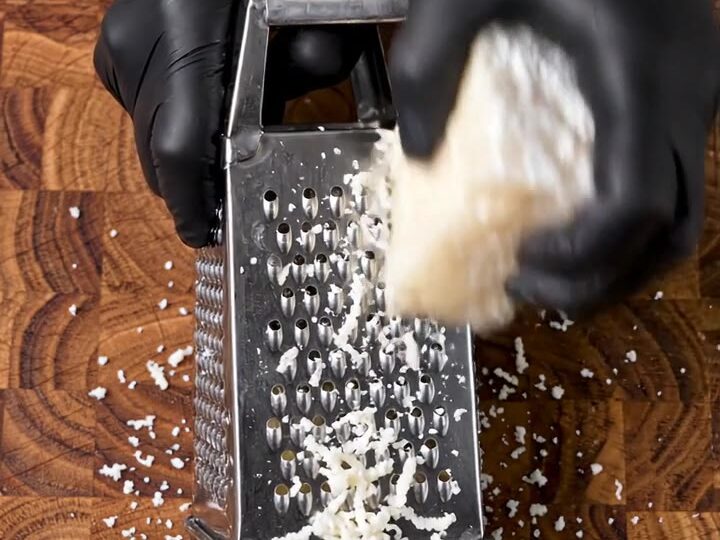
- Grate the cheese and squeeze lemonSqueeze lemon over the fish, then finely grate the hard cheese on the small holes of a four-sided box grater. Scatter the fluffy grated cheese over the board so it is ready for the finish. Halve the cherry tomatoes and set them aside with the olives.Look for Cheese falls in a light, fluffy pile with no large chunks left on the grater.Tip Grate the cheese just before serving so it stays fresh and aromatic.
Every ingredient is evenly coated, fragrant and progressing at a steady gentle sizzle without sticking to the pan surface.
Take a moment to check the color, texture and aroma before moving on to the next stage.
Main Cooking Stage
- Sear the swordfish in butter and oilHeat the olive oil and the butter in the cast iron skillet over medium-high heat until the butter foams. Lay the swordfish steaks in the pan and sear each side until golden and lightly crisped at the edges. Spoon the melted butter and oil over the fish as it cooks.Look for Butter foams, then the fish turns golden with crisp edges on each side.Tip Do not move the steaks while they sear; they release easily once golden.
- Build the tomato caper sauceAdd the halved cherry tomatoes, the black olives, the green olives and the capers to the pan, along with the pan juices. Simmer gently, stirring occasionally, until the tomatoes soften and the sauce thickens into a rustic, glossy sauce.Look for Tomatoes have softened and the sauce looks thick and glossy around the fish.Tip Keep the heat at a steady simmer so the tomatoes break down without scorching.
- Finish the fish to a safe temperatureNestle the swordfish steaks back into the tomato caper sauce and cook until the thickest part of the fish is opaque and flakes at the center. The fish must reach 145°F (63°C) on an instant-read thermometer before you remove the skillet from the heat.Look for Flesh is opaque all the way through and flakes easily at the center.Safe temperature 145°F (63°C) internal temperature (fish)Tip Check the thickest steak in its center; thin edges cook faster than the middle.
Every ingredient is evenly coated, fragrant and progressing at a steady gentle sizzle without sticking to the pan surface.
Take a moment to check the color, texture and aroma before moving on to the next stage.
Final Glaze and Plating
- Garnish and serve from the skilletServe the dish directly in the skillet. Garnish with fresh thyme sprigs, extra black and green olives and lemon wedges. Scatter the grated hard cheese over the top just before bringing the pan to the table.Look for Plate looks glossy with fresh thyme, bright lemon and a light dusting of cheese.Tip Bring the skillet to the table hot so the sauce stays glossy and warm.
Every ingredient is evenly coated, fragrant and progressing at a steady gentle sizzle without sticking to the pan surface.
Take a moment to check the color, texture and aroma before moving on to the next stage.
Common mistakes
Avoid crowding the pan or flipping too early before a crust forms, keep the burner at steady medium-high heat so aromatics never scorch, and season in balanced layers rather than only at the end.
How to tell it’s done
The dish is ready when the exterior shows even golden color, the center feels tender when pressed gently with a fork, and the sauce coats the back of a spoon glossy and fragrant.
- Fish: 145°F (63°C) in the thickest part
Up next · Part 3 of 3
4 variations · storage & make-ahead · 3 answers · printable card
Tips, FAQ & printable recipe (Part 3)← Back to the ingredients (Part 1)