Dinner · Part 3 of 3: Tips & recipe card
Roasted Sausage and Sweet Onions — One Pan, 30 Minutes Tips, FAQ & printable recipe
- Prep
- Cook
- Total
- Serves
- 4
Tips for success
Choose sausages with a high meat content and a natural casing if you can find them; natural casings snap when you bite, which is half the pleasure of this dish.
If the pan juices accumulate more fat than you want, tilt the pan and spoon off the excess before plating, leaving behind the darker, flavorful drippings. The rendered sausage fat is the only fat this recipe needs — it bastes the onions as they roast.
Position matters on the pan. Onions placed at the outer edges brown fastest because sheet pans are hottest there; keep the thickest wedges at the edges and any smaller pieces toward the center.
If the sausages brown faster than the onions, slide the onions to the hot spots and move the sausages inward for the final minutes. Small adjustments like these turn a good pan into a great one.
Variations
- Bratwurst and Apples: Swap the sweet onions for half onions and half thick apple wedges. The apples roast into the sausage fat and turn tender-tart, and the whole pan takes on a sweet-savory flavor that suits a cool evening.
- Hot and Spicy: Use hot Italian sausages instead of mild ones. The rendered fat carries the heat through the pan as it roasts, and the sweet onions balance the spice in every bite without any extra work.
- Chicken Sausage Version: Poultry sausages work well here; roast them the same way but cook to 165°F (74°C) at the center. They release less fat than pork, so expect slightly paler onions with the same sweet flavor.
- Balsamic Finish: Drizzle a tablespoon of balsamic vinegar over the onions during the final 5 minutes of roasting. It reduces in the pan heat into a dark, glossy glaze that clings to the wedges and the sausages alike.
Storage and make-ahead
- Fridge
- Airtight container, up to 4 days. The onions grow sweeter overnight; reheat gently so the sausages stay juicy.
- Freezer
- Freeze cooked sausages and onions together in a freezer-safe container up to 2 months; thaw overnight in the refrigerator before reheating.
- Reheat
- Warm on a sheet pan at 350°F (175°C) for 10 minutes, or gently in a covered skillet with a splash of water; avoid the microwave, which toughens the casings.
Cool leftovers no more than 2 hours at room temperature, then transfer the sausages and onions to an airtight container. They keep in the refrigerator for up to 4 days. The onions soften further overnight and become even sweeter, which makes the leftovers excellent folded into scrambled eggs or layered on a toasted roll.
The onions can be cut into wedges up to a day ahead; store them in a covered container in the refrigerator so they stay crisp.
The full dish is best roasted fresh, since the sausages lose their snap when reheated, but the cut onions can wait on the sheet pan in the fridge for a few hours before the sausages are added and the pan goes into the oven.
Serving ideas
Serve the sausages and onions straight from the pan at the table for a rustic presentation, or plate them individually with a spoonful of the glossy pan juices over each sausage.
The onions, tender and deeply caramelized, are the natural sauce — no extra condiment is needed, though a spoonful of grainy mustard on the side is a classic companion.
This dish pairs naturally with starches that soak up the juices: mashed potatoes, polenta, or a crusty loaf for mopping the pan. A sharp green salad on the side cuts through the richness, and a glass of dry cider or a light red wine echoes the sweet-savory notes of the caramelized onions.
Frequently asked questions
Can this be made with chicken or turkey sausages?
Why are the onions steaming instead of browning?
Can the onions be cut ahead of time?
How is doneness checked without a thermometer?
What should be served with roasted sausage and onions?
Roasted Sausage and Sweet Onions — One Pan, 30 Minutes
Ingredients
- 1 1/2 lb fresh Italian sausages
- 3 sweet onions, cut into thick wedges
Instructions
- Set a rack in the middle of the oven and heat it to 425°F (220°C). A fully hot oven is what gives the sausages a browned exterior while the onions soften and caramelize rather than steam. Let the oven come all the way to temperature before the pan goes in.
- Peel the sweet onions and cut each one into 6 to 8 thick wedges, leaving the root end partly attached so the layers hold together as they roast. Thick wedges turn golden and jammy at the edges instead of burning thin and drying out on the hot pan.
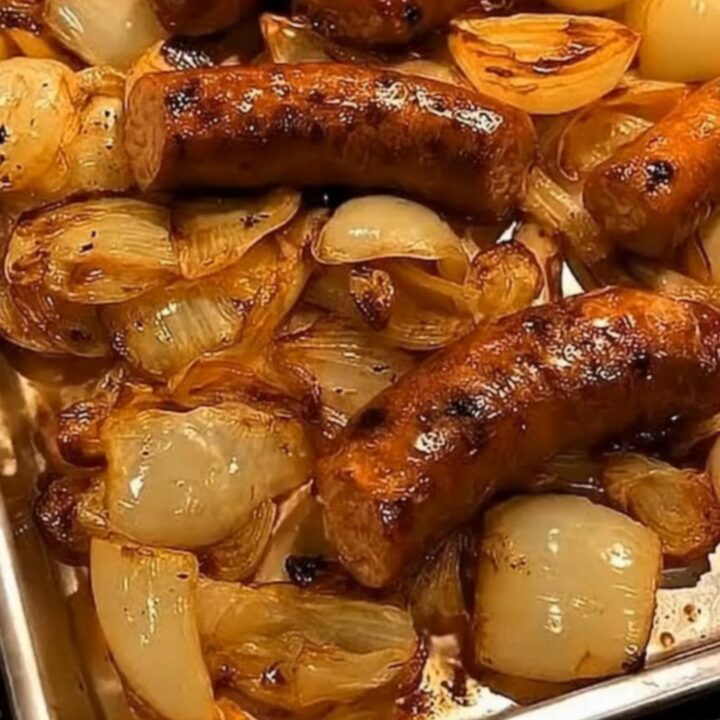
- Spread the onion wedges across a rimmed sheet pan in a single, even layer, then nestle the sausages on top and among them. Leave visible space between every piece so the dry heat can circulate and brown each surface instead of trapping steam underneath.
- Slide the pan onto the middle rack and roast for 15 minutes. The sausages will plump and begin to brown on top while the onions slump and turn translucent at the center. Keep the oven door closed so the heat stays high and the surfaces dry out properly.
- Pull the pan out and, with metal tongs, turn each sausage and each onion wedge so the pale sides face the heat. Return the pan to the oven for another 10 to 15 minutes, until the sausages are deeply browned and the onions are caramelized at the edges.
- Insert an instant-read thermometer into the center of the thickest sausage. Fresh sausages are safe at 160°F (71°C) — if the reading is lower, roast 3 to 5 minutes more and check again. The juices should run clear and the casing should feel firm under the tongs.
- Let the sausages and onions rest on the sheet pan for 3 minutes out of the oven. Resting lets the juices settle back into the sausage instead of running out at the first cut, and the onions finish softening in the residual pan heat.
- Lift a sausage and a tangle of onions onto each plate with the tongs, spooning the glossy pan juices over the top. Slice through a sausage at the table to show the juicy interior, and serve immediately while the onions are still steaming and sweet.
Estimated nutrition per serving
- Calories
- 460
- Protein
- 20 g
- Carbohydrates
- 12 g
- Fat
- 36 g
Next recipe
Garlic Herb Roast Pork with Baby Potatoes in One Pan
See the recipe → →This recipe is based on a short cooking video and is published under the pen name Clara Weller. It was checked before publication, but errors can slip through. Nutrition, when shown, is an estimate. Read more in our editorial policy and on our food safety page.
More recipes to try
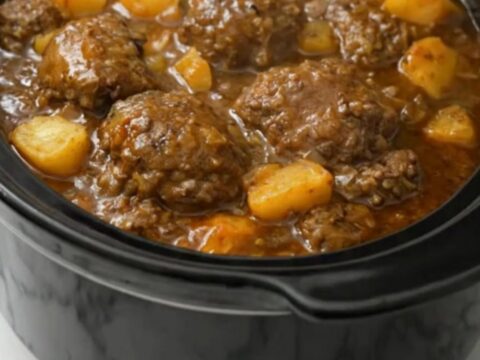
Slow Cooker Salisbury Steak and Potatoes with Rich Onion Gravy
Total time: 6 h 20 min
One-Pan Impossible Pizza Pie with a Crispy Baking-Mix Crust
Total time: 1 h 5 min
Creamy Lemon Garlic Spaghetti Ready in 12 Minutes
Total time: 12 min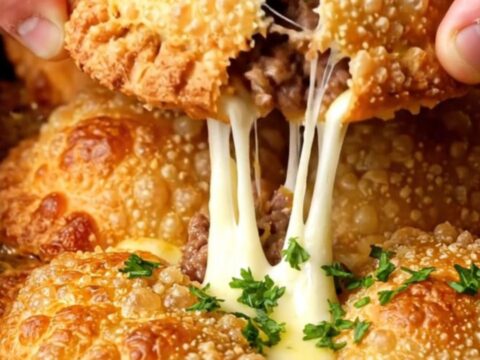
Crispy Cheesy Beef Tortilla Pockets: A 15-Minute Dinner
Total time: 30 min
Sticky Glazed Beef Tortilla Kebabs
Total time: 45 min