Dinner · Part 1 of 3: Ingredients
Roasted Sausage and Sweet Onions — One Pan, 30 Minutes
- Prep
- Cook
- Total
- Serves
- 4
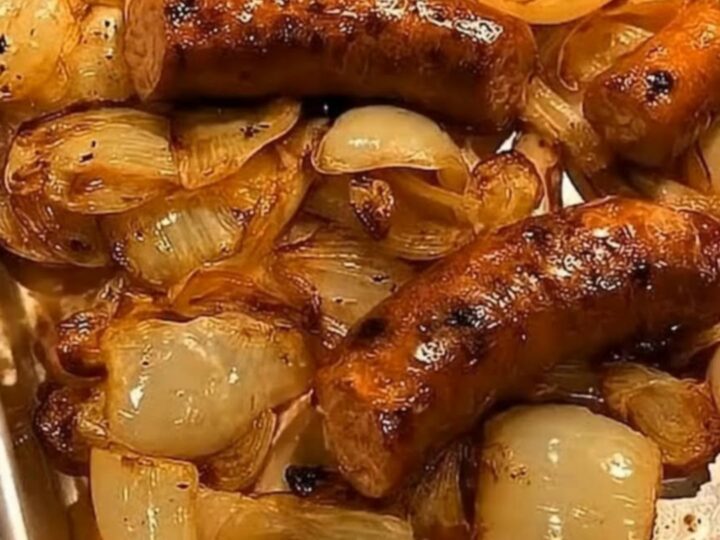
Two ingredients, one pan, and a hot oven do all the work here. Fresh sausages roast alongside thick wedges of sweet onion until the casings brown and the onions turn golden and jammy at the edges. It is the kind of uncomplicated dinner that tastes far richer than the effort behind it, and the whole thing comes together in about forty minutes, start to finish.
Roasting sausages and onions together is one of the oldest tricks in home cooking, and it still earns its place on a weeknight table. The pan does the browning for you: rendered sausage fat drips onto the onions, the onions soften and caramelize in that fat, and everything comes out of the oven glossy, savory and sweet at the same time.
There is no sauce to make, no pot to watch, and no skillet to scrub — just a rimmed sheet pan and a hot oven. Choose good fresh sausages and sweet onions such as Vidalia or Walla Walla for their high sugar content. Cut the onions thick so they hold their shape, give everything room on the pan, and let the dry heat of the oven build the color.
Ingredients
- 1 1/2 lb fresh Italian sausages
- 3 sweet onions, cut into thick wedges
Why this recipe works
High, dry heat is the engine of this recipe. At 425°F (220°C), the moisture on the surface of the sausages and onions evaporates quickly, which is the precondition for browning. The sausage casings tighten and turn golden while the natural sugars in the sweet onions concentrate, then caramelize at the edges.
Because the onions sit in the rendered fat that escapes the sausages, they cook in a thin layer of flavorful drippings that conducts heat evenly and carries the caramelization further than dry roasting alone would.
The single layer matters as much as the temperature. Sausages and onions crowded together trap steam, and steam keeps surfaces pale and soft instead of browned.
Spacing everything out, and turning each piece once midway through, exposes every side to the dry heat in turn. The thick wedge cut protects the onions: they slump and soften in the center while the outer layers darken, so you get both textures in one bite.
Notes and substitutions
Sweet onions — Vidalia, Walla Walla or Texas 1015 — are the right choice because their high sugar content caramelizes deeply without turning bitter. Yellow onions work in a pinch; expect a slightly sharper, more savory result.
For the sausages, any fresh, fully raw sausage works: sweet or hot Italian, bratwurst, or chicken and turkey sausages if you prefer poultry. Remember that poultry sausages need to reach 165°F (74°C) rather than 160°F (71°C).
A heavy rimmed sheet pan gives the best browning and contains the rendered fat safely. Metal tongs make turning the sausages and lifting the onions easy, and an instant-read thermometer takes the guesswork out of doneness — it is the most useful tool on this list. If the sausages crowd the pan, split the batch across two pans rather than stacking; the extra minutes of roasting are worth the color you gain.
- sweet onions: Yellow onions work well; they are less sweet but still caramelize deeply under the broiler-hot dry heat of a fully preheated oven.
- fresh Italian sausages: Any fresh raw sausage works — bratwurst, or mild and hot Italian alike. Keep them in their casings so they stay plump and juicy while roasting.
- fresh Italian sausages: Chicken or turkey sausages roast the same way but must reach 165°F (74°C) at the center instead of 160°F (71°C) to be fully cooked.
Equipment
- rimmed sheet pan
- metal tongs
- sharp knife
- cutting board
- instant-read thermometer
- white serving plate
Up next · Part 2 of 3
8 steps · 30 min of cooking · what to look for at each stage
Step-by-step instructions (Part 2)