Dinner · Part 3 of 3: Tips & recipe card
Mongolian Beef Noodles in One Skillet, Ready in 30 Minutes Tips, FAQ & printable recipe
- Prep
- Cook
- Total
- Serves
- 4
Tips for success
The freezer is the best tool in this recipe: 15 minutes of firming turns flank steak into something that slices paper-thin with almost no effort, and thin slices are what keep the meat tender after a fast, hot sear.
Slice against the grain — look at the direction the fibers run and cut across them. A sharp knife matters more here than in almost any other step.
Get the skillet properly hot before the beef goes in — the oil should shimmer and thin out when the pan is tilted. High, steady heat is what produces the browned bits that season the vegetables and the sauce, so resist the urge to lower it.
And keep the cornstarch slurry stirred right up until it hits the simmering sauce; cornstarch settles fast in a resting bowl.
Variations
- Spicy Mongolian noodles: Add a teaspoon of crushed red pepper flakes to the sauce, or drizzle chili crisp over each bowl at the table for heat with a little crunch.
- Chicken version: Swap the flank steak for thinly sliced chicken thighs; cook to 165°F (74°C) and follow the same sear-and-rest order for juicy pieces.
- Extra vegetables: Stir in snap peas, shredded carrots or sliced mushrooms with the peppers — anything that cooks in 2 to 3 minutes keeps the crisp-tender texture.
- Rice bowl style: Skip the noodles and serve the saucy beef and peppers over hot steamed rice; double the sauce so there is plenty to soak into the grains.
Storage and make-ahead
- Fridge
- Airtight container, up to 3 days; the sauce stays glossy if reheated gently.
- Freezer
- Freezes for up to 2 months; thaw overnight in the refrigerator before reheating.
- Reheat
- Skillet over medium heat with a splash of water, tossing until steaming, about 4 minutes.
Leftovers keep well because the sauce stays silky overnight. Cool the noodles for no more than 2 hours, then transfer them to an airtight container and refrigerate. The peppers soften slightly by the next day, but the flavor deepens, and a quick reheat brings the gloss back. Eat within 3 days for the best texture.
Almost everything can be prepared hours ahead. Slice and coat the beef in the morning and refrigerate it; whisk the sauce, make the slurry and cut the vegetables, each in its own container, up to a day in advance.
Cook the noodles just before dinner — they are the only element that suffers from waiting — and the stir-fry itself comes together in about 10 minutes.
Serving ideas
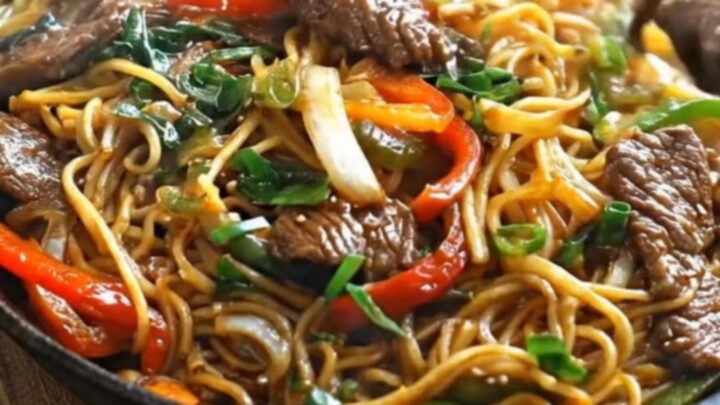
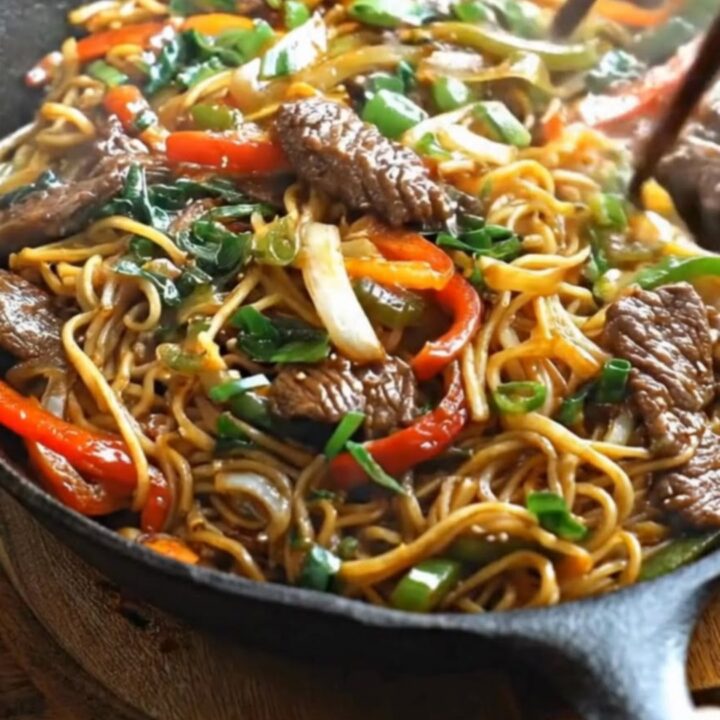
Serve the noodles straight from the skillet into warm, shallow bowls, piling the beef and peppers on top so the colors show and the sauce pools around the noodles.
Warm bowls matter more than they seem: the sauce stays fluid and glossy to the last twirl instead of tightening against cold ceramic. A fork or chopsticks both work — the strands are built for twirling.
The dish is a complete dinner on its own, but it welcomes simple sides. Steamed rice soaks up any extra sauce for anyone who wants more, and a quick cucumber salad with rice vinegar cuts through the sweetness of the glaze. Extra scallion pieces scattered over each bowl at the table add a fresh, sharp finish against the rich, caramelized sauce.
Frequently asked questions
Can this be made ahead for a weeknight dinner?
Why did the beef turn out chewy instead of tender?
Can the sauce be made without cornstarch?
What noodles work best if lo mein is not available?
Can this recipe be frozen and reheated later?
Mongolian Beef Noodles in One Skillet, Ready in 30 Minutes
Ingredients
- 1 lb flank steak, thinly sliced against the grain
- 2 tbsp cornstarch, for coating the beef
- 8 oz lo mein noodles (fresh or dried)
- 1/2 cup low-sodium soy sauce
- 1/2 cup packed brown sugar
- 4 cloves garlic, minced
- 1 tbsp fresh ginger, grated
- 1/2 cup water
- 1 tbsp cornstarch stirred into 2 tbsp cold water, for thickening
- 3 tbsp vegetable oil, divided
- 2 cups bell peppers, cut into thin strips (mixed colors)
- 4 scallions, cut into 2-inch pieces
Instructions
- Freeze the flank steak for 15 minutes, then slice it as thin as possible against the grain. Toss the slices with the 2 tablespoons of cornstarch until every piece carries a light, even coating, and set them aside for no more than 30 minutes before cooking.
- In a small bowl, whisk the soy sauce, brown sugar, minced garlic, grated ginger and the half cup of water until the sugar dissolves. In a second bowl, stir the tablespoon of cornstarch into 2 tablespoons of cold water to make a smooth slurry, and keep both beside the stove.
- Bring a large pot of salted water to a boil and cook the noodles until just al dente — a minute less if the package gives a range. Drain them, rinse briefly under warm water and toss with a small drizzle of oil so they do not stick together.
- Heat 2 tablespoons of the oil in a cast-iron skillet over high heat until it shimmers. Lay the beef slices in a single layer, in two batches if needed, and sear about 1 minute per side. The beef is done at 145°F (63°C); transfer it to a plate and let it rest at least 3 minutes.
- Add the remaining tablespoon of oil to the same skillet. Tumble in the bell pepper strips and the scallion pieces and stir-fry over high heat for 2 to 3 minutes, tossing constantly so they char in spots without collapsing. The vegetables should stay crisp and bright.
- Pour the soy-sauce mixture into the skillet with the vegetables and bring it to a lively simmer. Give the cornstarch slurry one last stir and whisk it in. The sauce thickens in under a minute; keep it moving so it turns smooth and glossy rather than clumpy.
- Return the rested beef slices and any collected juices to the skillet, then add the drained noodles. Using tongs, lift and turn the mixture for 1 to 2 minutes so every strand picks up sauce and the beef warms through in the glossy glaze.
- Transfer the saucy noodles and beef straight from the skillet into warm bowls, piling the beef and peppers on top so the color shows. Serve immediately while the sauce is still glossy and steaming, with extra scallion pieces scattered over each bowl.
Estimated nutrition per serving
- Calories
- 640
- Protein
- 32 g
- Carbohydrates
- 78 g
- Fat
- 21 g
- Fiber
- 4 g
- Sugar
- 22 g
- Sodium
- 1150 mg
Next recipe
Chili Cheese Dog Crescent Rolls in One Pan
See the recipe → →This recipe is based on a short cooking video and is published under the pen name Clara Weller. It was checked before publication, but errors can slip through. Nutrition, when shown, is an estimate. Read more in our editorial policy and on our food safety page.
More recipes to try
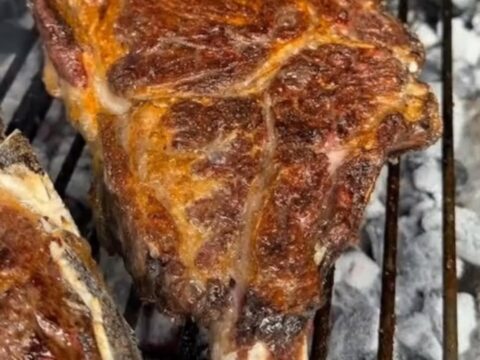
Charcoal-Grilled Bone-In Ribeye with a Deep Golden Crust
Total time: 38 min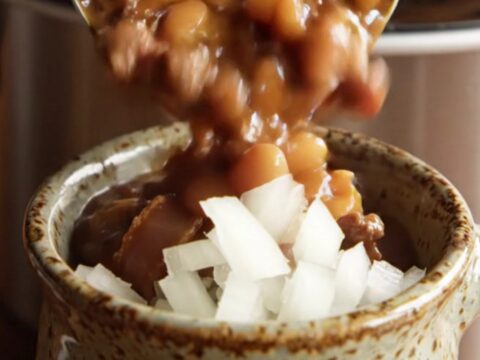
Crockpot Cowboy Calico Beans with Bacon and Beef
Total time: 4 h 20 min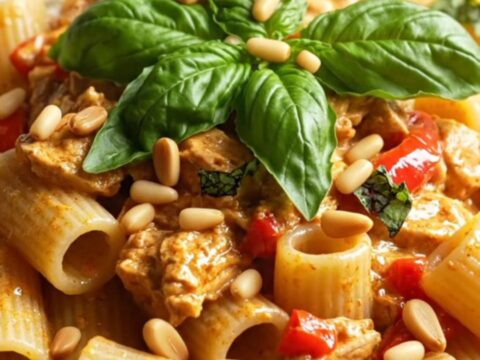
Crockpot Roasted Red Pepper Goat Cheese Chicken (Dump-and-Go)
Total time: 4 h 20 min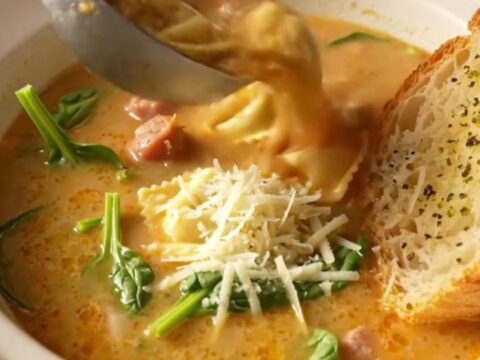
Slow-Cooker Creamy Tortellini, Sausage & Spinach Soup
Total time: 5 h 50 min
Birria Mulitas with Double Cheese and Crispy Red Tortillas
Total time: 15 min