Dinner · Part 2 of 3: Instructions
Mongolian Beef Noodles in One Skillet, Ready in 30 Minutes Step-by-step instructions
- Prep
- Cook
- Total
- Serves
- 4
Before you start
Set up completely before the first flame — this recipe moves fast once the skillet heats. Freeze the flank steak for 15 minutes, then slice it thin against the grain and toss the slices with cornstarch. Whisk the soy sauce, brown sugar, garlic, ginger and water in one bowl, and stir the cornstarch slurry in another; both live beside the stove.
Get a large pot of salted water boiling, cut the bell peppers into thin strips and the scallions into 2-inch pieces, and set out tongs and warm bowls. With everything in reach, the stir-fry itself takes barely ten minutes of active work.
Ingredients at a glance (12)
- 1 lb flank steak, thinly sliced against the grain
- 2 tbsp cornstarch, for coating the beef
- 8 oz lo mein noodles (fresh or dried)
- 1/2 cup low-sodium soy sauce
- 1/2 cup packed brown sugar
- 4 cloves garlic, minced
- 1 tbsp fresh ginger, grated
- 1/2 cup water
- 1 tbsp cornstarch stirred into 2 tbsp cold water, for thickening
- 3 tbsp vegetable oil, divided
- 2 cups bell peppers, cut into thin strips (mixed colors)
- 4 scallions, cut into 2-inch pieces
Instructions
Prep the beef, sauce and noodles
- Slice and coat the steakFreeze the flank steak for 15 minutes, then slice it as thin as possible against the grain. Toss the slices with the 2 tablespoons of cornstarch until every piece carries a light, even coating, and set them aside for no more than 30 minutes before cooking.Look for The slices should look dry and powdery, not pasty — a thin veil of starch clings to each piece of beef.Tip The starch coating protects the beef from the hot pan and helps the sauce cling to every slice later.
- Mix the Mongolian sauceIn a small bowl, whisk the soy sauce, brown sugar, minced garlic, grated ginger and the half cup of water until the sugar dissolves. In a second bowl, stir the tablespoon of cornstarch into 2 tablespoons of cold water to make a smooth slurry, and keep both beside the stove.Look for No sugar granules should sit at the bottom of the bowl, and the slurry should pour without streaks.Tip Mixing the sauce before the pan gets hot means the stir-fry never has to pause mid-cook.
- Boil the noodlesBring a large pot of salted water to a boil and cook the noodles until just al dente — a minute less if the package gives a range. Drain them, rinse briefly under warm water and toss with a small drizzle of oil so they do not stick together.Look for The noodles should bend easily but still offer a slight bite at the center when tested.Tip Slightly underdone noodles finish cooking in the sauce and absorb flavor without turning mushy.
By the end of the first phase, everything that will meet the hot pan is ready and waiting. The beef slices wear a dry, even cornstarch coating with no wet clumps, the sauce sits dissolved and smooth beside the stove, and the slurry pours without streaks.
The noodles are al dente — bending easily but with a slight bite at the center — drained, lightly oiled and free of sticking. The peppers are cut into even strips and the scallions into long pieces. Nothing should still need a knife or a whisk when the skillet goes on the heat.
Sear the beef, char the vegetables
- Sear the beefHeat 2 tablespoons of the oil in a cast-iron skillet over high heat until it shimmers. Lay the beef slices in a single layer, in two batches if needed, and sear about 1 minute per side. The beef is done at 145°F (63°C); transfer it to a plate and let it rest at least 3 minutes.Look for Deep brown edges form quickly and the slices firm up; no pink should remain at the center before the beef leaves the pan.Safe temperature 145°F (63°C) internal temperature (steaks, chops and roasts)Tip Crowding the pan drops the temperature and steams the meat instead of searing it — give each slice space.
- Stir-fry the peppers and scallionsAdd the remaining tablespoon of oil to the same skillet. Tumble in the bell pepper strips and the scallion pieces and stir-fry over high heat for 2 to 3 minutes, tossing constantly so they char in spots without collapsing. The vegetables should stay crisp and bright.Look for Listen for a steady sizzle and look for blistered edges on the peppers and wilted-green scallion tops.Tip The browned bits left by the beef dissolve into the vegetables and season the whole pan.
The beef slices should leave the pan deeply browned at the edges with no pink at the center, having hit 145°F (63°C), and rest on a plate while the vegetables cook. The peppers and scallions keep their shape and color, with blistered, charred spots on the pepper skins and softened greens — never limp or watery. The skillet should sound like a steady, aggressive sizzle the whole time; if the noise fades to a hiss, the heat is too low or the pan is crowded. Browned bits cling to the pan bottom, ready to flavor the sauce.
Sauce, toss and serve
- Build the glossy saucePour the soy-sauce mixture into the skillet with the vegetables and bring it to a lively simmer. Give the cornstarch slurry one last stir and whisk it in. The sauce thickens in under a minute; keep it moving so it turns smooth and glossy rather than clumpy.Look for The sauce should coat the back of a spoon and fall in a slow, shiny ribbon.Tip Slurry always goes in at a simmer — added to a lukewarm pan, cornstarch settles into beads.
- Toss in the beef and noodlesReturn the rested beef slices and any collected juices to the skillet, then add the drained noodles. Using tongs, lift and turn the mixture for 1 to 2 minutes so every strand picks up sauce and the beef warms through in the glossy glaze.Look for The strands look lacquered and pull away from the pan cleanly; nothing pools at the bottom of the skillet.Tip Tongs, not a spoon, keep the noodle tangle intact and fold the beef through gently.
- Plate and serve hotTransfer the saucy noodles and beef straight from the skillet into warm bowls, piling the beef and peppers on top so the color shows. Serve immediately while the sauce is still glossy and steaming, with extra scallion pieces scattered over each bowl.Look for Steam should still rise off the bowls when they reach the table and the sauce should shine under the light.Tip Warm bowls hold the heat longer and keep the sauce flowing to the last twirl.
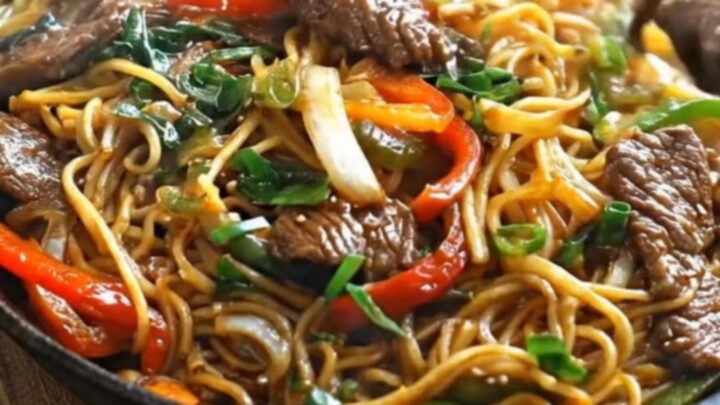
The sauce should thicken within a minute of the slurry going in, turning smooth and glossy enough to coat a spoon in a slow ribbon. After the beef and noodles fold in, every strand glistens and the mixture pulls cleanly away from the pan — no thin sauce pooling at the edges. The beef is warmed through, the peppers still crisp, and the whole skillet smells of caramelized garlic and brown sugar. Serve immediately; the sauce is at its glossiest in the first few minutes off the heat.
Common mistakes
Three mistakes account for most disappointing batches. First, slicing the steak with the grain instead of against it — the muscle fibers stay long and the meat turns chewy no matter how briefly it cooks. Second, crowding the pan: the beef steams in its own juices, grays instead of browning, and waterlogs the skillet, so sear in two batches if needed.
Third, adding the cornstarch slurry to a lukewarm pan, where it settles into beads instead of thickening; the sauce must be at a full simmer first. Overcooked noodles are the fourth hazard — pull them a minute early, since they keep softening in the hot sauce.
How to tell it’s done
The dish is done when the noodles look lacquered rather than wet, the sauce clings in a glossy film instead of pooling, and the beef slices are tender with browned edges. The beef finished cooking when it reached 145°F (63°C) in the pan and rested 3 minutes; a quick return to the skillet only warms it through, so there is no need to test again.
The peppers should still show blistered, crisp edges, and the scallion greens should have softened just enough to bend. Steam rising off the bowl and a shine on every strand are the surest signs it is time to eat.
- Steaks, chops and roasts: 145°F (63°C) in the thickest part, then a 3-minute rest
Up next · Part 3 of 3
4 variations · storage & make-ahead · 5 answers · printable card
Tips, FAQ & printable recipe (Part 3)← Back to the ingredients (Part 1)