Dinner · Part 1 of 3: Ingredients
Mongolian Beef Noodles in One Skillet, Ready in 30 Minutes
- Prep
- Cook
- Total
- Serves
- 4
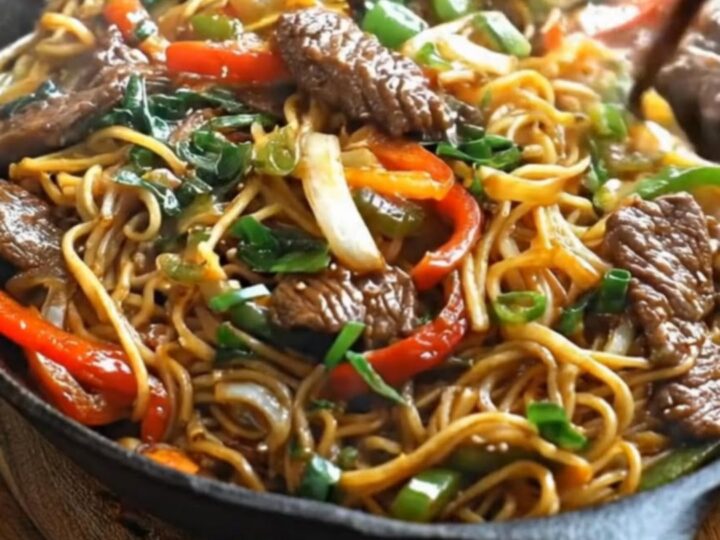
A steaming skillet of Mongolian beef noodles — thin slices of flank steak, sweet garlicky sauce and springy noodles tangled with bell peppers and scallions — is one of the most satisfying dinners to pull together on a weeknight. Everything cooks in a single pan, the sauce comes together in the time it takes to boil water, and the whole thing lands on the table in about 30 minutes, glossy and steaming hot.
Mongolian beef noodles takes the takeout favorite — seared beef in a sweet, savory brown-sugar and soy glaze — and folds it into a bowl of noodles so the sauce has somewhere to go. Thin flank steak slices get a quick cornstarch coating and a fast, hot sear, then bell peppers and scallions pick up the browned bits left in the pan.
The sauce simmers down with garlic and ginger, thickens to a lacquer, and the noodles and beef go back in for one final toss. The result is a glossy, saucy tangle that twirls cleanly onto a fork, with crisp vegetables for contrast and tender beef in every bite. It is a one-skillet dinner built for busy evenings.
Ingredients
- 1 lb flank steak, thinly sliced against the grain
- 2 tbsp cornstarch, for coating the beef
- 8 oz lo mein noodles (fresh or dried)
Mongolian sauce
- 1/2 cup low-sodium soy sauce
- 1/2 cup packed brown sugar
- 4 cloves garlic, minced
- 1 tbsp fresh ginger, grated
- 1/2 cup water
- 1 tbsp cornstarch stirred into 2 tbsp cold water, for thickening
- 3 tbsp vegetable oil, divided
- 2 cups bell peppers, cut into thin strips (mixed colors)
- 4 scallions, cut into 2-inch pieces
Why this recipe works
The method borrows the best trick from Chinese-American restaurant kitchens: a thin cornstarch coating on the beef. It shields the meat from the intense heat of the cast-iron skillet, so the outside browns while the inside stays tender, and it gives the finished sauce something to grip.
Slicing the steak thin against the grain shortens the muscle fibers, which is what makes inexpensive flank steak taste like something far more luxurious after a one-minute sear.
Cooking the sauce separately from the beef protects both. If the sugary glaze simmered with the meat from the start, the sugar would scorch before the beef cooked through.
Instead, the beef sears first and rests, the vegetables char in the same pan, and the sauce builds last, thickening in under a minute with a cornstarch slurry. Adding the noodles at the very end, after the sauce has reached full gloss, lets them absorb flavor without overcooking.
Notes and substitutions
Flank steak is the classic cut here because it slices into long, tender ribbons, but sirloin or skirt steak work just as well — the key is slicing thin against the grain.
Lo mein noodles hold the sauce best; fresh ones need only a brief blanch, while dried spaghetti is a perfectly good stand-in. Low-sodium soy sauce keeps the glaze from turning salty once it reduces; with regular soy sauce, cut the amount by a tablespoon or two.
A cast-iron skillet or wok gives the sear and char that make this dish, but any heavy skillet will do — just give it time to get properly hot before the beef goes in. Mixed-color bell peppers make the bowl look as good as it tastes, and scallions should go in cut long so they stay visible after the toss. Freeze the steak for 15 minutes before slicing; firm meat takes thin, even slices far more easily.
- flank steak: Sirloin steak or skirt steak work well; slice thin against the grain and keep the sear brief so the meat stays tender.
- lo mein noodles: Spaghetti, linguine or ramen noodles all hold the sauce nicely; cook them just to al dente before the stir-fry.
- bell peppers: Snap peas, shredded carrots or sliced onion can stand in; add whatever cooks quickly so the vegetables stay crisp.
- brown sugar: Granulated sugar works, though brown sugar gives the sauce its deeper, caramel-like color and flavor.
Equipment
- cast-iron skillet or large wok
- large pot for the noodles
- kitchen tongs
- cutting board and sharp knife
- small bowl for the sauce
- measuring cups and spoons
Up next · Part 2 of 3
8 steps · 15 min of cooking · what to look for at each stage
Step-by-step instructions (Part 2)