Dinner · Part 3 of 3: Tips & recipe card
Miso Butter Seared Halibut with Shiitake and Bok Choy in One Pan Tips, FAQ & printable recipe
- Prep
- Cook
- Total
- Serves
- 2
Tips for success
Choose halibut fillets that are the same thickness so they cook evenly. A center-cut piece is ideal because it has consistent thickness from end to end. If the fillets are very thick, you can add a minute or two to the basting stage, but check the internal temperature before serving.
Keep the pan sauce moving when you add the miso. Stir it into the butter with a spoon so it dissolves completely and does not clump. A glossy, smooth sauce coats the fish, while a grainy one separates on the plate. Remove the pan from direct heat for a moment if the butter starts to smoke.
Variations
- Red Miso Version: Swap the white miso for red miso to make a deeper, saltier sauce. Use about half the amount and taste before seasoning the fish with extra salt, since red miso adds noticeable savory depth.
- Salmon Swap: Use skin-on salmon fillets in place of halibut. Score the skin side lightly and sear it skin-side down until crisp. The richer fish pairs well with the same miso butter and mushrooms.
- Spinach and Mushroom: Replace the bok choy with a large handful of baby spinach, wilted into the pan sauce at the end. The leaves soak up the miso butter quickly, giving a softer, greener side to the fish.
- Ginger Garlic Butter: Add a teaspoon of finely grated fresh ginger along with the garlic for a brighter, spicier sauce. Keep the rest of the method the same and add the ginger when you stir in the miso.
Storage and make-ahead
- Fridge
- Store leftover halibut and sauce in an airtight container in the refrigerator for up to 2 days.
- Reheat
- Reheat gently in a skillet over low heat with a spoonful of butter, just until warmed through.
This dish is best eaten fresh, within minutes of coming off the skillet, because the seared crust softens and the fish firms as it cools. If you have leftovers, let the halibut and sauce cool for no more than 2 hours at room temperature, then transfer them to a shallow airtight container.
Keep the fish separate from the mushrooms and bok choy when you store them, so the vegetables do not turn soggy. Refrigerated leftovers keep for up to 2 days. Do not leave cooked fish out of the refrigerator for longer than 2 hours.
You can prepare the components in advance, but you should cook the halibut just before serving. Score and season the fillets up to a few hours ahead, then keep them covered and refrigerated until you are ready to start. Trim and halve the bok choy, slice the shiitake and scallions, and toast the sesame seeds a day ahead.
Store the vegetables in a sealed container in the refrigerator. Measure the miso and butter into small bowls so you can move quickly once the pan is hot. Grate the garlic right before using it, since it loses its bright flavor and becomes sharp if it sits for long.
Serving ideas
Serve the halibut right away on warm plates, with the miso butter sauce spooned underneath each fillet. The sauce is best while it still looks glossy and smells of toasted butter, so bring the plates to the table quickly.
Add a bowl of steamed white rice to soak up the extra sauce, which makes a complete and satisfying dinner without extra work.
For a lighter table setting, pair the halibut with a simple cucumber salad dressed with rice vinegar and a pinch of sugar. The crisp, cool crunch balances the rich butter and miso.
Offer extra scallions and sesame seeds on the side so everyone can add more to their taste. A dry, crisp white wine or a pot of green tea complements the mild fish and savory sauce well.
Frequently asked questions
Can you use frozen halibut for this recipe?
What is the best miso for this sauce?
Why does your pan sauce look grainy or split?
How do you know when the halibut is cooked through?
Can you cook this on a grill or in a nonstick pan?
Miso Butter Seared Halibut with Shiitake and Bok Choy in One Pan
Ingredients
- 2 halibut fillets, about 6 oz each, thick cut
- kosher salt, to taste
- freshly ground black pepper, to taste
- 6 fresh shiitake mushrooms, stems removed
- 2 baby bok choy, halved lengthwise
- 3 tbsp unsalted butter
- 3 cloves fresh garlic, finely grated
- 1 tbsp white miso paste
- 2 scallions, thinly sliced
- 1 tsp toasted sesame seeds
Instructions
- Pat the halibut fillets dry with paper towels. Make shallow diagonal cuts across the flesh, about a quarter inch deep, without cutting through. Season both sides with kosher salt and black pepper. Keep the fish refrigerated until the pan is ready.
- Trim the shiitake stems and leave the caps whole. Halve the bok choy lengthwise and rinse off any grit, then pat dry. Grate the garlic on a fine microplane so it falls into fine shreds onto the board.
- Set a cast-iron skillet over medium-high heat. Add the butter and let it melt, then foam and bubble. Keep an eye on it so the milk solids turn nut brown but do not scorch.
- Lay the seasoned halibut in the hot butter, scored side down, along with the shiitake caps and bok choy halves. Let them sear without moving for about 4 minutes, until the bottoms turn golden.
- Tilt the pan slightly and spoon the bubbling butter over the fish. Stir the grated garlic and miso into the pooled butter until smooth. Keep spooning the glossy sauce over the halibut for about 3 minutes.
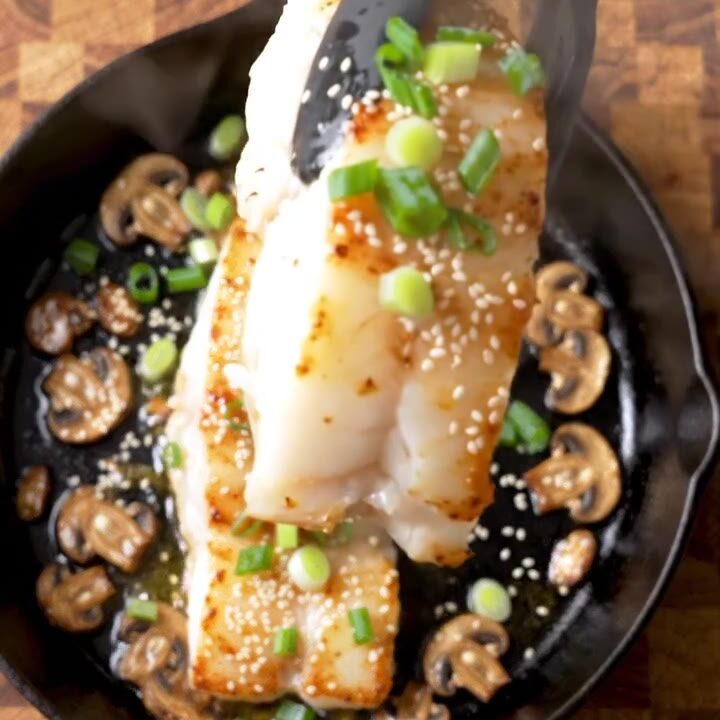
- Cook until the halibut is opaque all the way through and the mushrooms are caramelized at the edges. The fish is done when it reaches 145°F (63°C) at the thickest part. Lift the fillets with tongs and transfer to a plate.
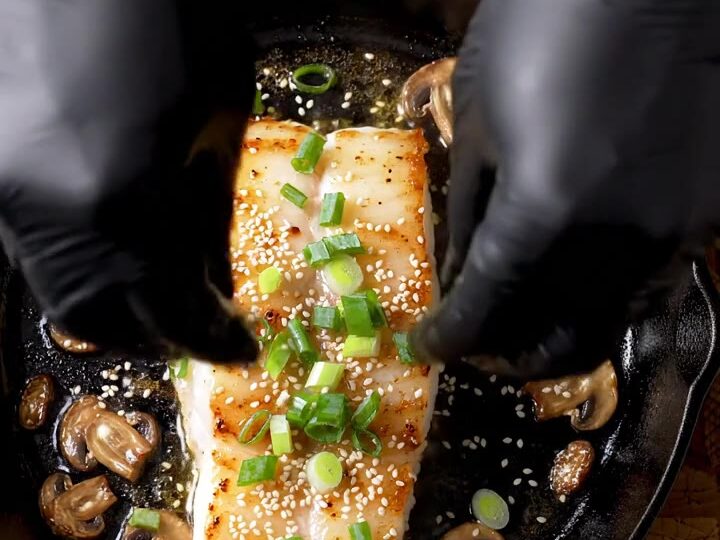
- Spoon the miso butter sauce and caramelized shiitake and bok choy onto two plates. Place each halibut fillet over the sauce, then finish with sliced scallions and toasted sesame seeds.
- Serve the halibut immediately while the fish is still warm and the sauce is glossy. Spoon any remaining butter from the skillet over the top for extra shine before the plates leave the table.
Estimated nutrition per serving
- Calories
- 470
- Protein
- 38 g
- Carbohydrates
- 12 g
- Fat
- 30 g
- Fiber
- 2 g
- Sugar
- 2 g
- Sodium
- 980 mg
Next recipe

Cajun Blackened Salmon with Creamy Gulf Shrimp Skillet
See the recipe → →This recipe is based on a short cooking video and is published under the pen name Clara Weller. It was checked before publication, but errors can slip through. Nutrition, when shown, is an estimate. Read more in our editorial policy and on our food safety page.
More recipes to try

Crispy Smashed Potatoes with Molten Raclette Cheese in One Skillet
Total time: 50 min
Tuscan Salmon and Scallop Vodka Cream Skillet in One Pan
Total time: 45 min
Garlic Butter Mushroom Parmesan Polenta Skillet for Crispy Weeknight Dinner
Total time: 1 h
Thai Red Curry Prawns in One Skillet in Under 30 Minutes
Total time: 25 min
Pan-Seared Arctic Char with Garlic Herb Butter and Crispy Skin
Total time: 27 min