Dinner · Part 1 of 3: Ingredients
Butternut Squash Sage Lasagna with Brown Butter Skillet
- Prep
- Cook
- Total
- Serves
- 6
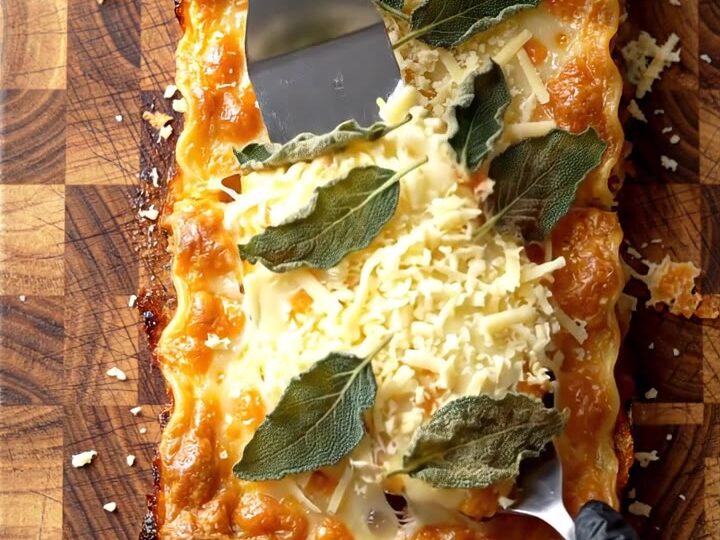
Brown butter goes golden and nutty, sage leaves crisp in seconds, and sweet butternut squash softens into every layer. This lasagna bakes in a single cast iron skillet, so the flavour builds in the pan and the cleanup stays simple. It is a cozy dinner that feels special without a long list of steps or dishes to wash afterward.
This butternut squash sage lasagna is built the way a skillet dish should be: everything happens in one dark cast iron pan. You start by browning butter until it foams and turns golden, then fry sage leaves until they are crisp and fragrant in that same fat. Diced squash goes in next, cooking until tender and caramelised at the edges.
Fresh lasagna sheets are layered over the squash, each one dusted with finely grated hard aged cheese, and the whole pan goes into the oven until the top turns golden and bubbles at the edges. Before slicing, a short rest lets the layers set, so each portion comes out as a neat rectangle with a crisp top.
Ingredients
- 1 lb butternut squash, peeled, seeded and cut into small cubes
- 12 fresh sage leaves
- 2 whole garlic cloves, lightly crushed
- 6 tbsp unsalted butter
- 9 fresh lasagna noodle sheets, about 8 inches long
- 1 1/2 cups finely grated hard aged cheese, such as Parmigiano-Reggiano
- 1 tsp kosher salt, plus more to taste
- freshly ground black pepper to taste
- 1 tbsp olive oil
Why this recipe works
Browning the butter first is the key to the flavour. As the milk solids darken, they add toasty, hazelnut-like notes that plain melted butter cannot provide.
Frying the sage in this same fat makes the leaves crisp and infuses the butter with their earthy perfume, so every bite carries that aroma. Working in the skillet rather than a separate sauce pan keeps those browned bits in the dish instead of leaving them behind.
Cooking the squash in the browned butter before layering is the second reason this method works. Pre-cooking gives the cubes a caramelised edge and makes them tender, so they do not stay firm or watery once the lasagna bakes. Because the noodles sit directly on the buttery squash, they soften gently while the top browns in the oven, and the finished slab holds together well when cut.
Notes and substitutions
Fresh lasagna sheets are ideal here because they are thin and tender, and they cook through in the same time as the squash. If you only have dried sheets, use the no-boil kind and break them so they fit the skillet in a single layer.
Hard aged cheese such as Parmigiano-Reggiano gives sharp, savoury flavour and grates into fine shreds that melt and brown well across the top. Freshly grated cheese from a block melts more evenly than pre-shredded cheese, which often contains anti-caking agents.
A 10-inch dark cast iron skillet is the best choice because it holds heat evenly, browns the butter well and goes straight from the stovetop into the oven. Use a fine box grater to produce a fluffy pile of cheese, and a large chef's knife to cut the squash into small, even cubes.
If you do not have cast iron, use an oven-safe skillet of similar size, but check the browning, since thinner pans heat unevenly and may need a few minutes less in the oven.
- fresh lasagna noodle sheets: no-boil dried lasagna sheets, broken to fit the skillet
- Parmigiano-Reggiano: Pecorino Romano or aged Grana Padano
- unsalted butter: salted butter, with the added salt reduced
Equipment
- 10-inch dark cast iron skillet
- box grater with fine holes
- large chef's knife
- cutting board
- fish spatula or flat spatula
- small saucepan
Up next · Part 2 of 3
6 steps · 45 min of cooking · what to look for at each stage
Step-by-step instructions (Part 2)