Dinner · Part 2 of 3: Instructions
Butternut Squash Sage Lasagna with Brown Butter Skillet Step-by-step instructions
- Prep
- Cook
- Total
- Serves
- 6
Before you start
Gather everything before you turn on the stove, since the butter browns quickly and the sage fries in seconds. Peel the squash, remove the seeds and cut it into small cubes about half an inch wide so they cook evenly. Pat the sage leaves completely dry with a clean towel, because damp leaves spatter in hot butter.
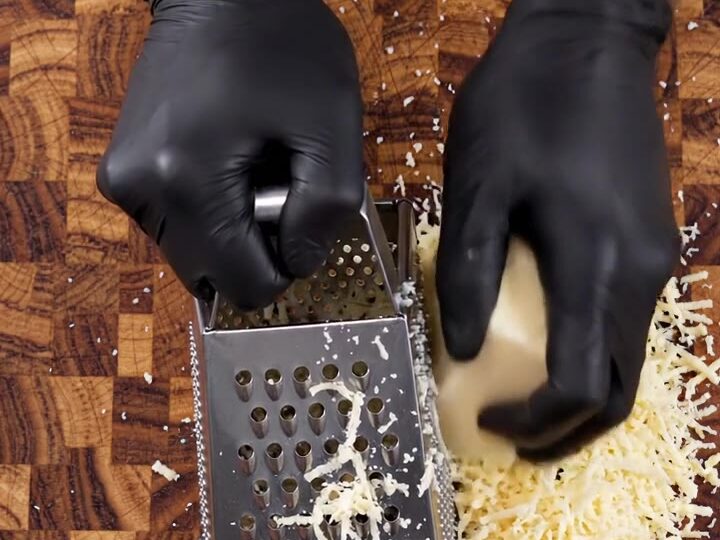
Lightly crush the garlic cloves with the flat of your knife, leaving them whole. Grate the hard aged cheese on the fine holes of the box grater and set it aside in a loose pile. Lay out the fresh lasagna sheets and have a flat spatula nearby. Preheat the oven only when you are ready to bake, and keep a plate lined with paper towels by the stove for the crisp sage leaves.
Ingredients at a glance (9)
- 1 lb butternut squash, peeled, seeded and cut into small cubes
- 12 fresh sage leaves
- 2 whole garlic cloves, lightly crushed
- 6 tbsp unsalted butter
- 9 fresh lasagna noodle sheets, about 8 inches long
- 1 1/2 cups finely grated hard aged cheese, such as Parmigiano-Reggiano
- 1 tsp kosher salt, plus more to taste
- freshly ground black pepper to taste
- 1 tbsp olive oil
Instructions
Brown the butter and fry the sage
- Cube the squash and prep the sagePeel the butternut squash, remove the seeds and cut it into small cubes about half an inch wide. Pat the sage leaves dry with a towel and set them on the board with the whole garlic cloves. Grate the hard aged cheese on the fine holes of the box grater and keep it in a loose pile.Look for Squash cubes are even and sage leaves are fully dry before frying.Tip Dry sage leaves crisp quickly, while damp leaves spatter and steam in the hot butter.
- Brown the butter with sageMelt the butter in the cast iron skillet over medium heat. Let it foam, then keep swirling until the milk solids turn golden brown and smell nutty, about 4 minutes. Lift the sage leaves out onto a paper towel as they crisp, and sprinkle them with a pinch of salt.Look for Butter foams, then turns golden brown with a nutty aroma.Tip Pull the pan off the heat as soon as the butter turns amber, since it darkens quickly.
The butter has foamed, settled and turned golden brown, with a nutty smell that fills the kitchen. The sage leaves have crisped and stopped sizzling, and they are lifted onto paper towels. Before going on, make sure the butter is not dark brown or smoking, because burnt butter tastes bitter and will ruin the dish. If it darkens too quickly, lower the heat slightly and keep swirling the pan. The sage should be crisp and bright green, not black. Taste a small piece of the fried sage and check that it is crunchy and fragrant before you add the squash and begin building the layers in the skillet.
Cook the squash and build the layers
- Cook the squash in browned butterAdd the garlic cloves and the squash cubes to the browned butter in the skillet. Season with the remaining salt and black pepper. Cook over medium heat, stirring every few minutes, until the squash is tender and lightly caramelised at the edges, about 12 minutes. Remove the garlic and discard it.Look for Squash is tender when pierced with a knife and edges are golden.Tip Cut cubes uniformly so they cook at the same rate and soften together.
- Layer the noodles and cheeseSpread a thin layer of squash and butter over the bottom of the skillet. Lay three noodle sheets over it, breaking them to fit the skillet. Scatter a third of the squash, a third of the fried sage and a handful of cheese over the noodles. Repeat the layers two more times, finishing with noodles and a generous layer of cheese.Look for Each layer covers the one below and the top is evenly coated in cheese.Tip Keep a little of the butter in the pan to moisten each layer.
The squash cubes are tender when pierced with a knife, with golden, caramelised edges that smell sweet and toasty. The garlic has been removed, and the butter is coating every cube. Before layering, spread the squash in an even layer so the noodles will sit flat.
Each noodle sheet should be broken to fit so the skillet is covered without gaps. Scatter the squash, fried sage and cheese over each layer and press gently so the layers stay together. The top layer should be generously covered in cheese. If the squash looks dry, add a spoonful more butter to moisten the layers before going into the oven.
Bake, rest and garnish the lasagna
- Bake until golden and bubblingHeat the oven to 375°F (190°C). Drizzle the olive oil over the top layer and bake the skillet on the middle rack for 20 to 25 minutes, until the top is golden and the edges are bubbling. Let the lasagna rest in the skillet for 10 minutes so it holds its shape.Look for Top is golden brown and the edges are bubbling vigorously.Tip Rotate the skillet halfway through baking for even browning.
- Garnish and serveScatter the remaining crispy fried sage leaves over the top of the lasagna and dust with a final pinch of grated cheese. Cut the lasagna into rectangular portions with a sharp knife and lift each one out with a spatula.Look for Slices hold their shape and the cheese on top is melted and golden.Tip Wipe the knife between cuts for clean, neat portions.
After baking, the top is deep golden brown, the cheese has melted into crisp patches, and the edges bubble steadily. The slab should look set and firm when you press the centre gently with the back of a spoon. Before cutting, let the lasagna rest for 10 minutes so the layers settle and hold together. Scatter the reserved crisp sage and a final pinch of cheese over the top. The garnish should look fresh and crunchy. Cut a test portion first to check that the layers are cohesive and the noodles are tender, then serve the rest.
Common mistakes
The most common mistake is burning the butter. Once it turns from golden to dark brown, it tastes bitter, so keep the heat at medium and watch closely. Another mistake is frying the sage in butter that is still foaming hard, which can scorch the leaves; wait until the foam calms and the butter is beginning to brown.
Do not skip drying the sage, because wet leaves spatter and steam rather than crisp. Undercooked squash is another frequent problem, so cook the cubes until they are fully tender before layering, since they will not soften enough in the oven alone. Finally, do not cut the lasagna straight from the oven. The 10-minute rest is essential, because a hot slab collapses and slides when sliced.
How to tell it’s done
The lasagna is ready when the top is golden brown and the cheese has melted into crisp patches, with bubbling along the edges of the skillet. The noodles should be tender when you cut through a corner with a knife and slide a spatula underneath. Check the centre by inserting a thin knife: it should feel hot and the layers should be fully set rather than loose.
The squash should be soft and easy to pierce throughout. This recipe contains no meat, poultry or fish, so no internal protein temperature applies, but an instant-read thermometer in the centre should register well above 165°F (74°C) so the layers are fully heated through and set.
Up next · Part 3 of 3
4 variations · storage & make-ahead · 5 answers · printable card
Tips, FAQ & printable recipe (Part 3)← Back to the ingredients (Part 1)