Dinner · Part 3 of 3: Tips & recipe card
Butternut Squash Sage Lasagna with Brown Butter Skillet Tips, FAQ & printable recipe
- Prep
- Cook
- Total
- Serves
- 6
Tips for success
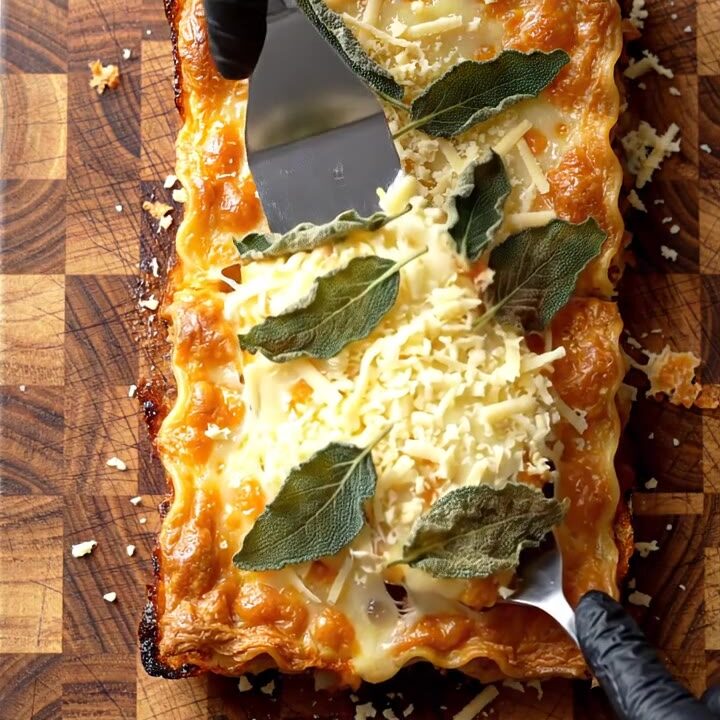
For the cleanest slices, let the lasagna cool for the full 10 minutes in the skillet before cutting. Use a sharp knife and wipe the blade between cuts so each rectangle keeps its neat edges and the cheese does not drag. A thin fish spatula slides under each portion more easily than a thick one, and it keeps the crisp top intact as you lift it out.
Brown the butter in a light-coloured pan if you want to watch its colour clearly, although the cast iron works well too. Keep your attention on the pan during the browning stage, because the transition from golden to dark happens fast.
Store leftover fried sage in an airtight container at room temperature for a day, but add fresh sage to the top at serving for the crispest garnish and aroma.
Variations
- Extra crispy top: Remove the foil for the final 5 minutes of baking and move the skillet closer to the top rack. The cheese on the surface turns deeper golden and crunchy, giving more contrast with the soft squash layers below and the tender noodles underneath.
- Brown butter with lemon: Stir a teaspoon of finely grated lemon zest into the browned butter once it has cooled slightly. The bright citrus cuts through the richness of the squash and cheese and brightens the nutty flavour of the sage in every layer.
- Garlic-forward layers: Mince the garlic cloves instead of leaving them whole, and cook them in the butter until just golden before adding the squash. The garlic becomes mellow and sweet, spreading gentle savoury warmth through each layer of the skillet lasagna.
- Nutmeg-spiced squash: Add a pinch of ground nutmeg and a little extra black pepper to the squash as it cooks. The warm spice deepens the autumn flavour of the butternut and pairs especially well with the sage and the brown butter in the dish.
Storage and make-ahead
- Fridge
- Store the cooled lasagna in an airtight container in the refrigerator for up to 3 days, then reheat portions until steaming hot throughout.
- Freezer
- Freezing is possible for up to 2 months in airtight, freezer-safe portions. Thaw overnight in the refrigerator before reheating.
- Reheat
- Reheat covered portions in a 350°F (175°C) oven until hot through, about 15 minutes, and add fresh crisp sage before serving.
Leftover lasagna keeps well when handled correctly. Let it cool in the skillet for no more than 2 hours at room temperature, then cover the skillet tightly with foil or transfer the portions to a shallow airtight container. Cooling in shallow portions helps the centre chill quickly and evenly.
Refrigerate the lasagna promptly, where it keeps for up to 3 days. The sage garnish will soften in storage, so if you want the crispest top, add a fresh batch of fried sage when you reheat. Avoid leaving the dish out for long periods, since the cheese and butter can spoil.
You can prepare the components a day in advance to shorten the evening's work. Cube the squash, store it in an airtight container in the refrigerator, and grate the cheese the same day for the best texture. Fry the sage the day you cook it, because fried leaves lose their crispness overnight.
You can also brown the butter ahead and keep it refrigerated; reheat it gently until liquid before building the layers. Assemble and bake the lasagna on the day you plan to serve it, so the noodles stay tender and the top browns properly. Make-ahead assembly means the layers absorb more liquid, so the noodles can turn soft if left overnight, which is why baking fresh gives the best result.
Serving ideas
Serve the lasagna warm, cut into rectangular portions and lifted onto each plate with a spatula. A simple green salad with lemon vinaigrette balances the sweetness of the squash and the richness of the brown butter, and it makes a light counterpoint to the cheese. Provide an extra grating of hard aged cheese and a little freshly ground black pepper at the table so each person can add more.
For a relaxed dinner, pair the lasagna with crusty bread to soak up the golden butter from the pan, and a glass of dry white wine or sparkling water. Garnish each plate with a few of the reserved crisp sage leaves just before serving for aroma and crunch.
Because the dish is rich, smaller portions with a crisp salad or roasted vegetables on the side make it feel complete and satisfying for a family meal or a small gathering.
Frequently asked questions
Can you use dried lasagna noodles instead of fresh sheets?
Why does the brown butter taste bitter?
Can this lasagna be made without cheese?
How do you keep the sage leaves crisp on top?
Can you prepare the squash ahead of time?
Butternut Squash Sage Lasagna with Brown Butter Skillet
Ingredients
- 1 lb butternut squash, peeled, seeded and cut into small cubes
- 12 fresh sage leaves
- 2 whole garlic cloves, lightly crushed
- 6 tbsp unsalted butter
- 9 fresh lasagna noodle sheets, about 8 inches long
- 1 1/2 cups finely grated hard aged cheese, such as Parmigiano-Reggiano
- 1 tsp kosher salt, plus more to taste
- freshly ground black pepper to taste
- 1 tbsp olive oil
Instructions
- Peel the butternut squash, remove the seeds and cut it into small cubes about half an inch wide. Pat the sage leaves dry with a towel and set them on the board with the whole garlic cloves. Grate the hard aged cheese on the fine holes of the box grater and keep it in a loose pile.
- Melt the butter in the cast iron skillet over medium heat. Let it foam, then keep swirling until the milk solids turn golden brown and smell nutty, about 4 minutes. Lift the sage leaves out onto a paper towel as they crisp, and sprinkle them with a pinch of salt.
- Add the garlic cloves and the squash cubes to the browned butter in the skillet. Season with the remaining salt and black pepper. Cook over medium heat, stirring every few minutes, until the squash is tender and lightly caramelised at the edges, about 12 minutes. Remove the garlic and discard it.
- Spread a thin layer of squash and butter over the bottom of the skillet. Lay three noodle sheets over it, breaking them to fit the skillet. Scatter a third of the squash, a third of the fried sage and a handful of cheese over the noodles. Repeat the layers two more times, finishing with noodles and a generous layer of cheese.
- Heat the oven to 375°F (190°C). Drizzle the olive oil over the top layer and bake the skillet on the middle rack for 20 to 25 minutes, until the top is golden and the edges are bubbling. Let the lasagna rest in the skillet for 10 minutes so it holds its shape.
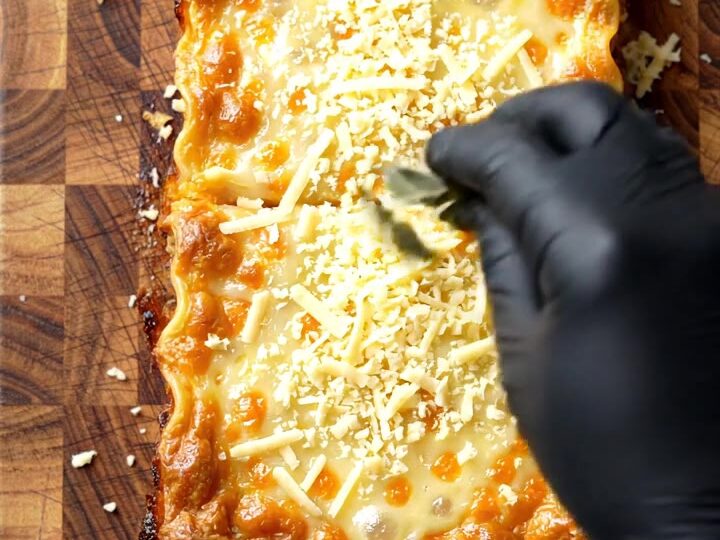
- Scatter the remaining crispy fried sage leaves over the top of the lasagna and dust with a final pinch of grated cheese. Cut the lasagna into rectangular portions with a sharp knife and lift each one out with a spatula.
Estimated nutrition per serving
- Calories
- 520
- Protein
- 18 g
- Carbohydrates
- 46 g
- Fat
- 30 g
- Fiber
- 4 g
- Sodium
- 780 mg
Next recipe

Zucchini Lasagna Rolls Baked in a Skillet with Ricotta and Mozzarella
See the recipe → →This recipe is based on a short cooking video and is published under the pen name Clara Weller. It was checked before publication, but errors can slip through. Nutrition, when shown, is an estimate. Read more in our editorial policy and on our food safety page.
More recipes to try

Parmesan Crusted Cod with Lemon Garlic Butter in One Skillet
Total time: 27 min
Cajun Blackened Salmon with Creamy Gulf Shrimp Skillet in One Pan
Total time: 40 min
Seared Swordfish with Tomato, Olive and Caper Skillet Sauce
Total time: 27 min
Brown Butter Seared Sea Scallops with Sage and Squash in One Skillet
Total time: 30 min
Crispy Eggplant Parmesan with Molten Mozzarella in One Skillet
Total time: 55 min