Dinner · Part 3 of 3: Tips & recipe card
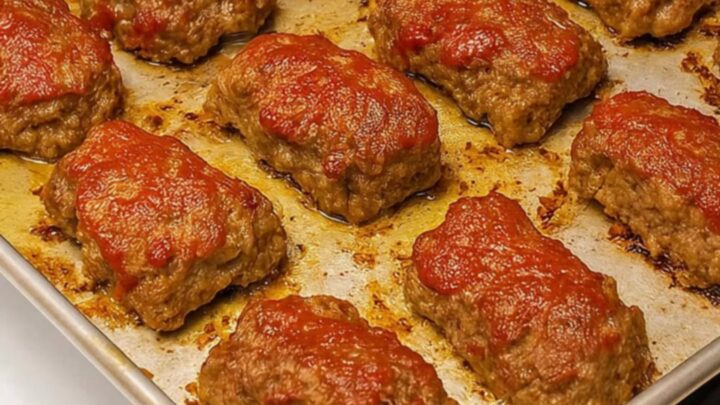
Juicy Mini Meatloaves with Sweet Glaze in 45 Minutes Tips, FAQ & printable recipe
- Prep
- Cook
- Total
- Serves
- 6
Tips for success
Weigh the portions if a kitchen scale is nearby: 4 oz each gives six even loaves that finish at the same moment, which matters more with mini meatloaves than with one big loaf. When shaping, press the mixture together firmly enough to close cracks but not so hard that it compacts — a compacted loaf bakes dense.
Smooth the tops with the back of a spoon so the glaze spreads in an even layer instead of pooling in dips. And keep the beef cold until mixing starts; cold fat stays in the crumb instead of smearing onto the bowl.
The thermometer placement matters as much as the reading: insert it into the side of a loaf, tip reaching the center, and check two or three loaves of different sizes.
If the glaze is browning faster than the centers cook, lay a loose sheet of foil over the pan for the final minutes. For a deeper flavor in the glaze, whisk in a teaspoon of the rendered pan fat at the end of baking and brush it over the loaves as they come out of the oven.
Variations
- Turkey minis: Swap in ground turkey and pull the loaves at 165°F (74°C). Add an extra tablespoon of ketchup to the mixture to keep the crumb moist, and expect a lighter, more delicate loaf.
- Bacon-topped: Lay a half strip of bacon over each loaf before the first bake instead of glazing early, then add the glaze for the final 10 minutes. The bacon bastes the tops and the glaze goes on over crisp bacon.
- Cheddar-stuffed: Press a cube of cheddar into the center of each loaf as you shape it and seal the meat around it. The cheese melts into a molten middle; check the temperature in a cheese-free loaf to be sure.
- Smoky glaze: Whisk a teaspoon of smoked paprika and a teaspoon of hot sauce into the glaze for a sweet-smoky version with a gentle kick. Brown sugar stays the same; the mustard carries the heat.
Storage and make-ahead
- Fridge
- Airtight container, 3 to 4 days; keep extra glaze separate so the tops stay intact.
- Freezer
- Wrap each cooled loaf tightly in plastic and foil, or bag them airtight, up to 3 months. Thaw overnight in the refrigerator before reheating.
- Reheat
- Oven at 350°F (175°C) for 10 to 12 minutes, covered loosely with foil; or microwave in 30-second bursts. The oven keeps the glaze sticky and the edges browned.
Let the loaves cool no more than 2 hours at room temperature, then transfer them to an airtight container, keeping any extra glaze in a separate small container. They keep 3 to 4 days in the refrigerator. Store glaze separately so the tops stay tacky rather than sticky-glued to the lid.
The raw mixture can be shaped into loaves, covered tightly on the parchment-lined pan, and refrigerated up to 24 hours before baking; add 3 to 5 minutes to the first bake since they go in cold. The glaze keeps 3 days covered in the refrigerator. Baked loaves also freeze well, glaze and all.
Serving ideas
Serve the mini meatloaves straight from the sheet pan for a casual dinner, or plate one per person with the reserved glaze in a small dish alongside.
Mashed potatoes are the natural partner — the extra glaze doubles as a sauce for them — and buttered egg noodles, roasted potatoes or a crisp green salad all work alongside. Because each loaf is its own portion, sides can be set out family-style while the loaves rest, and everyone eats hot at the same time.
For a second meal, split a chilled loaf and pan-fry it gently in a little butter until the glaze caramelizes again, then tuck it into a soft roll with a slice of cheddar — a meatloaf sandwich that needs nothing else.
The small loaves also make a simple dinner party plate: one loaf, a spoonful of glaze, a scatter of chopped parsley and a pile of buttered green beans.
Frequently asked questions
What internal temperature do mini meatloaves need?
Can the meatloaf mixture be made ahead?
Why did the glaze slide off the loaves?
How do the loaves stay juicy instead of dense?
Can mini meatloaves be frozen?
Juicy Mini Meatloaves with Sweet Glaze in 45 Minutes
Ingredients
- 1 1/2 lb ground beef (85% lean)
- 3/4 cup plain breadcrumbs
- 1/4 cup whole milk
- 1 large egg, lightly beaten
- 1/2 cup finely chopped yellow onion (about half a medium onion)
- 2 cloves garlic, minced
- 1 tbsp Worcestershire sauce
- 1/4 cup ketchup
- 1 tsp kosher salt
- 1/2 tsp freshly ground black pepper
- 1/3 cup ketchup
- 2 tbsp light brown sugar, packed
- 1 tsp yellow mustard
- 1 tsp Worcestershire sauce
Instructions
- Position a rack in the center of the oven and heat it to 400°F (200°C). Line a rimmed baking sheet with parchment paper, leaving a little overhang so the loaves release cleanly later. The high heat browns the glaze quickly without drying out the small portions, so give the oven the full time to come to temperature before anything goes in.
- In a large mixing bowl, stir the breadcrumbs into the milk and let them sit for 5 minutes until the crumbs swell into a thick, damp paste. This panade is the quiet secret of a tender meatloaf: the hydrated starch coats the protein strands and keeps them from tightening into a dense, rubbery crumb as the loaves bake.
- Add the egg, onion, garlic, Worcestershire sauce, ketchup, salt and pepper to the soaked breadcrumbs and stir until evenly combined. Crumble the ground beef over the bowl, then mix with clean hands or a fork just until no streaks of seasoning remain. Stop the moment it comes together; overworking the mixture is the fastest route to a tough, tight crumb.
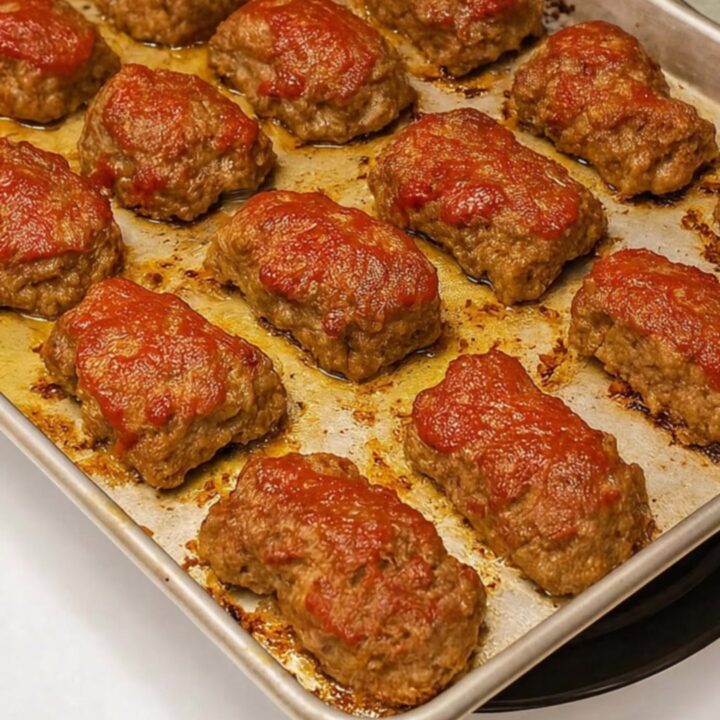
- Divide the mixture into six equal portions, about 4 oz each, and shape each one into a small oval loaf roughly 3 by 2 inches on the prepared baking sheet. Space them at least an inch apart so hot air circulates and every side browns. Smooth any deep cracks with the back of a spoon; a tight surface holds the glaze better.
- In a small bowl, whisk the ketchup, brown sugar, mustard and Worcestershire sauce until the sugar dissolves and the glaze looks uniform and glossy. Taste and adjust: more mustard for tang, more sugar for candy-dark sweetness. Set aside about a third of the glaze in a separate spot for serving, so a spoon that touched raw beef never dips back in.
- Bake the loaves for 15 minutes uncovered. At this stage the outside sets, fat begins to render onto the pan, and the tops lose their raw red color. Starting the bake before glazing lets the crust firm up, so the glaze sits on the loaf instead of sliding off and pooling around the base.
- Spoon the glaze generously over each loaf, letting it drip down the sides. Return the pan to the oven for 10 to 15 minutes more, until the glaze is bubbling at the edges and an instant-read thermometer in the center of the thickest loaf reads 160°F (71°C). Because the loaves are small, check early — they climb from done to dry fast.
- Pull the pan from the oven and let the loaves rest on the sheet for 5 minutes. The juices, driven to the center by the heat, redistribute through the crumb during this pause, which is the difference between a moist bite and a puddle on the plate. The glaze also thickens slightly as it cools, turning from glossy to lacquered.
- Slide a thin metal spatula under each loaf and lift it to a warm plate, keeping the glaze intact. Serve with the reserved glaze on the side for anyone who wants extra. Mini meatloaves pair naturally with mashed potatoes, buttered egg noodles or a simple green salad, and every portion arrives with its own caramelized edges.
Estimated nutrition per serving
- Calories
- 380
- Protein
- 26 g
- Carbohydrates
- 18 g
- Fat
- 21 g
Next recipe

Homemade Italian Stromboli with a Big Mozzarella Pull
See the recipe → →This recipe is based on a short cooking video and is published under the pen name Clara Weller. It was checked before publication, but errors can slip through. Nutrition, when shown, is an estimate. Read more in our editorial policy and on our food safety page.
More recipes to try
Million Dollar Cheesy Beef Spaghetti (One-Pan Baked)
Total time: 1 h 15 min
Roasted Sausage and Sweet Onions — One Pan, 30 Minutes
Total time: 43 min
Garlic Herb Roast Pork with Baby Potatoes in One Pan
Total time: 1 h 45 min
Slow Cooker Salisbury Steak and Potatoes with Rich Onion Gravy
Total time: 6 h 20 min
One-Pan Impossible Pizza Pie with a Crispy Baking-Mix Crust
Total time: 1 h 5 min