Dinner · Part 3 of 3: Tips & recipe card
Japanese Tonkotsu Ramen with Chashu & Ajitsuke Tamago Tips, FAQ & printable recipe
- Prep
- Cook
- Total
- Serves
- 2
Tips for success
To get the perfect jammy egg, boil the eggs for 6-7 minutes, then shock them in ice water. Peel them under running water to make it easier.
Marinate the peeled eggs in a mixture of soy sauce, mirin, and a little sugar for at least 4 hours, or overnight for a deeper flavor. The eggs should have a set white and a creamy, moist yolk—not runny.
When torching the chashu, hold the blowtorch about 2-3 inches away and move it continuously to avoid burning. If you don’t have a blowtorch, sear the slices in a hot, dry skillet for 30-60 seconds per side.
The goal is a caramelized, slightly charred surface that adds a smoky note to the rich broth. Let the chashu rest for a minute before placing it on the ramen.
Variations
- Spicy Miso Ramen: Add 1-2 tablespoons of miso paste and a teaspoon of chili oil to the broth before serving. Top with a spoonful of chili crisp for extra heat.
- Vegetarian Tonkotsu-Style: Use a rich mushroom or soy milk broth instead of pork bone broth. Replace chashu with grilled tofu or seitan, and use vegan eggs if desired.
- Garlic Butter Corn Ramen: Add a pat of butter and a handful of corn kernels to the bowl before pouring the broth. Finish with extra black garlic oil for a sweet, savory twist.
- Shoyu Ramen: Add 1-2 tablespoons of soy sauce to the broth for a lighter, saltier flavor. Omit the black garlic oil and top with bamboo shoots instead.
Storage and make-ahead
- Fridge
- Store leftover components separately in airtight containers in the refrigerator: broth for up to 3 days, chashu for up to 4 days.
- Freezer
- The broth and chashu can be frozen for up to 2 months. Thaw overnight in the refrigerator and reheat gently. Noodles and eggs are best fresh.
- Reheat
- Reheat the broth in a saucepan over medium heat until steaming. Reheat chashu in a skillet or under the broiler until hot. Cook fresh noodles for serving.
Leftover ramen components can be stored separately: the broth in an airtight container in the refrigerator for up to 3 days, the chashu for up to 4 days, and the eggs in their marinade for up to 5 days.
Keep the noodles and toppings separate. Reheat the broth gently on the stove, and cook fresh noodles if possible, as leftover noodles can become mushy.
The tonkotsu broth and chashu can be made up to 2 days ahead and refrigerated. The ajitsuke tamago can be marinated for up to 3 days.
On the day of serving, simply reheat the broth, cook the noodles, and torch the chashu. This makes the final assembly quick and easy, perfect for a dinner party or a special weeknight meal.
Serving ideas
Serve the ramen in deep bowls, with the broth piping hot. Provide chopsticks and a spoon for the broth. Slurping is not only acceptable but encouraged—it helps cool the noodles and enhances the flavor. For a complete meal, offer additional toppings like extra scallions, chili oil, or sesame seeds on the side.
Pair the ramen with a side of gyoza or a simple cucumber salad to balance the richness. For drinks, a cold Japanese beer or a glass of iced green tea complements the savory broth. The ramen is best enjoyed immediately, while the noodles are springy and the broth is hot.
Frequently asked questions
Can this ramen be made ahead of time?
What is the best way to get a jammy egg yolk?
Can you use a different cut of pork for chashu?
What can you substitute for black garlic oil?
How do you store leftover ramen components?
Japanese Tonkotsu Ramen with Chashu & Ajitsuke Tamago
Ingredients
- 300 g fresh ramen noodles
- 500 ml rich 12-hour pork bone broth (tonkotsu)
- 4 slices rolled braised pork belly chashu
- 2 ramen eggs (ajitsuke tamago), halved
- 2 sheets nori
- 50 g wood ear mushrooms (kikurage)
- 2 tbsp black garlic oil (mayu)
- Chopped scallions, for serving
Instructions
- Bring a large pot of water to a rolling boil. Add the fresh ramen noodles and cook for 60 seconds, shaking them in a noodle basket or strainer to separate. Drain thoroughly and divide the noodles between two ramen bowls.
- In a saucepan, heat the tonkotsu broth over medium-high heat until piping hot, stirring occasionally. Do not let it boil vigorously; keep it at a gentle simmer to preserve the creamy texture.
- Arrange the chashu slices on a heatproof surface. Use a kitchen blowtorch to sear the edges until they are charred, bubbling, and intensely fragrant, about 1–2 minutes per side. Alternatively, sear in a hot skillet for 1 minute per side. Let it rest for 3 minutes before slicing.
- Ladle the hot tonkotsu broth over the noodles in each bowl, filling about two-thirds full. Use chopsticks to fold the noodles gently through the broth so they are evenly coated.
- Place the torched chashu slices on top of the noodles. Add the halved ramen eggs, cut side up. Tuck the nori sheets between the bowl edge and the broth so they stand up slightly.
- Scatter the wood ear mushrooms over the bowl. Drizzle the black garlic oil (mayu) in a circle over the top, letting it pool slightly. Sprinkle with chopped scallions.
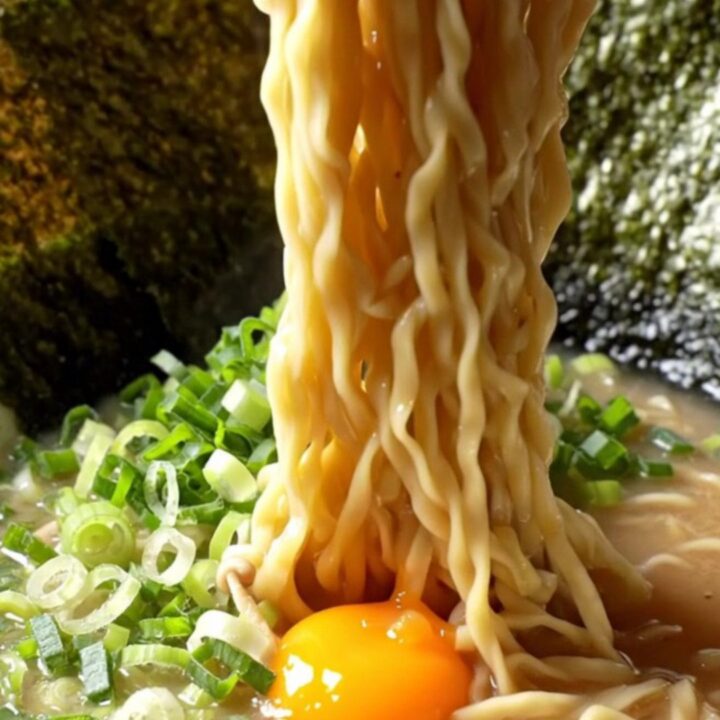
- Serve the ramen immediately while the broth is scorching hot. Use chopsticks to lift a bundle of noodles and slurp them, enjoying the creamy broth and toppings together.
Estimated nutrition per serving
- Calories
- 780
- Protein
- 35 g
- Carbohydrates
- 75 g
- Fat
- 38 g
Next recipe

Turkish Lamb Dürüm with Sumac Onion & Grilled Tomato
See the recipe → →This recipe is based on a short cooking video and is published under the pen name Clara Weller. It was checked before publication, but errors can slip through. Nutrition, when shown, is an estimate. Read more in our editorial policy and on our food safety page.
More recipes to try

Loaded Cheesy Jalapeño Bacon Cornbread Skillet
Total time: 37 min
Crispy Ebi Tempura Roll with Spicy Mayo & Eel Sauce
Total time: 40 min
Crispy Honey Garlic Butter Chicken Tenders with Loaded Bacon Fries
Total time: 40 min
Slow-Braised Turkish Güveç: Clay Pot Lamb Stew with Shallots & Peppers
Total time: 3 h 20 min
Loaded Philly Cheesesteak Garlic Bread Boats with Melted Provolone
Total time: 30 min