Dinner · Part 3 of 3: Tips & recipe card
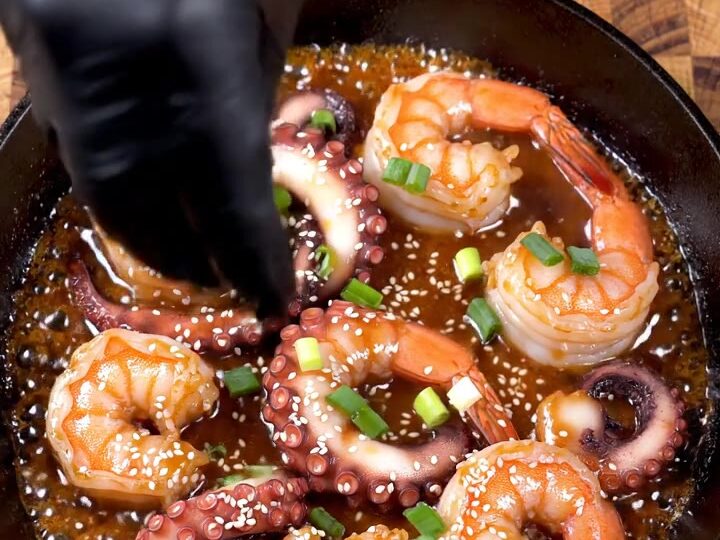
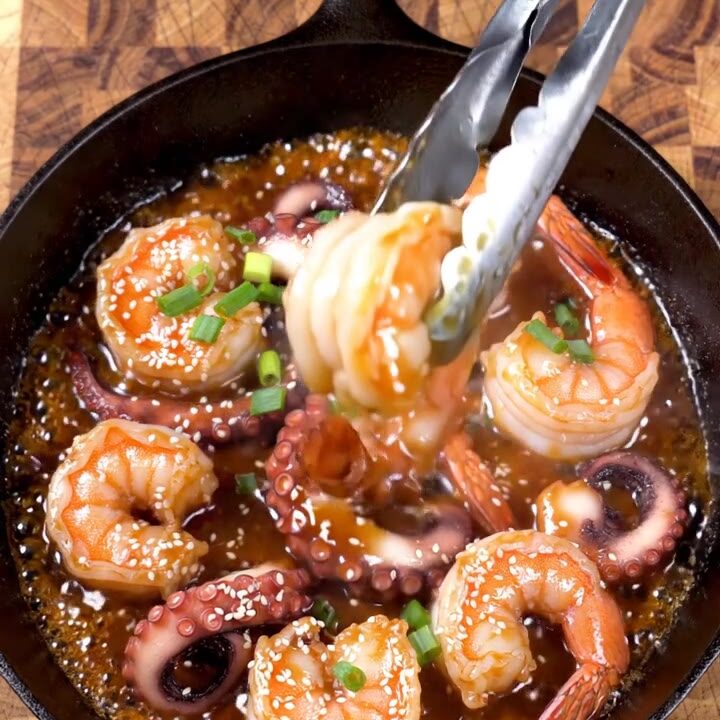
Honey Gochujang Charred Octopus and Shrimp Skillet in One Pan Tips, FAQ & printable recipe
- Prep
- Cook
- Total
- Serves
- 4
Tips for success
Keep your mise en place close to the stove. Once the skillet is hot, the seafood and glaze move quickly, so having the lime, green onions, gochujang, honey and grated ginger within reach makes the cooking calm and controlled. Set a timer for the octopus sear and check the color with a spatula rather than guessing, since the edges should be browned but not blackened.
A thin spatula works best for turning delicate shrimp without tearing them. Taste the glaze before you add the seafood and adjust the sweetness with a spoonful of honey, or the heat with a teaspoon of extra gochujang, so the final balance suits your table.
Serve the skillet directly at the table on a trivet, since it stays hot and continues to sizzle for several minutes. Set out extra lime wedges, because the bright acid is what balances the sweet, spicy glaze. Warm steamed white rice or lightly cooked short-grain rice alongside to soak up the glaze that collects in the pan. A simple cucumber salad or quick pickled vegetables add crunch and a cool contrast to the caramelized seafood. Keep the portion sizes generous, because the octopus and shrimp disappear quickly when the dish is served hot and glossy from the skillet.
Variations
- Milder glaze: Use 2 tablespoons gochujang and add an extra teaspoon of honey to tame the heat. The glaze stays sticky and glossy while the seafood tastes sweeter and less spicy, which suits guests who prefer gentle flavors.
- Rice bowl: Serve the seared seafood and glaze over warm short-grain rice in individual bowls. The rice absorbs the caramelized sauce, turning the skillet dish into a complete, satisfying meal that is easy to eat on a weeknight.
- Extra ginger: Increase the grated ginger to 2 tablespoons for a brighter, more aromatic glaze. The sharper spice cuts through the honey and gives the seafood a fresh, zesty character that pairs well with the lime finish.
- Stir-fried greens: Serve alongside quick-stirred bok choy or spinach cooked in the same skillet after the seafood comes out. The greens soak up leftover glaze and add color, so the dish looks lively on the table and feels more complete.
Storage and make-ahead
- Fridge
- Cool within 2 hours, then refrigerate in an airtight container for up to 2 days.
- Reheat
- Reheat gently in a skillet over medium heat for 2 to 3 minutes until hot throughout; do not overheat the seafood.
Leftover octopus and shrimp should be cooled within 2 hours of cooking and transferred to an airtight container before refrigerating. Store the seafood and any remaining glaze separately if you can, since the glaze keeps its texture better on its own and the shrimp can become tough when reheated for too long.
Keep the sliced green onions and lime wedges in their own container, and eat the leftovers within 2 days for the best flavor and texture. Do not leave the dish out at room temperature for more than 2 hours, and discard any portion that has been sitting out longer. Always smell and inspect the seafood before reheating, and throw away anything with an off odor or a slimy surface.
You can prepare parts of this dish in advance to make weeknight cooking faster. Grate the ginger and mince the garlic up to a day ahead, store them in separate covered containers in the refrigerator, and slice the green onions shortly before cooking so they stay crisp. Mix the gochujang and honey together in a small bowl and keep it covered in the refrigerator until you need it; the sauce holds well for several days.
Pat the seafood dry and keep it chilled on a plate lined with paper towels, but cook the octopus and shrimp just before serving, since the texture of the seared seafood is best when it is fresh from the pan. Cut the lime into wedges on the day you cook so the juice stays bright and the wedges do not dry out.
Serving ideas
Serve the seafood on a warm plate or directly in the cast-iron skillet, placed on a heat-safe trivet so the pan keeps its sizzle at the table. Spoon any extra glaze from the bottom of the pan over the top, and scatter the reserved green onion greens across the finished dish for color and a fresh, sharp bite.
Offer lime wedges on the side so each guest can squeeze a little over their portion just before eating. Warm rice, a crisp cucumber salad or a simple green vegetable make natural partners, because they balance the sticky sweetness of the glaze and give the plate a satisfying contrast of textures and temperatures for a relaxed dinner.
For a more relaxed presentation, divide the octopus and shrimp into shallow bowls with a spoonful of rice and some of the glaze. Top each bowl with sliced green onions and a lime wedge, and serve with chopsticks or forks. Guests who enjoy spice can add extra gochujang to their own bowl, while those who prefer a milder flavor can rely on the honey-sweetened glaze alone. Serve soon after cooking, while the seafood is still warm and glossy, since the glaze continues to set and dull as it cools on the plate.
Frequently asked questions
Can you use frozen octopus for this recipe?
What is gochujang and can you buy it at a regular supermarket?
Why does your glaze turn bitter or burn in the pan?
Can you make this dish without a cast-iron skillet?
How do you know when the shrimp are fully cooked?
Honey Gochujang Charred Octopus and Shrimp Skillet in One Pan
Ingredients
- 1 lb raw octopus tentacles, cleaned
- 1/2 lb large shrimp, peeled and deveined
- 2 tbsp neutral cooking oil, such as canola or vegetable oil
- 3 tbsp gochujang (Korean red chili paste)
- 2 tbsp honey
- 1 tbsp fresh ginger, finely grated
- 4 cloves garlic, minced
- 4 green onions, trimmed and sliced, divided
- 1 lime, cut into wedges for squeezing
Instructions
- Pat the octopus tentacles and shrimp dry with paper towels. Slice the green onions, keeping the whites and greens separate. Mince the garlic and grate the fresh ginger on a box grater. Keep the seafood refrigerated until the pan is hot.
- Heat the oil in the cast-iron skillet over medium-high heat until it shimmers. Add the octopus tentacles in a single layer and sear them for 4 to 5 minutes, turning once, until curled and browned at the edges.
- Add the shrimp to the skillet beside the octopus. Cook for 2 to 3 minutes, turning once, until the shrimp turn pink and opaque all the way through and are cooked to 145°F (63°C).
- Spoon the gochujang and honey into the skillet and stir. Add the grated ginger and minced garlic and stir for about 1 minute, until fragrant. Reduce the heat to medium and let the sauce bubble until thick.
- Spoon the glaze over the octopus and shrimp, turning the pieces until every surface is coated. Continue cooking for 1 to 2 minutes, basting often, until the glaze caramelizes and clings to the seafood.
- Scatter the green onion greens over the skillet and take the pan off the heat. Squeeze a lime over the top and serve immediately while the skillet is still sizzling.
Estimated nutrition per serving
- Calories
- 390
- Protein
- 36 g
- Carbohydrates
- 24 g
- Fat
- 14 g
- Fiber
- 1 g
- Sugar
- 16 g
- Sodium
- 1100 mg
Next recipe

Cheesy Polenta Fries with Marinara: Crispy, Gooey and Ready in One Skillet
See the recipe → →This recipe is based on a short cooking video and is published under the pen name Clara Weller. It was checked before publication, but errors can slip through. Nutrition, when shown, is an estimate. Read more in our editorial policy and on our food safety page.
More recipes to try

French Onion Rigatoni with Gruyère in One Skillet
Total time: 1 h 20 min
Coconut-Crusted Mahi-Mahi with Mango Salsa in One Skillet
Total time: 27 min
Creamy Polenta with Garlic Butter Mushrooms and Melted Cheese
Total time: 1 h
Garlic Herb Butter Pan-Seared Arctic Char with Crispy Skin
Total time: 27 min
Brown Butter Seared Scallops with Squash and Sage
Total time: 45 min