Dinner · Part 1 of 3: Ingredients
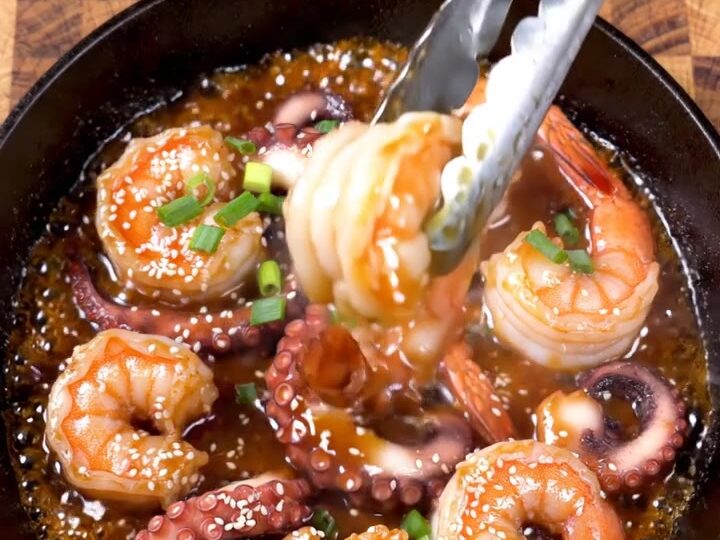
Honey Gochujang Charred Octopus and Shrimp Skillet in One Pan
- Prep
- Cook
- Total
- Serves
- 4
A sizzling cast-iron skillet of octopus and shrimp, lacquered in a sticky honey gochujang glaze, is the kind of dinner that feels special without a long list of steps. The seafood charrs at the edges while the sauce turns thick and glossy around every piece. Fresh ginger and garlic bring warmth, and a squeeze of lime at the very end keeps it lively. It is one pan, one glaze, and a dish that is ready in under an hour from start to finish.
This dish brings together two kinds of seafood that behave very differently in a hot pan. Octopus tentacles need a hard sear to develop browned, slightly crisp edges and a tender bite, while shrimp cook in a couple of minutes and turn pink and opaque as soon as they are done. Cooking them in a fixed order lets each one reach its best texture.
Once the octopus has charred, the shrimp join it, and then the gochujang, honey, grated ginger and minced garlic go into the same skillet. The glaze picks up the browned bits from the pan, so the flavor builds in layers rather than sitting on the surface. The result is a glossy, caramelized coating over the seafood, finished with sliced green onions and a bright squeeze of lime.
Ingredients
- 1 lb raw octopus tentacles, cleaned
- 1/2 lb large shrimp, peeled and deveined
- 2 tbsp neutral cooking oil, such as canola or vegetable oil
Glaze
- 3 tbsp gochujang (Korean red chili paste)
- 2 tbsp honey
- 1 tbsp fresh ginger, finely grated
- 4 cloves garlic, minced
- 4 green onions, trimmed and sliced, divided
- 1 lime, cut into wedges for squeezing
Why this recipe works
The method depends on heat and order. Octopus goes into a preheated cast-iron skillet first, so the surface can sear and char before the flesh becomes rubbery. Cast iron holds heat well, which keeps the pan hot even when the cold seafood hits it, and the browned edges that form are the reason this dish tastes deeper than a simple stir-fry.
Adding the shrimp only after the octopus has charred means the shrimp cook through quickly without overcooking, while the octopus gets the longer contact time it needs to curl and brown.
Building the glaze directly in the pan is the second key idea. Gochujang and honey melt together over medium heat, and as they bubble they pick up the caramelized bits left by the seafood. Grated ginger and minced garlic bloom in the sauce for about a minute, releasing their aromas before the glaze thickens.
Spooning the sauce over the seafood and turning each piece coats it evenly, so the sugars in the honey caramelize into a lacquer that clings to every bite instead of pooling at the bottom of the skillet.
Notes and substitutions
Octopus is the ingredient that makes this dish, so buy the best quality you can find. Fresh raw octopus tentacles are sold cleaned or frozen in most American fish counters and Asian markets. If you buy frozen octopus, thaw it fully in the refrigerator overnight and pat it very dry before cooking, since excess moisture stops it from charring. Precooked octopus is a shortcut that works well, but it needs less time in the pan and should be seared only until it browns at the edges.
Gochujang is a fermented Korean red chili paste with a sweet, savory and mildly spicy flavor. It is sold in tubs in most supermarkets, often near the Asian foods or in the international aisle, and it keeps for months in the refrigerator.
Its heat varies by brand, so taste the glaze before serving and adjust with a little extra honey if you want more sweetness. A 12-inch cast-iron skillet is the ideal size for this recipe because it gives the octopus room to sear in one layer. If you do not have one, use the largest heavy skillet you own and cook in two batches.
- raw octopus tentacles: precooked octopus tentacles, patted very dry, which will char faster and need less time
- gochujang: a mix of 2 tbsp red miso and 1 tbsp hot sauce for a milder, less thick glaze
- honey: maple syrup, which gives a similar sticky finish with a slightly deeper flavor
Equipment
- 12-inch cast-iron skillet
- large chef's knife
- wooden cutting board
- box grater
- heat-resistant spatula
- small mixing bowl
Up next · Part 2 of 3
6 steps · 15 min of cooking · what to look for at each stage
Step-by-step instructions (Part 2)