Dinner · Part 3 of 3: Tips & recipe card
Golden Turkish Stuffed Onions with Garlic Yogurt Tips, FAQ & printable recipe
- Prep
- Cook
- Total
- Serves
- 4
Tips for success
For the best texture, use a wide, shallow pan so the rolls fit in a single layer. This ensures even cooking and prevents them from becoming mushy.
If you have extra filling, roll it into small meatballs and tuck them between the onion rolls; they will cook in the same sauce and are a cook's treat.
To get neat rolls, place the filling at the wider end of the petal and roll away from you, tucking the sides in as you go. Don't worry if the rolls are not perfect; they will still taste wonderful. Serve with extra yogurt on the side, as some people like to add more at the table.
Variations
- Vegetarian Version: Replace the ground beef with cooked lentils or a mixture of mushrooms and rice. Use vegetable broth in place of the cooking liquid. The filling will be a bit softer, so handle gently.
- Lamb and Mint: Swap the ground beef for ground lamb and increase the dried mint to 1 1/2 tablespoons. The lamb adds a rich, gamey flavor that pairs well with the yogurt.
- Spicy Kick: Add 1/2 teaspoon of red pepper flakes or a pinch of cayenne to the filling. Serve with a drizzle of chili oil over the top for extra heat.
- Tomato-Yogurt Swirl: Mix 2 tablespoons of the tomato pan reduction into the garlic yogurt before spreading it on the plate. This creates a marbled effect and adds a tangy twist.
Storage and make-ahead
- Fridge
- Store leftover stuffed onions in an airtight container in the refrigerator for up to 3 days. Keep the yogurt separate and add it when reheating.
- Freezer
- Freeze cooked stuffed onions in a freezer-safe container for up to 2 months. Thaw overnight in the refrigerator before reheating.
- Reheat
- Reheat gently in a covered pan over low heat, adding a splash of water or broth to keep them moist.
Leftover stuffed onions can be stored in an airtight container in the refrigerator for up to 3 days. They will keep their shape and flavor well. The yogurt sauce is best added fresh, so store the rolls separately and spoon the yogurt onto the plate when serving.
You can assemble the stuffed onions up to a day in advance. After rolling, place them in the pan, pour over the cooking liquid, cover, and refrigerate.
When ready to cook, bring them to a simmer on the stovetop, then reduce the heat and cook as directed. You may need to add a little extra water.
Serving ideas
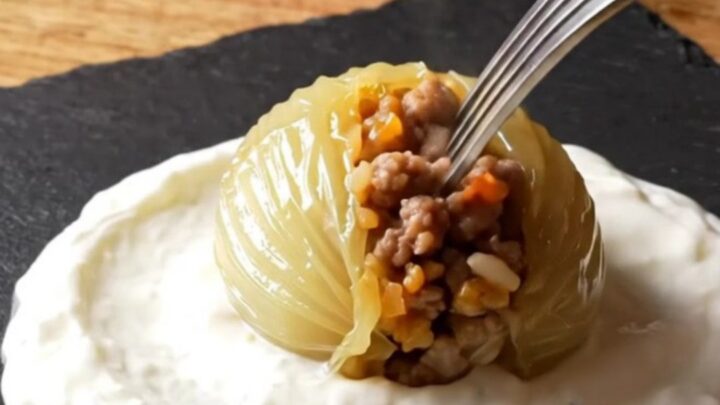
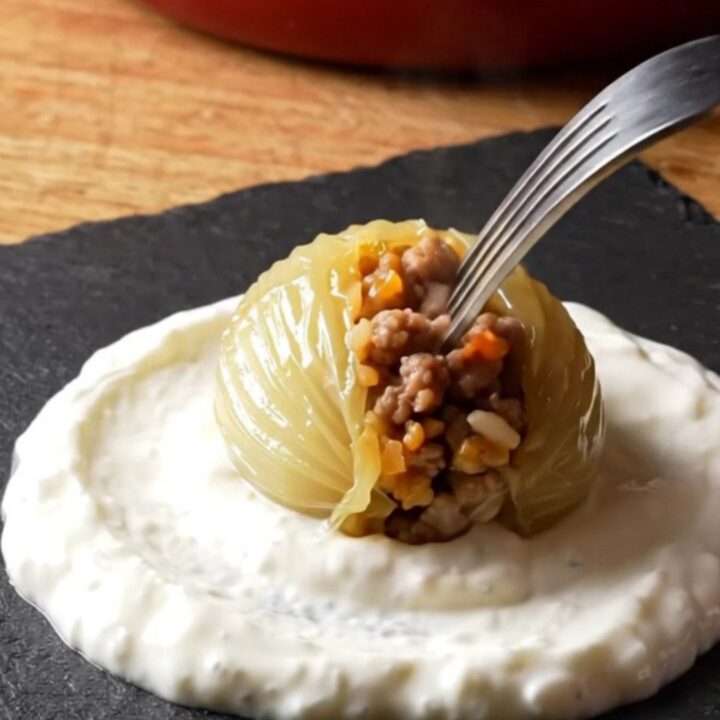
Serve the stuffed onions warm, directly over the garlic yogurt. The cool yogurt contrasts beautifully with the hot rolls, and the tomato sauce adds brightness.
A sprinkle of dried mint is essential for the authentic flavor. This dish pairs well with a simple green salad or crusty bread to soak up the sauce.
For a more substantial meal, serve alongside rice or bulgur pilaf. The rolls can also be served as an appetizer, with smaller portions.
If you like, add a squeeze of lemon juice over the top for extra freshness. The dish is best enjoyed right after cooking, while the rolls are still warm and the yogurt is cool.
Frequently asked questions
Why do the onion petals tear when peeling?
Can the stuffed onions be made without rice?
How do you prevent the rolls from unrolling during cooking?
Can the garlic yogurt be made ahead?
What can be used instead of Greek yogurt?
Golden Turkish Stuffed Onions with Garlic Yogurt
Ingredients
- 4 large yellow onions
- 250 g ground beef
- 1 cup washed rice
- 1 tbsp tomato paste
- 1/2 cup finely chopped onion
- 1 tbsp dried mint
- 1 tsp ground cumin
- 1 tsp salt
- 2 tbsp olive oil
- 1 1/2 cups hot water
- 1 tbsp tomato paste
- 1 tbsp olive oil
- 1 cup thick Greek yogurt
- 2 cloves garlic, minced
- 1 tsp dried mint, for garnish
Instructions
- Fill a large pot with water and bring to a boil. While waiting, cut a single vertical slit through the outer skin of each onion, from the top to the root, cutting about halfway to the center. Drop the onions into the boiling water and cook for 10 minutes, until the layers soften and begin to separate. Remove with a slotted spoon and let cool slightly.
- In a mixing bowl, combine ground beef, washed rice, tomato paste, finely chopped onion, dried mint, ground cumin, salt, and olive oil. Mix with your hands or a spoon until everything is evenly distributed. The mixture should be well combined but not overworked.
- Once the onions are cool enough to handle, gently peel the translucent petals apart. Each onion should yield several large petals. Place a tablespoon of filling on each petal, near the wider end, then roll tightly into a small cylinder, tucking the ends in as you go. Repeat until all filling is used.
- Arrange the stuffed onion rolls tightly in a single layer in a shallow braiser or wide pan. They should fit snugly so they don't unroll during cooking. If there are gaps, tuck any extra onion pieces or smaller rolls into the spaces.
- In a small bowl, whisk together hot water, tomato paste, and olive oil until the tomato paste is dissolved. Pour this mixture over the stuffed onions in the pan. The liquid should come about halfway up the sides of the rolls.
- Cover the pan with a lid and place over low heat. Simmer gently for 35 minutes, until the rice is tender and the beef is cooked through. Check occasionally to ensure the liquid hasn't evaporated completely; add a splash of hot water if needed.
- In a small bowl, stir together the thick Greek yogurt and minced garlic. Spread the yogurt in a generous circle across the base of a serving plate, using the back of a spoon to create a swirl.
- Using a slotted spoon, carefully transfer the stuffed onions from the pan onto the yogurt-covered plate. Arrange them in a single layer or slightly overlapping. Drizzle the remaining tomato pan reduction over the top, then sprinkle with dried mint.
Estimated nutrition per serving
- Calories
- 480
- Protein
- 22 g
- Carbohydrates
- 45 g
- Fat
- 24 g
Next recipe

Golden Cheese-Crusted Turkish Meatball Casserole
See the recipe → →This recipe is based on a short cooking video and is published under the pen name Clara Weller. It was checked before publication, but errors can slip through. Nutrition, when shown, is an estimate. Read more in our editorial policy and on our food safety page.
More recipes to try

Tender Meatballs and Roasted Veggies Casserole
Total time: 50 min
One-Pan Ground Beef and Tomato Spaghetti
Total time: 30 min
Loaded Chicken Fry Dürüm Wrap with Cheddar
Total time: 35 min
Flaky Turkish Meat Börek with Crispy Phyllo Layers
Total time: 1 h 45 min
Crispy Garlic Parmesan Chicken Tenders with Chili Dip
Total time: 40 min