Dinner · Part 3 of 3: Tips & recipe card
Garlic Butter Lobster Skillet with Asparagus and Parmesan Tips, FAQ & printable recipe
- Prep
- Cook
- Total
- Serves
- 2
Tips for success
For the best sear, make sure the lobster tails are as dry as possible before placing them in the skillet. Moisture on the surface will steam the meat and prevent browning. Use a paper towel to pat them dry thoroughly.
When basting, tilt the skillet slightly and use a large spoon to scoop the foaming butter over the lobster meat repeatedly. This continuous basting keeps the meat moist and infuses it with garlic and herb flavor. Do not walk away during this step; it only takes a few minutes.
The charred lemon is a key component. Press the cut side down onto the hot skillet and leave it undisturbed for a minute to develop a deep caramelization. This adds a smoky complexity to the juice.
When squeezing the lemon, do it over the skillet so the juice falls onto the hot butter, creating a quick emulsion. Taste the butter before serving; it should be well seasoned. Adjust with a pinch of salt if needed. Serve the dish immediately, as lobster is best enjoyed hot and fresh.
Variations
- Spicy Garlic Butter: Add 1/2 teaspoon of red pepper flakes to the garlic herb butter before searing. The heat will balance the richness and add a subtle kick. Alternatively, stir in a teaspoon of sriracha or hot sauce for a different flavor profile.
- Herb-Crusted: After searing the lobster, sprinkle with a mixture of fresh breadcrumbs, grated Parmesan, and chopped parsley. Place under the broiler for 1-2 minutes until golden and crisp. This adds a crunchy texture and extra savory flavor.
- Lemon-Butter Sauce: Increase the lemon juice to half a lemon and add 2 tablespoons of white wine to the skillet after searing. Let it reduce slightly to create a pan sauce. Finish with a knob of cold butter to emulsify.
- Grilled Version: Instead of a skillet, grill the lobster tails and asparagus over medium-high heat. Brush with garlic herb butter while grilling. Char the lemon on the grill as well. This imparts a smoky flavor perfect for outdoor cooking.
Storage and make-ahead
- Fridge
- Store leftovers in an airtight container in the refrigerator for up to 2 days. Reheat gently in a skillet with a little butter to maintain moisture.
- Freezer
- Not recommended; cooked lobster freezes poorly and becomes rubbery. Freeze raw lobster tails for up to 3 months if needed.
- Reheat
- Reheat in a skillet over low heat with a splash of water or butter, covered, until warmed through. Avoid microwave.
Store any leftovers in an airtight container in the refrigerator for up to 2 days. To reheat, gently warm in a skillet over low heat with a little butter or olive oil to prevent drying out. Avoid microwaving, as it can make the lobster rubbery. The asparagus may soften upon reheating but will still be delicious. If the butter has solidified, it will melt again when reheated. Do not freeze cooked lobster, as the texture will suffer.
The garlic herb butter can be made up to 3 days ahead and stored in the refrigerator. The Parmesan can be grated a day in advance and kept in an airtight container. The lobster tails can be butterflied several hours ahead and kept chilled on a plate covered with plastic wrap.
The asparagus can be trimmed and stored in a damp paper towel in the refrigerator. However, the actual searing should be done just before serving to ensure the best texture and flavor.
Serving ideas
Serve the garlic butter lobster skillet as the main course with crusty bread to soak up the buttery juices. A simple green salad with a light vinaigrette would complement the richness. For a more substantial meal, serve over creamy polenta or pasta. The dish also pairs well with a crisp white wine such as Sauvignon Blanc or Chardonnay. Garnish with extra fresh herbs like parsley or chives if desired, though the recipe is already flavorful on its own.
This dish is elegant enough for a special occasion but quick enough for a weeknight. Present the skillet directly at the table for a dramatic effect, with the lobster tails arranged on top of the asparagus.
The aroma of garlic and butter will be irresistible. Provide small forks for picking the lobster meat and plenty of napkins. The leftovers, if any, can be repurposed into a lobster salad or tossed with pasta the next day. Enjoy every buttery, lemony bite.
Frequently asked questions
Can this recipe be made with frozen lobster tails?
What is the best way to butterfly lobster tails?
Can this recipe be made without a cast iron skillet?
How do you know when the lobster is fully cooked?
Can this recipe be doubled for a larger crowd?
Garlic Butter Lobster Skillet with Asparagus and Parmesan
Ingredients
- 2 Maine lobster tails (about 5 oz each)
- 1 bunch green asparagus, trimmed
- 4 tbsp garlic herb butter
- 1/2 cup freshly grated Parmigiano-Reggiano cheese
- 1 lemon, halved
Instructions
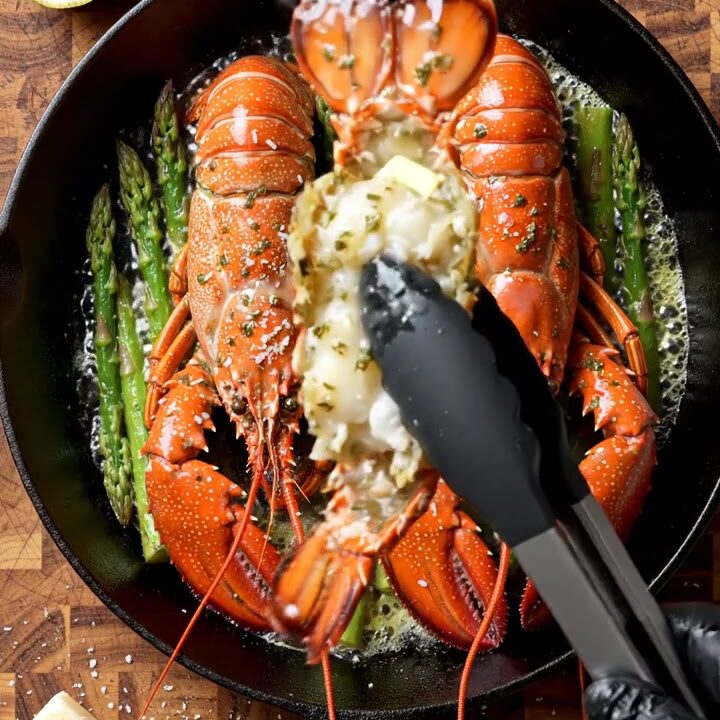
- Using kitchen shears, cut through the top shell of each lobster tail lengthwise, stopping at the tail fin. Gently pull the shell apart slightly and lift the meat through the cut, resting it on top of the shell. Pat the meat dry with paper towels.
- Snap off the woody ends of the asparagus spears where they break naturally, then rinse and pat dry. If the spears are thick, peel the lower third of each spear for even cooking.
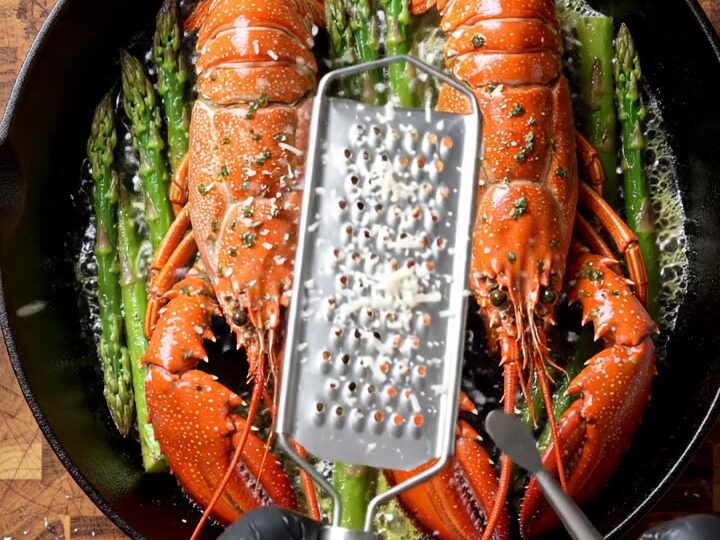
- Using a box grater, grate the firm wedge of Parmigiano-Reggiano on the fine side to yield a light, fluffy pile of cheese. Set aside until ready to use.
- Place a large cast iron skillet over high heat and add the garlic herb butter. Let the butter melt and foam, swirling the pan to coat the bottom evenly.
- Place the lobster tails meat-side down in the hot skillet. Sear for 2-3 minutes until the meat is golden brown, then flip. Continue cooking, basting the meat with the foaming butter using a spoon, until the meat is opaque and reaches 145°F (63°C) in the thickest part.
- Push the lobster tails to one side of the skillet and add the trimmed asparagus spears in a single layer. Sear for 2-3 minutes, turning occasionally, until bright green and crisp-tender.
- Place the lemon halves cut-side down in the skillet, alongside the lobster and asparagus. Cook for 1-2 minutes until the cut surfaces are caramelized and fragrant.
- Remove the skillet from the heat. Sprinkle the grated Parmigiano-Reggiano over the lobster and asparagus. Squeeze the charred lemon halves over everything, allowing the juice to mingle with the garlic butter.
- Using tongs, lift the lobster tails and asparagus onto a serving platter. Pour any remaining garlic butter from the skillet over the top. Serve immediately while hot.
Estimated nutrition per serving
- Calories
- 420
- Protein
- 32 g
- Carbohydrates
- 8 g
- Fat
- 28 g
Next recipe
Honey Pepper Jumbo Prawns with Charred Pineapple Skillet
See the recipe → →This recipe is based on a short cooking video and is published under the pen name Clara Weller. It was checked before publication, but errors can slip through. Nutrition, when shown, is an estimate. Read more in our editorial policy and on our food safety page.
More recipes to try

Truffle Potato Gratin with Gruyere Cream Skillet
Total time: 1 h 25 min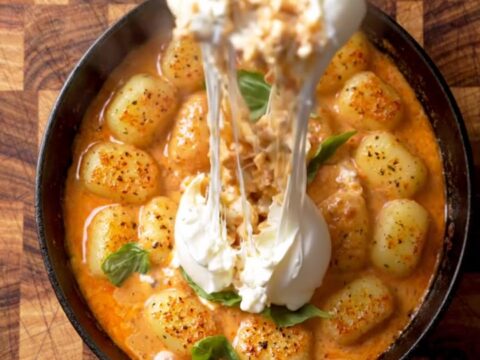
Crispy Potato Gnocchi Spicy Vodka Burrata Skillet
Total time: 35 min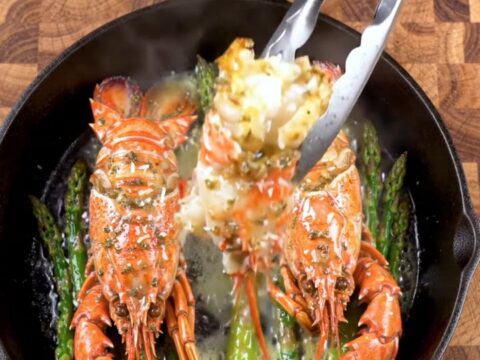
Butter-Basted Lobster Tails with Asparagus
Total time: 22 min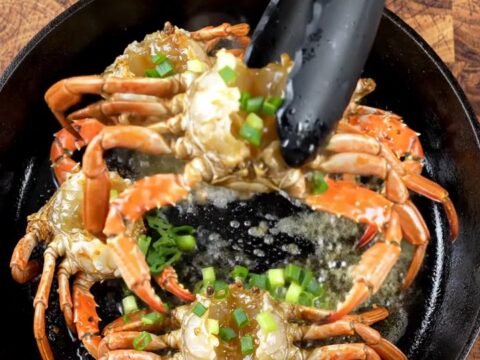
Crispy Cajun Garlic Butter Soft Shell Crab Skillet
Total time: 35 min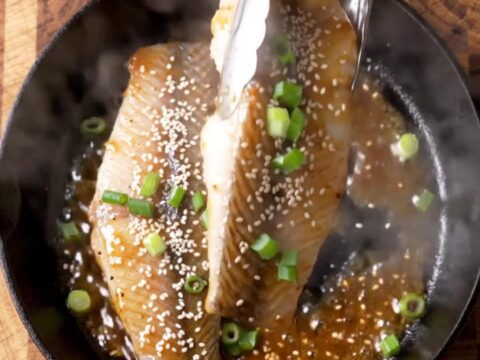
Crispy Miso Butter Sea Bass with Baby Bok Choy
Total time: 25 min