Dinner · Part 1 of 3: Ingredients
Garlic Butter Lobster Skillet with Asparagus and Parmesan
- Prep
- Cook
- Total
- Serves
- 2
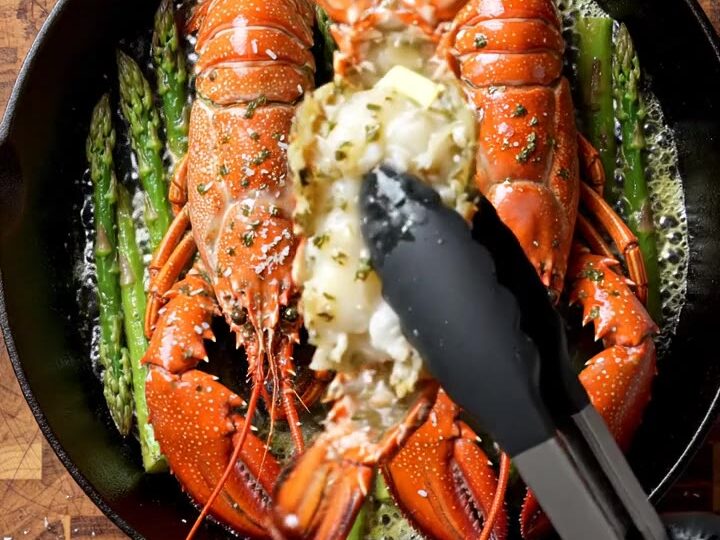
This garlic butter lobster skillet brings restaurant-quality seared Maine lobster tails and crisp asparagus together in one hot cast iron pan. The lobster is butterflied and seared in foaming garlic herb butter, then finished with a shower of freshly grated Parmigiano-Reggiano and a squeeze of charred lemon.
It is a quick yet impressive dinner that comes together in under 30 minutes, perfect for a special weeknight or a weekend treat. The high-heat sear locks in the sweet, tender meat while the asparagus stays bright and crisp.
A great lobster dish does not need to be complicated. Here, the natural sweetness of Maine lobster tails is enhanced by a fast, hot sear in garlic herb butter. The asparagus cooks right alongside, soaking up the same flavorful butter, and a final dusting of Parmesan adds a nutty, salty finish.
The charred lemon brings a smoky brightness that cuts through the richness. This recipe is designed for home cooks who want a showstopping meal without fuss. It is a one-pan wonder that delivers on flavor and presentation, making it ideal for date nights or holiday dinners.
Ingredients
- 2 Maine lobster tails (about 5 oz each)
- 1 bunch green asparagus, trimmed
- 4 tbsp garlic herb butter
- 1/2 cup freshly grated Parmigiano-Reggiano cheese
- 1 lemon, halved
Why this recipe works
The method of searing lobster tails in a screaming-hot cast iron skillet creates a beautiful golden crust while keeping the interior moist and tender. The foaming butter acts as a basting liquid, continuously coating the meat with garlic and herb flavor. This technique is quick, ensuring the lobster does not overcook and turn rubbery. The high heat also caramelizes the natural sugars in the lobster, adding a subtle sweetness that pairs perfectly with the savory butter.
Cooking the asparagus in the same pan allows it to absorb the garlic butter and lobster juices, creating a cohesive dish. The asparagus is seared just until crisp-tender, preserving its vibrant color and snap.
The final addition of Parmesan and lemon juice brightens the dish and balances the richness. The cast iron skillet retains heat well, keeping everything warm while serving. This method is efficient, using one pan from stovetop to table, and it maximizes flavor with minimal cleanup.
Notes and substitutions
Choose lobster tails that are similar in size for even cooking. Fresh or frozen both work; if frozen, thaw overnight in the refrigerator. The garlic herb butter can be store-bought or homemade. For a quick homemade version, mix softened butter with minced garlic and chopped parsley or thyme. The Parmesan should be freshly grated from a wedge for the best flavor and melting quality. Pre-grated cheese often contains anti-caking agents that prevent it from melting smoothly.
A cast iron skillet is ideal for this recipe because it heats evenly and retains high heat, giving the lobster a great sear. If you do not have cast iron, use a heavy stainless steel pan. The asparagus should be trimmed by snapping off the woody ends; they break naturally at the right point.
For thicker spears, peeling the lower part of the stalk helps them cook evenly. Do not overcrowd the pan; if necessary, cook the asparagus in batches to ensure it sears rather than steams.
- garlic herb butter: Use 4 tbsp unsalted butter mixed with 2 minced garlic cloves and 1 tsp chopped fresh herbs (thyme, parsley, or chives).
- Parmigiano-Reggiano: Substitute with Grana Padano or Pecorino Romano for a similar salty, nutty flavor.
- Maine lobster tails: Use 4 small rock lobster tails or 1 lb large shrimp, adjusting cooking time accordingly.
- green asparagus: Substitute with broccolini or haricots verts, trimmed and blanched if thick.
Equipment
- Box grater
- Chef's knife
- Cutting board
- Cast iron skillet
- Kitchen shears
- Tongs
- Serving platter
Up next · Part 2 of 3
9 steps · 12 min of cooking · what to look for at each stage
Step-by-step instructions (Part 2)