Dinner · Part 2 of 3: Instructions
Garlic Butter Lobster Skillet with Asparagus and Parmesan Step-by-step instructions
- Prep
- Cook
- Total
- Serves
- 2
Before you start
Before starting, ensure the lobster tails are fully thawed if frozen, and pat them dry with paper towels. Prepare the garlic herb butter if making from scratch, and have all ingredients measured and within reach. Trim the asparagus and grate the Parmesan cheese.
Cut the lemon in half. Place a large cast iron skillet on the stove and turn the heat to high so it gets thoroughly hot. Have a pair of tongs and a spoon ready for searing and basting. This mise en place approach will make the cooking process smooth and fast.
Ingredients at a glance (5)
- 2 Maine lobster tails (about 5 oz each)
- 1 bunch green asparagus, trimmed
- 4 tbsp garlic herb butter
- 1/2 cup freshly grated Parmigiano-Reggiano cheese
- 1 lemon, halved
Instructions
Preparation and Initial Searing
- Butterfly the Lobster TailsUsing kitchen shears, cut through the top shell of each lobster tail lengthwise, stopping at the tail fin. Gently pull the shell apart slightly and lift the meat through the cut, resting it on top of the shell. Pat the meat dry with paper towels.Look for The lobster meat sits exposed on the shell, ready to sear.Tip Cutting through the shell with shears is easier than using a knife; keep the fin intact for presentation.
- Trim the AsparagusSnap off the woody ends of the asparagus spears where they break naturally, then rinse and pat dry. If the spears are thick, peel the lower third of each spear for even cooking.Look for Asparagus spears are uniform in length and dry.Tip The natural break point removes the tough part; no need to cut with a knife.
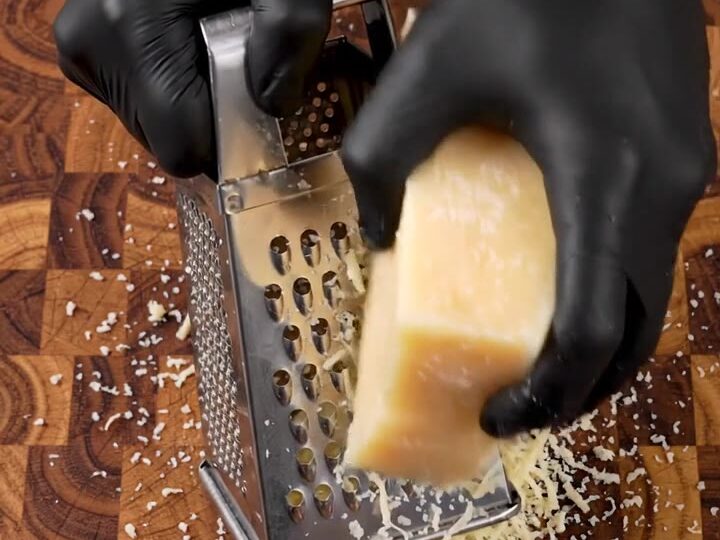
- Grate the ParmesanUsing a box grater, grate the firm wedge of Parmigiano-Reggiano on the fine side to yield a light, fluffy pile of cheese. Set aside until ready to use.Look for The cheese is finely grated and airy.Tip Grate just before cooking for the best texture and flavor.
After butterflying the lobster and grating the cheese, the skillet is hot and the butter is foaming. The lobster tails are placed meat-side down and sear to a golden brown. The asparagus is added and starts to char slightly at the tips.
The kitchen smells of garlic and herbs. The lobster meat is beginning to turn opaque at the edges, and the butter is bubbling around the seafood. This is the critical phase where the foundation of flavor is built.
Basting and Finishing
- Heat the Cast Iron SkilletPlace a large cast iron skillet over high heat and add the garlic herb butter. Let the butter melt and foam, swirling the pan to coat the bottom evenly.Look for Butter is foaming but not browning.Tip High heat gives a good sear; do not let the butter burn.
- Sear the Lobster TailsPlace the lobster tails meat-side down in the hot skillet. Sear for 2-3 minutes until the meat is golden brown, then flip. Continue cooking, basting the meat with the foaming butter using a spoon, until the meat is opaque and reaches 145°F (63°C) in the thickest part.Look for The lobster meat is golden and firm to the touch.Safe temperature 145°F (63°C) internal temperature (shellfish)Tip Baste continuously to keep the meat moist and flavorful.
- Add the AsparagusPush the lobster tails to one side of the skillet and add the trimmed asparagus spears in a single layer. Sear for 2-3 minutes, turning occasionally, until bright green and crisp-tender.Look for Asparagus is bright green and slightly charred at the tips.Tip Do not overcrowd the pan; cook in batches if needed.
- Char the Lemon HalvesPlace the lemon halves cut-side down in the skillet, alongside the lobster and asparagus. Cook for 1-2 minutes until the cut surfaces are caramelized and fragrant.Look for Lemon is golden with char marks.Tip Charring the lemon adds a smoky depth to the juice.
The lobster is flipped and basted with the foaming butter. The asparagus is cooked to a bright green with a slight char. The lemon halves are charred cut-side down, releasing a citrusy aroma. The internal temperature of the lobster reaches 145°F (63°C). The skillet is sizzling, and the butter has reduced slightly. The textures are crisp on the outside and tender inside. The dish is almost ready, with the cheese and lemon juice about to be added.
Final Assembly and Serving
- Shower with Parmesan and LemonRemove the skillet from the heat. Sprinkle the grated Parmigiano-Reggiano over the lobster and asparagus. Squeeze the charred lemon halves over everything, allowing the juice to mingle with the garlic butter.Look for Cheese melts slightly from the residual heat, and lemon juice sizzles.Tip Squeeze the lemon while it is still warm for maximum juice.
- Serve the Lobster SkilletUsing tongs, lift the lobster tails and asparagus onto a serving platter. Pour any remaining garlic butter from the skillet over the top. Serve immediately while hot.Look for The lobster glistens with butter and cheese.Tip Serve with crusty bread to soak up the extra butter.
The Parmesan is showered over the hot lobster and asparagus, melting slightly from the residual heat. The charred lemon is squeezed over everything, creating a burst of juice that mingles with the butter. The lobster glistens with a buttery sheen and is flecked with melted cheese. The asparagus is vibrant and tender. The dish is transferred to a platter, with the remaining butter poured on top. It looks glossy, aromatic, and ready to serve.
Common mistakes
A common mistake is overcooking the lobster, which turns it tough and rubbery. Keep the heat high and cook briefly, checking the temperature early. Another mistake is adding the asparagus too early, causing it to become mushy. Add it after the lobster has a head start, and cook just until crisp-tender.
Overcrowding the skillet lowers the temperature and steams the food instead of searing it. Work in batches if needed. Also, do not skip basting the lobster with butter; it keeps the meat moist and adds flavor. Finally, use freshly grated Parmesan; pre-grated cheese does not melt as well.
How to tell it’s done
The lobster is done when the meat is opaque and reaches an internal temperature of 145°F (63°C) in the thickest part. The exterior should be golden brown and slightly crisp, while the interior remains tender and juicy.
The asparagus should be bright green and crisp-tender, offering slight resistance when pierced with a fork. The Parmesan will be melted and lightly browned in spots. The lemon juice will sizzle on contact. The butter should be foamy and fragrant with garlic and herbs. Serve immediately for the best texture and flavor.
- Shellfish: 145°F (63°C) in the thickest part
Up next · Part 3 of 3
4 variations · storage & make-ahead · 5 answers · printable card
Tips, FAQ & printable recipe (Part 3)← Back to the ingredients (Part 1)