Dinner · Part 1 of 3: Ingredients
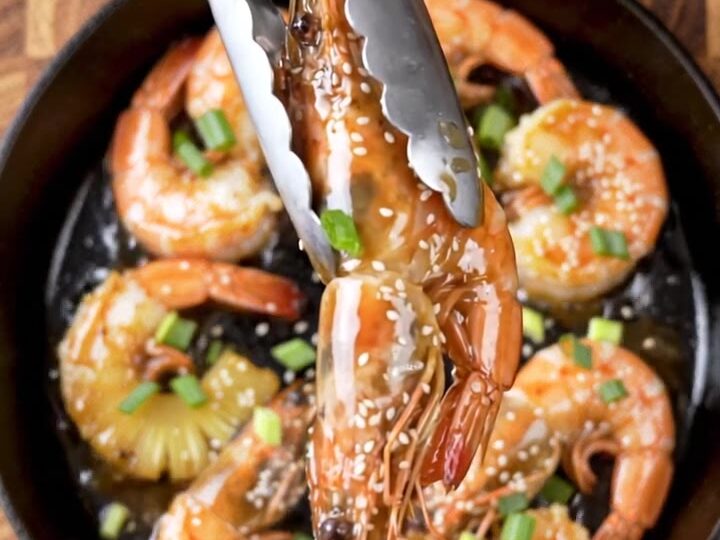
Honey Pepper Jumbo Prawns with Charred Pineapple Skillet
- Prep
- Cook
- Total
- Serves
- 4
This honey pepper jumbo prawn skillet is a weeknight showstopper. Butterflied tiger prawns sear until juicy, golden pineapple chunks char at the edges, and a bubbling black pepper honey soy glaze brings everything together with a sweet, peppery kick.
Fresh coconut and ginger add a fragrant, tropical note, while scallions and sesame seeds provide a fresh finish. All cooked in one cast iron skillet, it's a quick, impressive dinner that feels special but comes together in under 30 minutes.
This recipe turns a handful of bold ingredients into a glossy, caramelized skillet that's equal parts sweet, savory, and peppery. Jumbo tiger prawns are butterflied so they cook quickly and soak up the glaze, while golden pineapple chunks get a deep char that brings out their natural sweetness.
The black pepper honey soy glaze bubbles around everything, thickened with fresh ginger and coconut for a fragrant, tropical twist. Scallions and sesame seeds add freshness and crunch. It's a one-pan dinner that feels both indulgent and effortless, perfect for a busy weeknight or a casual weekend meal.
Ingredients
- 1 1/2 lb jumbo tiger prawns, peeled and deveined, tails on
- 2 cups golden pineapple chunks (about 1/2 pineapple)
- 4 scallions, sliced
- 1/2 cup fresh white coconut, grated
- 1 tbsp fresh ginger root, grated
Glaze
- 1/4 cup honey
- 3 tbsp soy sauce
- 1 tsp coarsely ground black pepper
- 1 tbsp toasted sesame oil
- 1 tbsp sesame seeds, for garnish
- 2 tbsp unsalted butter
Why this recipe works
Butterflying the prawns does more than make them look impressive—it creates a larger surface area that sears quickly and evenly, keeping the flesh tender and juicy. The high heat of a cast iron skillet gives the prawns a beautiful caramelized crust while the pineapple chars and releases its sugars, deepening the flavor of the whole dish. The honey soy glaze, with its coarsely ground black pepper, clings to every crevice, coating each piece in a sweet, spicy, glossy layer.
Cooking the pineapple and prawns together in the same pan allows the pineapple's juices to mingle with the prawns' natural brininess, creating a balanced sauce. The fresh coconut and ginger are grated just before cooking, so their flavors stay bright and aromatic.
Adding the glaze at the end and letting it bubble briefly thickens it into a shiny coating that doesn't overcook the prawns. This method delivers a restaurant-quality dish with minimal effort and maximum flavor.
Notes and substitutions
Choose jumbo tiger prawns (about 16-20 per pound) for the best texture and presentation. They should be peeled and deveined, but leaving the tails on adds a nice touch for serving. If using frozen prawns, thaw them overnight in the refrigerator and pat them dry before cooking. Fresh golden pineapple is ideal—look for one that's fragrant and slightly soft at the base. If using canned pineapple, drain it well and pat dry to get a good char.
A cast iron skillet is essential for achieving the high heat needed to sear the prawns and char the pineapple. If you don't have one, use a heavy stainless steel pan. Fresh coconut can be found in the produce section of many supermarkets; if unavailable, unsweetened shredded coconut is a fine substitute.
The glaze can be adjusted to taste—add more honey for sweetness or more pepper for heat. Keep the sesame oil for finishing, as it adds a nutty aroma that complements the dish.
- jumbo tiger prawns: large shrimp or extra-large shrimp (21-25 count) can be used; adjust cooking time slightly.
- fresh coconut: unsweetened shredded coconut can be used in a pinch, but fresh coconut adds more moisture and texture.
- golden pineapple: fresh ripe pineapple works; canned pineapple should be drained and patted dry to char well.
- toasted sesame oil: use a neutral oil like avocado or grapeseed oil; add a few drops of sesame oil for flavor if desired.
Equipment
- Box grater
- Cast iron skillet
- Chef's knife
- Cutting board
- Measuring spoons
- Small bowl
- Tongs
Up next · Part 2 of 3
5 steps · 10 min of cooking · what to look for at each stage
Step-by-step instructions (Part 2)