Dinner · Part 3 of 3: Tips & recipe card
French Onion Rigatoni with Gruyère in One Skillet Tips, FAQ & printable recipe
- Prep
- Cook
- Total
- Serves
- 4
Tips for success
Work with patience at the stove. The onion stage takes the longest but needs very little hands-on effort; stir every few minutes and let the color develop slowly. A deep amber is the goal, and it makes the difference between a flat pasta and one that tastes genuinely of French onion soup.
Finish with contrast. A pinch of fresh thyme and a crack of black pepper just before serving brighten the rich sauce and cheese. Serve with a simple green salad dressed with a sharp vinaigrette to balance the creaminess.
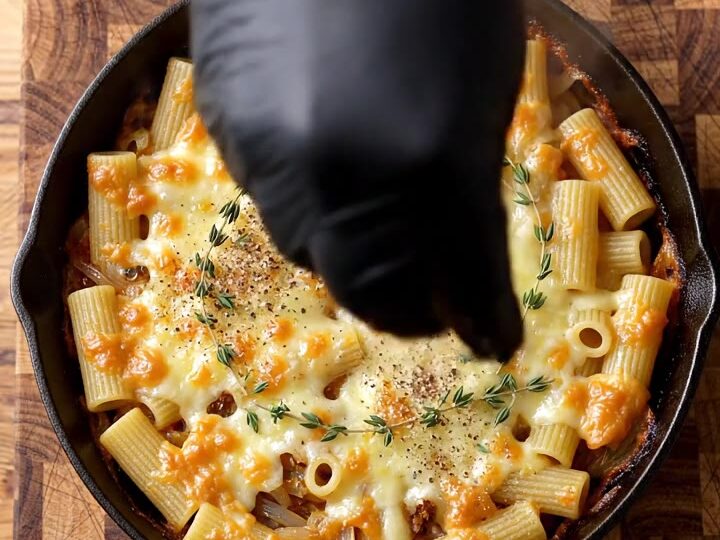
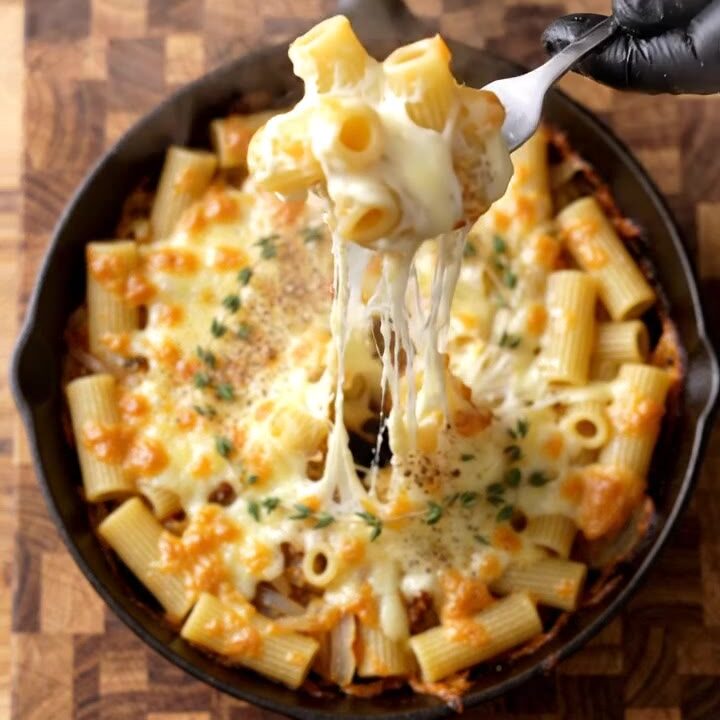
Use the skillet as your serving dish to keep things simple and warm. The cast iron holds heat well, so the cheese stays molten for the first few bites. Set the skillet on a trivet at the table and let everyone help themselves, lifting portions with a fork so each piece keeps its crust.
Variations
- Mushroom version: Add thinly sliced cremini mushrooms to the skillet after the onions and cook until golden before adding the garlic and thyme. The earthy mushrooms deepen the savory character of the dish.
- Extra-cheesy top: Increase the Gruyère on top to 1 1/2 cups for a thicker, more golden crust. Bake a few minutes longer until the cheese forms bronzed patches across the surface.
- Lighter sauce: Replace the heavy cream with half-and-half and use a little extra broth to keep the sauce loose. The final texture will be less rich but still creamy.
- Shallot twist: Swap half the yellow onions for sliced shallots for a more delicate, slightly sweeter flavor. Caramelize them the same way and finish the dish as written.
Storage and make-ahead
- Fridge
- Refrigerate leftovers in an airtight container for up to 3 days, cooled within 2 hours of cooking.
- Freezer
- Freezing is not recommended, because the cream sauce can separate and the pasta becomes soft when thawed.
- Reheat
- Reheat portions in a skillet over low heat with a splash of broth, stirring until hot throughout, or in a 350°F (175°C) oven covered until warm.
Leftovers keep well when they are cooled promptly. Let the skillet cool at room temperature for no more than 2 hours, then transfer the rigatoni to an airtight container and refrigerate it. Store the dish in the refrigerator for up to 3 days.
Because the sauce is cream- and cheese-based, it will thicken as it chills, so the texture firms up noticeably overnight. Keep the leftovers covered to prevent them from drying out or absorbing other fridge odors. Portion them into smaller containers so they cool faster and reheat more evenly.
You can prepare the components in advance to shorten the evening. Caramelize the onions up to 2 days ahead, cool them within 2 hours, and refrigerate them in an airtight container. Gently reheat them in the skillet over low heat before continuing with the garlic and thyme.
You can also grate the Gruyère a day ahead and keep it chilled in a sealed bag. Cook the rigatoni on the day you serve, since pasta softens as it sits. Once everything is combined, bake the assembled skillet right away for the best cheese crust, rather than letting it rest uncovered at room temperature.
Serving ideas
Serve the rigatoni hot, straight from the cast-iron skillet, so the cheese is still stretching and the top is at its most golden and crisp. A scatter of fresh thyme leaves over each portion adds color and an herbal lift that complements the sweet onions. Pair the dish with a crisp, acidic side such as a green salad with lemon vinaigrette or a dish of sliced tomatoes with flaky salt.
The contrast keeps the richness from feeling heavy. For drinks, a dry white wine or a light, crisp beer goes well with the nutty Gruyère. Offer extra black pepper at the table for those who like more bite, and warm bread on the side to soak up the sauce left in the pan.
This dish is a natural centerpiece for a relaxed family dinner or a casual gathering. Because it comes out of one pan, cleanup stays easy, and the skillet keeps the rigatoni warm long enough for second helpings. Set the table with simple plates and let guests dig in directly from the skillet, a presentation that feels generous and inviting. Offer a bowl of extra grated cheese for anyone who wants an even thicker, cheesier layer, and keep a few sprigs of thyme on hand for a fresh finish at the table.
Frequently asked questions
Can this be made ahead of time?
Why does the sauce turn grainy?
What is the best way to caramelize onions without burning them?
Can you use a different pasta shape?
How do you know when the baked rigatoni is ready?
French Onion Rigatoni with Gruyère in One Skillet
Ingredients
- 2 lb yellow onions, peeled and thinly sliced into half-moons
- 3 tbsp unsalted butter
- 1 tbsp olive oil
- 1 tsp kosher salt, plus more to taste
- 3 cloves garlic, thinly sliced
- 4 sprigs fresh thyme, leaves picked, plus more for serving
- 12 oz rigatoni
- 1/2 cup low-sodium beef broth
- 1/2 cup heavy cream
- 6 oz Gruyère cheese, freshly grated, plus 1 cup more for the top
- freshly ground black pepper to taste
Instructions
- Slice the onions into thin half-moons with a chef's knife. Melt the butter with the olive oil in the cast-iron skillet over medium-low heat, add the onions and the kosher salt, and stir to coat. Cook slowly, stirring every few minutes, until they turn deeply golden and jammy.
- When the onions are deeply caramelized, lower the heat slightly. Stir in the sliced garlic and the picked thyme leaves, and cook for about 1 minute until the garlic is fragrant but not browned.
- Bring a large pot of generously salted water to a boil. Cook the rigatoni until just al dente, about 2 minutes less than the package directs, then drain it and keep it aside for the skillet.
- Pour the broth into the skillet with the onions and scrape up the browned bits. Add the cream and bring to a gentle simmer. Reduce the heat, stir in the 6 oz grated Gruyère in handfuls until melted and smooth, then add the drained rigatoni and toss to coat. Season with black pepper.
- Scatter the remaining 1 cup of grated Gruyère evenly over the rigatoni. Transfer the skillet to the oven and bake at 400°F (200°C) for 10 to 12 minutes, until the cheese is bubbling and browned in spots.
- Let the skillet rest for 5 minutes so the sauce thickens slightly. Scatter the reserved thyme leaves over the top and serve straight from the cast-iron skillet, lifting out portions with a fork.
Estimated nutrition per serving
- Calories
- 780
- Protein
- 30 g
- Carbohydrates
- 74 g
- Fat
- 38 g
- Fiber
- 5 g
- Sugar
- 9 g
- Sodium
- 1100 mg
Next recipe

Coconut-Crusted Mahi-Mahi with Mango Salsa in One Skillet
See the recipe → →This recipe is based on a short cooking video and is published under the pen name Clara Weller. It was checked before publication, but errors can slip through. Nutrition, when shown, is an estimate. Read more in our editorial policy and on our food safety page.
More recipes to try

Creamy Polenta with Garlic Butter Mushrooms and Melted Cheese
Total time: 1 h
Garlic Herb Butter Pan-Seared Arctic Char with Crispy Skin
Total time: 27 min
Brown Butter Seared Scallops with Squash and Sage
Total time: 45 min
Garlic Butter Mushroom and Cheese Polenta Skillet for a Rich One-Pan Dinner
Total time: 1 h 5 min
Butternut Squash Sage Lasagna in Brown Butter Fontina Skillet
Total time: 1 h 30 min