Dinner · Part 2 of 3: Instructions
French Onion Rigatoni with Gruyère in One Skillet Step-by-step instructions
- Prep
- Cook
- Total
- Serves
- 4
Before you start
Gather everything before you turn on the stove, because the onions need steady attention and the sauce comes together quickly once the pasta is drained. Peel the onions, halve them from root to tip and slice them into thin half-moons with a sharp chef's knife, aiming for even pieces about 1/4 inch thick.
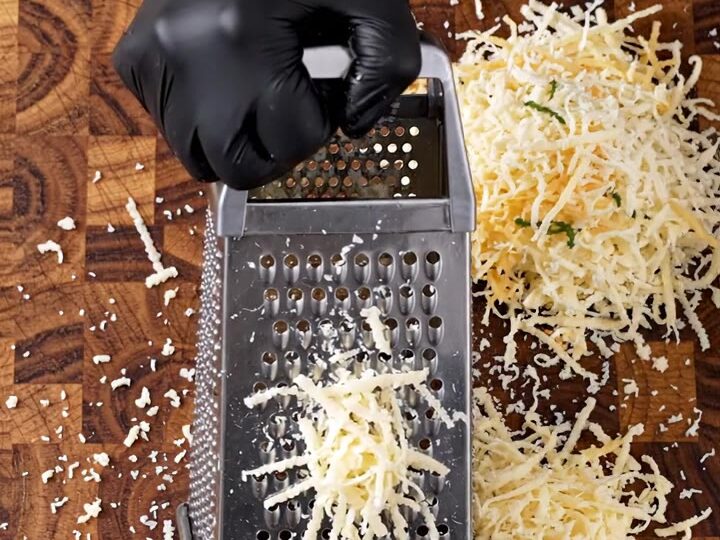
Thinly slice the garlic cloves and pick the thyme leaves from their stems, keeping a small pinch aside for finishing. Grate the 6 oz of Gruyère for the sauce and the 1 cup for the top; grating it fresh yields the smoothest melt. Measure the broth and cream, and set the oven rack in the upper third and preheat to 400°F (200°C). Bring a large pot of well-salted water to a boil.
Ingredients at a glance (11)
- 2 lb yellow onions, peeled and thinly sliced into half-moons
- 3 tbsp unsalted butter
- 1 tbsp olive oil
- 1 tsp kosher salt, plus more to taste
- 3 cloves garlic, thinly sliced
- 4 sprigs fresh thyme, leaves picked, plus more for serving
- 12 oz rigatoni
- 1/2 cup low-sodium beef broth
- 1/2 cup heavy cream
- 6 oz Gruyère cheese, freshly grated, plus 1 cup more for the top
- freshly ground black pepper to taste
Instructions
Caramelized onion base
- Slice and caramelize the onionsSlice the onions into thin half-moons with a chef's knife. Melt the butter with the olive oil in the cast-iron skillet over medium-low heat, add the onions and the kosher salt, and stir to coat. Cook slowly, stirring every few minutes, until they turn deeply golden and jammy.Look for Onions are deep golden brown, soft and sweet-smelling, with browned bits clinging to the pan.Tip Keep the heat moderate; scrape the fond from the pan as you stir so it deepens the color.
- Add garlic and thymeWhen the onions are deeply caramelized, lower the heat slightly. Stir in the sliced garlic and the picked thyme leaves, and cook for about 1 minute until the garlic is fragrant but not browned.Look for The kitchen smells sharply of garlic and herbs, and the garlic looks pale gold.Tip Garlic burns quickly after the onions are sweet, so keep stirring and watch closely.
The onions should have softened, shrunk considerably and turned a deep, even golden brown with a sweet, toasty aroma. They should look glossy and jammy, with dark browned bits sticking to the bottom of the skillet. Scrape those bits up as you stir. Before going on, add the garlic and thyme and smell the pan: it should be fragrant and savory, with no bitter or acrid note. If the onions are still pale, keep cooking gently for a few more minutes before adding anything else, since color is where the flavor comes from.
Creamy rigatoni sauce
- Cook the rigatoniBring a large pot of generously salted water to a boil. Cook the rigatoni until just al dente, about 2 minutes less than the package directs, then drain it and keep it aside for the skillet.Look for Pasta is firm to the bite with a slight chalky core.Tip Undercooked pasta keeps absorbing sauce and cooking in the oven, so it stays tender.
- Build the Gruyère saucePour the broth into the skillet with the onions and scrape up the browned bits. Add the cream and bring to a gentle simmer. Reduce the heat, stir in the 6 oz grated Gruyère in handfuls until melted and smooth, then add the drained rigatoni and toss to coat. Season with black pepper.Look for The sauce is glossy and coats the back of a spoon, clinging to every piece of pasta.Tip Add the cheese off the heat or on low so it melts smoothly without turning grainy.
After the cheese is stirred in, the sauce should look smooth, glossy and thick enough to coat the back of a spoon, with pasta fully coated and onions evenly distributed. There should be no grainy clumps of cheese and no pools of separated fat.
Check the seasoning and add a little more black pepper if needed, remembering that Gruyère and the onions already bring plenty of salt. If the sauce looks too thick, loosen it with a splash of the reserved pasta water or a little more broth. The skillet should be ready to go into the oven, with the top covered in the reserved cheese.
Golden cheese top
- Top with cheese and bakeScatter the remaining 1 cup of grated Gruyère evenly over the rigatoni. Transfer the skillet to the oven and bake at 400°F (200°C) for 10 to 12 minutes, until the cheese is bubbling and browned in spots.Look for Cheese is bubbling around the edges and golden brown in spots across the surface.Tip Set the oven rack in the upper third so the top browns before the sauce dries out.
- Rest, garnish and serveLet the skillet rest for 5 minutes so the sauce thickens slightly. Scatter the reserved thyme leaves over the top and serve straight from the cast-iron skillet, lifting out portions with a fork.Look for The cheese has set into a golden crust and the sauce is creamy and thick again.Tip Use a heatproof trivet under the skillet and keep the handle clearly marked as hot.
When the skillet comes out of the oven, the cheese should be bubbling vigorously at the edges, melted through the center and browned in golden spots across the surface. The sauce should look creamy and set slightly under the cheese crust, not dry. Let the dish rest for about 5 minutes before serving so the sauce thickens and the cheese firms enough to lift in portions. Check that the top shows a clear range of color, from pale gold to deep bronze, which signals an even, flavorful finish.
Common mistakes
The most common mistake is rushing the onions. If they are cooked over high heat, the outside burns while the centers stay pale and bitter, and the sauce loses its sweetness. Keep the heat moderate and be patient, stirring every few minutes and scraping the browned bits from the pan.
Another frequent problem is overcooking the pasta: rigatoni that is soft before it reaches the oven turns mushy under the cheese. Pull it from the water when it is still firm in the center, since it continues to cook in the sauce and the oven. Adding pre-shredded cheese is the third pitfall; its coating prevents a smooth melt and leaves the sauce gritty. Finally, do not skip the rest before serving.
How to tell it’s done
This dish is done when the cheese on top is melted, bubbling at the edges and browned in golden spots, and the sauce looks creamy and moist throughout. Insert a fork into the center: the rigatoni should feel tender with a pleasant bite, and the sauce should cling to it rather than pool at the bottom.
Because the recipe has no meat or eggs, there is no protein safe-temperature target; the goal is a hot, bubbling center. The onions should be deep golden and sweet, and the pasta should be cooked through. If the top has not browned after the full bake time, run the skillet under the broiler for 1 to 2 minutes, watching it closely, until the spots turn golden.
Up next · Part 3 of 3
4 variations · storage & make-ahead · 5 answers · printable card
Tips, FAQ & printable recipe (Part 3)← Back to the ingredients (Part 1)