Dinner · Part 1 of 3: Ingredients
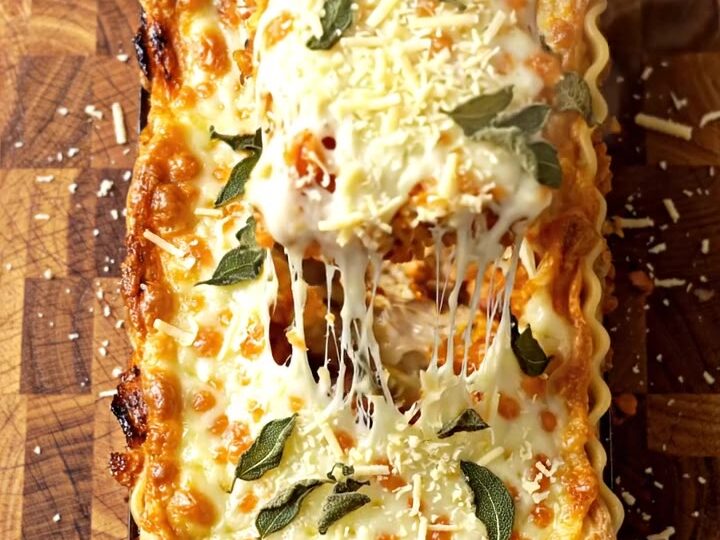
Butternut Squash Sage Lasagna in Brown Butter Fontina Skillet
- Prep
- Cook
- Total
- Serves
- 6
Brown butter and fresh sage turn a simple skillet lasagna into something special. Sweet butternut squash melts into a cheesy cream sauce between tender noodles, and a bubbling golden top finishes the dish with crisp fried sage. It is a cozy, one-pan dinner built for cool evenings and a relaxed table.
This butternut squash sage lasagna is built in a single cast iron skillet, which makes the whole dish feel more like a rustic bake than a formal casserole. The method starts by browning butter until it turns nutty and golden, then stirring in cream and finely grated aged hard cheese to make a smooth sauce.
Diced squash and sage go right into that sauce, followed by layers of wide lasagna noodles, more sauce and a final snowfall of cheese. The skillet goes into the oven until the top is bubbling and deeply golden, and the finished lasagna is sliced into neat squares. Crisp fried sage leaves on each portion add a savory crunch and a clear herb aroma that ties everything together.
Ingredients
- 1 whole butternut squash (about 2 lb), halved lengthwise and diced small
- 9 oz wide lasagna noodles
- 12 fresh sage leaves, plus extra sprigs for frying
- 2 cloves garlic, minced
- 6 tbsp unsalted butter
- 1 1/2 cups heavy cream
- 1 1/2 cups finely grated aged hard cheese (parmesan), divided
- 1 tsp kosher salt, plus more to taste
- black pepper to taste
- 2 tbsp olive oil, for frying the sage
Why this recipe works
Browning the butter first builds a deep, toasty flavor that carries through the whole dish. As the butter foams, its milk solids turn golden and nutty, and that flavor blends with the cream and cheese sauce rather than tasting like plain fat.
Stirring the grated hard cheese into warm cream over gentle heat keeps the sauce smooth and glossy, because finely grated cheese melts evenly instead of clumping. Starting the dish on the stovetop also means the squash begins to absorb the sauce before it goes into the oven.
Cooking the squash in small cubes is what makes this skillet version work. Small pieces soften while the noodles hydrate, so every bite has tender squash and no hard centers. The noodles are cooked only until just tender and then layered over the sauce, where they keep absorbing liquid as they bake.
The oven then sets the top layer, bubbling the cheese and browning the surface, while the interior stays moist and creamy. The final rest gives the layers time to firm up so the squares hold their shape when sliced.
Notes and substitutions
Wide lasagna noodles are the best fit for this skillet because they hold a generous layer of squash and sauce and stay tender without breaking apart. Buy the hard aged cheese as a block and grate it yourself on a fine box grater, since pre-grated cheese often contains anti-caking agents that keep it from melting smoothly. Fontina is also a good choice for a stretchy melt, and you can combine it with the grated cheese if you want a softer texture under the crust.
A 10-inch cast iron skillet is the right size for this recipe, because it holds the layers evenly and gives the top a good amount of surface to brown. If you do not have cast iron, use any oven-safe skillet of similar size. Use kosher salt and season in stages, since the cheese adds saltiness.
For a lighter sauce, half-and-half can replace the heavy cream, though it may take a few extra minutes to thicken. Reserve a few sage sprigs to fry as a crisp garnish, which adds crunch and a clear herb note to every serving.
- fontina: Gruyère or low-moisture mozzarella for a similar melt
- heavy cream: half-and-half for a lighter sauce, which may need a few extra minutes to thicken
- lasagna noodles: broken pieces of dried pappardelle
Equipment
- 10-inch cast iron skillet
- chef's knife
- cutting board
- fine box grater
- colander
- fish spatula or wide spatula
- small skillet for frying sage
Up next · Part 2 of 3
8 steps · 45 min of cooking · what to look for at each stage
Step-by-step instructions (Part 2)